The Stakes: Half a Billion Voters Across Five States
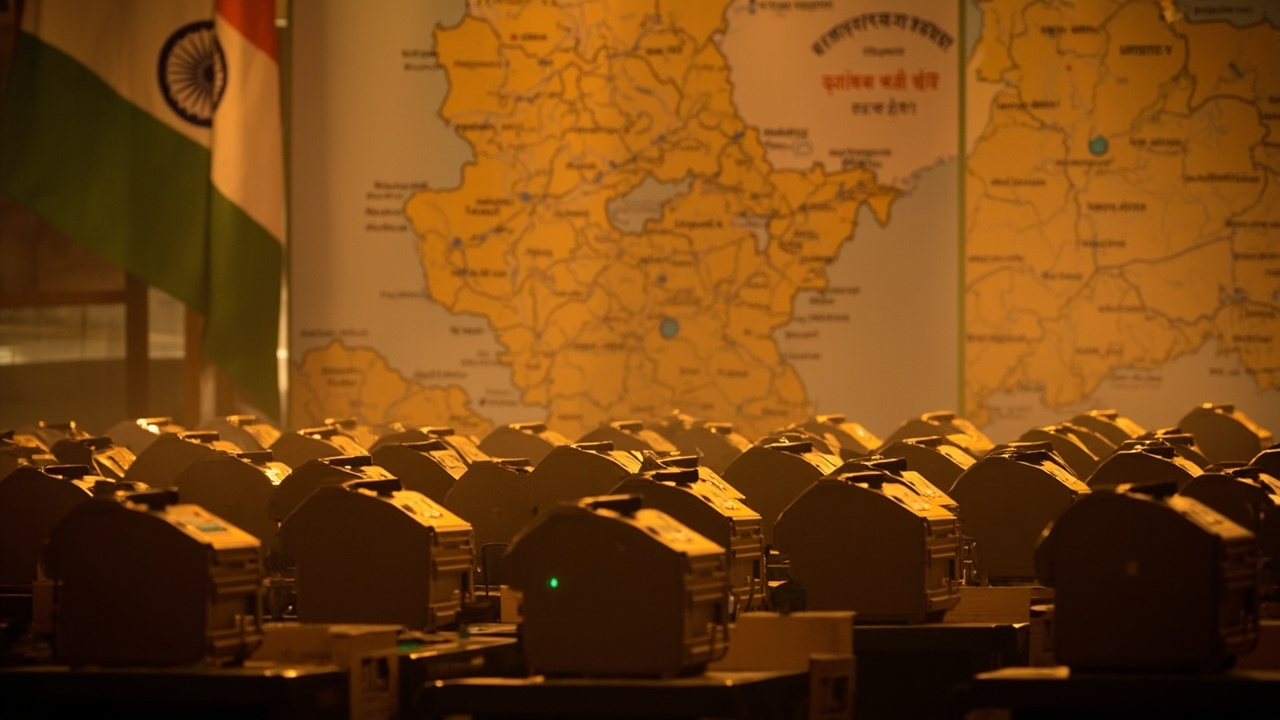
India’s Election Commission is overseeing the counting of votes cast in assembly elections across West Bengal, Assam, Tamil Nadu, Kerala, and the Union Territory of Puducherry — elections that collectively drew over 500 million eligible voters in what analysts have called the world’s largest sub-national democratic exercise.
The results, expected to be finalized by the evening of April 30, will determine the composition of state legislatures that govern nearly a quarter of India’s 1.4 billion population. They are also being watched closely as a barometer of public sentiment toward Prime Minister Narendra Modi’s Hindu nationalist BJP government midway through its third term.
West Bengal: BJP Seeks Inroads Against Mamata Banerjee’s TMC
West Bengal has emerged as the marquee contest of this election cycle. Exit polls from multiple agencies — including India Today-Axis, Republic-PMARQ, and Times Now-JVC — suggest the BJP could make significant gains in the eastern state, potentially winning 90 to 120 seats in the 294-member assembly.
Mamata Banerjee’s All India Trinamool Congress (TMC), which has dominated the state for over a decade, remains the front-runner according to most polls, but the projected margin has narrowed considerably compared to the 2021 assembly elections. Banerjee has framed the election as a battle to “protect Bengal’s secular fabric” against what she calls the BJP’s “communal agenda.”
The BJP’s campaign, led by Modi and Home Minister Amit Shah, focused heavily on issues of illegal immigration from Bangladesh — a theme that resonates in border districts — as well as allegations of corruption against the TMC government. The party also sought to consolidate Hindu votes across caste lines.
Assam: Immigration and Identity at the Forefront
In Assam, where the BJP has held power since 2016, exit polls suggest the party is likely to retain the state but with a potentially reduced majority. The election was dominated by debates over the National Register of Citizens (NRC), the Citizenship Amendment Act (CAA), and the complex question of who qualifies as a legitimate resident of the state.
Chief Minister Himanta Biswa Sarma, one of the BJP’s most prominent regional leaders, campaigned on a platform of infrastructure development and a hardline stance on illegal immigration. His opponents, including the Congress-AIUDF alliance, accused him of using immigration fears to polarize voters along religious lines.
Assam’s border with Bangladesh — and the broader national debate over border security, recently intensified by the government’s controversial proposal to deploy crocodiles and venomous snakes along riverine border stretches — made immigration the defining issue of the campaign.
Tamil Nadu and Kerala: Regional Powerhouses Hold Firm
In Tamil Nadu, exit polls suggest a tight contest between the ruling DMK-led alliance and the AIADMK-BJP combine. The DMK’s M.K. Stalin campaigned on a platform of state autonomy and social justice, while the AIADMK-BJP alliance emphasized economic development and national security.
Kerala presents perhaps the most complex electoral landscape, with the ruling CPI(M)-led Left Democratic Front (LDF) facing challenges from both the Congress-led United Democratic Front (UDF) and a growing BJP presence. Exit polls were split on whether the LDF would secure an unprecedented second consecutive term or whether the UDF would return to power.
What the Results Mean for India’s Political Future
Political analysts say these elections carry implications well beyond the five states. A strong BJP performance, particularly in West Bengal, would reinforce the party’s dominance of Indian politics and strengthen Modi’s hand as he navigates foreign policy challenges including the ongoing Iran conflict and its impact on global oil markets.
Conversely, a resilient performance by regional parties would signal that India’s federal structure and regional identities remain a potent counterweight to the BJP’s national ambitions.
“The assembly elections are a reality check on whether the BJP’s national popularity translates into state-level victories,” said Dr. Neetika Choudhary, a political scientist at Jawaharlal Nehru University. “State elections are fought on local issues — governance, welfare, identity — and that’s where regional parties often have an advantage.”
Counting Underway: What to Watch
The Election Commission has deployed tens of thousands of personnel across counting centers in all five states. Results are being updated in real-time on the Commission’s website.
Key indicators to watch:
- West Bengal: Whether the BJP crosses the 100-seat mark in the state assembly — a threshold that would represent a dramatic breakthrough
- Assam: The margin of victory for either the BJP or the opposition alliance — a narrow win could signal erosion of the BJP’s northeast dominance
- Tamil Nadu: Whether the BJP makes meaningful inroads in a state where Dravidian politics have historically kept national parties at arm’s length
- Kerala: If the LDF holds, it would be the first time in four decades that a government wins re-election in the state
International Implications
The elections come at a sensitive moment for India on the world stage. The country is navigating the economic fallout from the Iran-US conflict and soaring global oil prices — India imports over 80 percent of its crude oil — while simultaneously managing a complex relationship with neighboring Bangladesh amid the border security controversy.
Analysts note that a strong electoral mandate for Modi’s BJP would give the government greater political capital to pursue economic reforms and take decisive foreign policy positions, while a mixed result could force a more cautious approach.
The counting of votes is expected to conclude by late evening local time. This story will be updated as results come in.