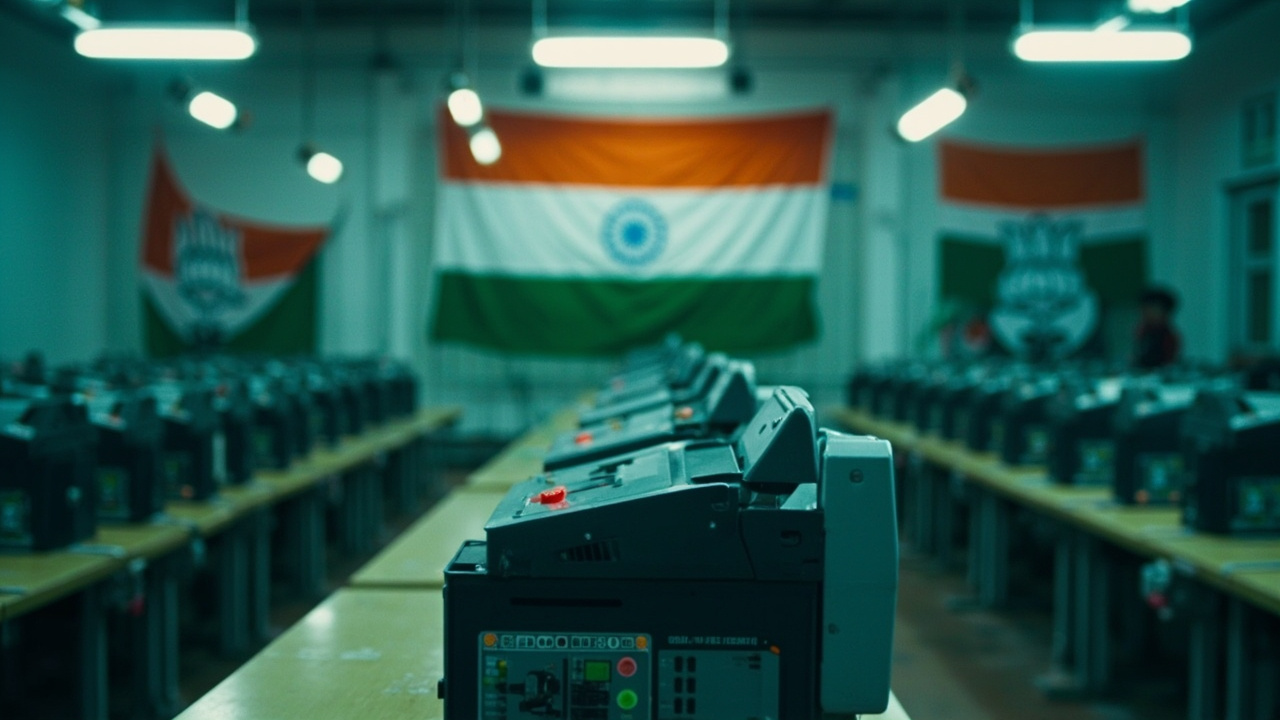
Exit polls released across five Indian states point to a seismic shift in the country’s political landscape, with the BJP projected to break through in West Bengal for the first time while the opposition holds its southern strongholds ahead of results on May 4.
The Headline Numbers
Multiple polling agencies including Today’s Chanakya, Axis My India, and CVoter released their exit poll projections this week. In West Bengal, the BJP is projected to win between 160 and 185 seats in the 294-seat assembly, ending Mamata Banerjee’s 15-year grip on power. The Trinamool Congress is projected to fall to between 95 and 120 seats, a devastating decline from its 215-seat majority in 2021.
In Assam, the BJP is projected to retain power with 88 to 100 seats in the 126-seat assembly, validating Chief Minister Himanta Biswa Sarma’s aggressive campaign on citizenship issues. The opposition Congress-led alliance is projected to win between 20 and 30 seats.
Tamil Nadu: DMK Holds the Line
In Tamil Nadu, the ruling DMK under Chief Minister M.K. Stalin is projected to retain power with a reduced but comfortable majority. Today’s Chanakya projects the DMK-led alliance winning between 140 and 160 seats in the 234-seat assembly, down from 159 in 2021 but well clear of the AIADMK-BJP alliance at 60 to 80 seats.
The result would represent a significant setback for the BJP’s southern ambitions. Despite investing heavily in Tamil Nadu and forging an alliance with the weakened AIADMK, the party is projected to win fewer than 20 seats on its own. The BJP’s Hindutva messaging has struggled to gain traction in a state where Dravidian identity politics remain dominant.
TVK leader Sengottaiyan has publicly rejected the exit poll projections, calling them biased and insisting the actual results will be far closer. However, most analysts consider the DMK’s position strong enough to withstand a modest polling error.
Kerala: Left’s Historic Bid Under Threat
Kerala’s political drama centres on whether the Left Democratic Front can achieve what no party has done in four decades: win consecutive terms. Exit polls suggest it cannot. The Congress-led United Democratic Front is projected to win between 85 and 100 seats in the 140-seat assembly, ending Chief Minister Pinarayi Vijayan’s bid for an unprecedented second term.
The LDF is projected to win between 35 and 50 seats, a sharp decline from its 99-seat victory in 2021. The BJP is projected to win between 3 and 8 seats, a modest but symbolically significant breakthrough in a state where the party has never held more than a single seat.
Vijayan’s government had been praised for healthcare and disaster management, but allegations of corruption and factionalism within the Communist Party of India (Marxist) appear to have eroded public confidence.
West Bengal: The Main Event
Bengal remains the most consequential contest. Mamata Banerjee’s TMC swept to power in 2011, ending 34 years of Communist rule. But the BJP’s relentless campaign, combining central government welfare schemes with aggressive Hindutva messaging, appears to have fractured the TMC’s coalition of minorities, rural voters, and urban progressives.
Amit Shah’s months-long campaign in Bengal, including massive rallies and door-to-door outreach, has paid dividends. The BJP is projected to make its deepest inroads in northern and western districts, where Hindi-speaking populations and Hindu nationalist sentiment are strongest. The TMC is expected to retain dominance in Kolkata and southern districts, but not by enough to offset losses elsewhere.
For Banerjee, a loss would be politically devastating. She has positioned herself as the face of opposition to the BJP nationally, and her defeat would reshape the dynamics of the INDIA opposition alliance heading into the 2029 general elections.
What May 4 Will Reveal
Exit polls in India have a mixed track record. In the 2024 general elections, several pollsters significantly overestimated the BJP’s seat count, leading to widespread scepticism. The Election Commission has urged voters and parties to wait for actual results rather than treating exit polls as fait accompli.
Nevertheless, the consistency of projections across multiple agencies suggests the broad trends are likely to hold. A BJP victory in Bengal would mark the party’s most significant state-level breakthrough since it won Uttar Pradesh in 2017, and would confirm Modi’s enduring appeal beyond the Hindi heartland.
For the opposition, the stakes are equally high. If the INDIA bloc cannot hold Bengal, its claim to be a credible national alternative to the BJP collapses. The results on May 4 will not just determine state governments; they will set the trajectory of Indian democracy for the next decade.