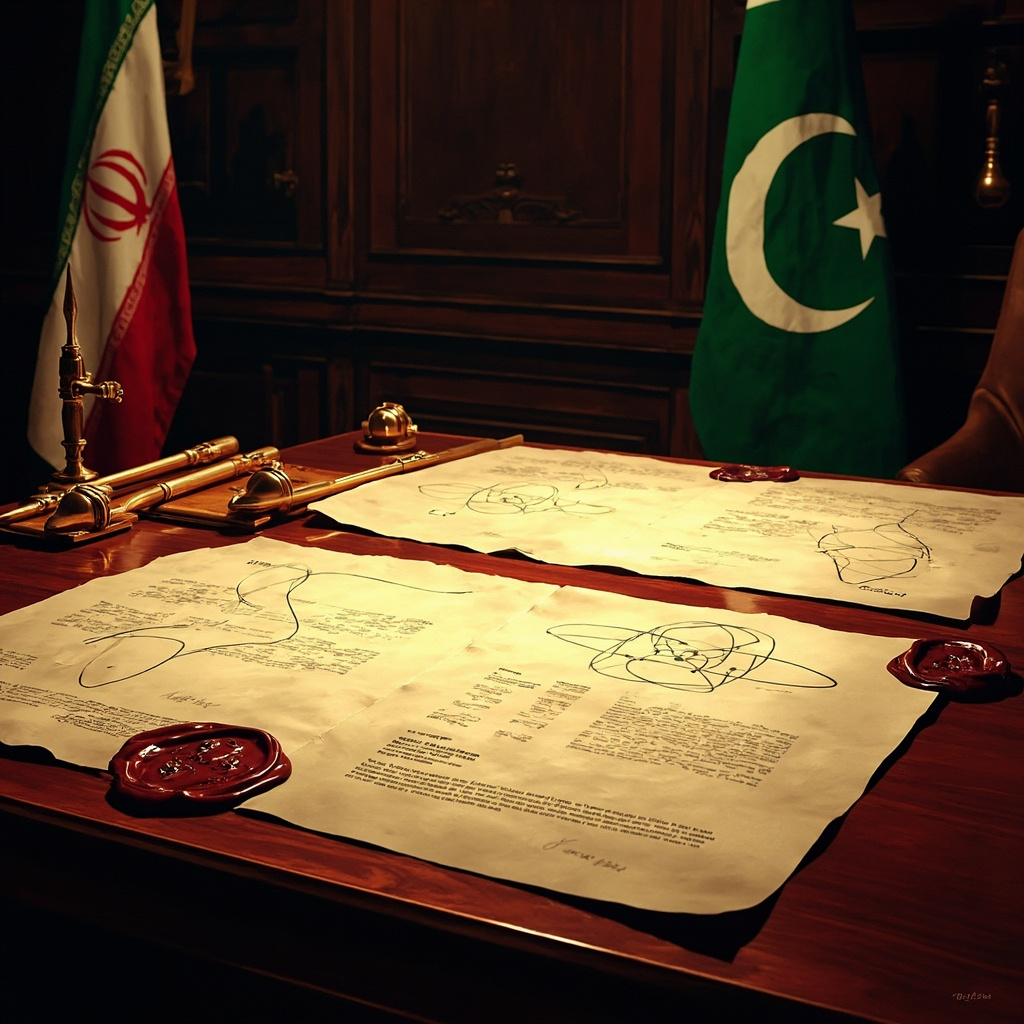
ISLAMABAD — The fate of the US-Iran ceasefire hung in the balance on Thursday as Tehran transmitted a revised peace proposal to Pakistani mediators, only for Donald Trump to publicly reject its terms and threaten a return to military action if Iran does not dismantle its nuclear ambitions.
The proposal, delivered to Islamabad on Wednesday evening according to sources familiar with the negotiations, represents Iran’s second attempt at a diplomatic resolution since the temporary ceasefire was declared nearly four weeks ago. Trump rejected an earlier version, and mediators had been waiting for Tehran to come back with a more palatable offer.
But any hope of a quick resolution was quickly dashed. On Wednesday, Trump posted a mocked-up image of himself holding a gun on Truth Social, telling Iranian leaders to “get their act together.” The caption read: “No more Mr. Nice Guy.”
Later, from the Oval Office, Trump drew a hard line: “At this moment, there will never be a deal unless they agree that there will be no nuclear weapons.”
Iran Pushes Back on Nuclear Red Line
Iran has defiantly pushed back against that key demand. In a message on state media Thursday, Supreme Leader Mojtaba Khamenei said Iran would “safeguard” its nuclear and missile capabilities and that “foreign actors” have no place in the Persian Gulf except “the depths of its waters.”
Khamenei, who has not been seen or heard publicly in more than seven weeks since being announced as the new supreme leader following the assassination of his father, Ayatollah Ali Khamenei, has issued several written messages that have hardened rather than softened Tehran’s position.
Iran remains deeply distrustful of the United States and did not understand why Washington abandoned the previous round of talks in Pakistan, an Iranian source told CNN. The source said Tehran could see talks restarting only if the US lifts its blockade of Iranian ports and Iran fully reopens the Strait of Hormuz — conditions both sides have so far refused to meet unconditionally.
The Economic Weapon: Blockade and Oil Crisis
With diplomacy stalled, Trump has turned to economic warfare as his preferred strategy. His administration is preparing to extend the US naval blockade of Iranian ports, including a longer-term closure of the Strait of Hormuz, sources familiar with the talks said.
The US has intercepted or redirected nearly 40 ships attempting to enter or exit Iranian ports since the blockade began earlier this month. “The blockade is genius,” Trump told reporters this week.
But the economic fallout is hitting American consumers too. Oil prices have shot to a four-year high, with Brent crude approaching $127 per barrel. US gas prices have soared, creating domestic political pressure that Tehran is banking on to force Trump’s hand.
Tehran appears to be playing for time, according to diplomatic sources — dragging out talks about talks and sending multiple proposals with seemingly incremental movement. The calculation in Tehran, the sources say, is that Trump may eventually tire of the fight or that American voters angry about soaring fuel costs will force concessions.
The Pakistan Channel: A Fragile Bridge
Pakistan has emerged as the unlikely mediator in the world’s most dangerous standoff, with Islamabad positioning itself as the critical backchannel between Washington and Tehran. The so-called “Islamabad Accord” framework has become the only active diplomatic track, after direct negotiations collapsed in March.
Mediators in Islamabad believe a fair deal is within reach, sources said. But the gap between the two sides remains enormous: Trump demands verifiable nuclear dismantlement; Iran insists on its right to enrich uranium for peaceful purposes. Both positions are framed as existential by their respective leaderships.
The Pakistani mediation effort has been complicated by the country’s own delicate position. Islamabad maintains close ties with both the United States and Iran, and its military establishment has been quietly facilitating communication between the two sides. But Pakistani officials have privately expressed frustration with the slow pace and public posturing from both capitals.
Military Option Still on the Table
While Trump’s current preference is economic pressure, military options remain very much alive. The president has been briefed by military officials on a possible new round of strikes on Iran, multiple sources confirmed, though he has not yet authorized such action.
The US military posture in the region remains unchanged, with two carrier strike groups operating in the Arabian Sea and the Gulf of Oman. The USS Abraham Lincoln continues flight operations, and the US has shipped more than 6,500 tonnes of munitions to Israel since the conflict began — a signal that the military track has not been abandoned.
Iran, for its part, has not stood down its forces. The Islamic Revolutionary Guard Corps maintains heightened readiness along the Strait of Hormuz, and Iranian state media has continued to broadcast images of military exercises and missile launches.
What Happens Next
The coming days will be critical. Pakistan is expected to share the details of Iran’s revised proposal with Washington, and Trump will face a choice: accept incremental progress toward a deal or escalate pressure — military or economic — to force a breakthrough.
Meanwhile, the War Powers Resolution clock continues to tick. The administration has argued the war is “terminated” under the ceasefire, but a growing bipartisan coalition in Congress disagrees. Senator Tim Kaine has led efforts to force a vote, and though six attempts have failed, the political pressure is mounting as gas prices remain elevated and the American public grows weary of yet another Middle Eastern conflict.
For now, the ceasefire holds — but barely. Each side is daring the other to break it first, and the gap between what Washington demands and what Tehran will accept has never been wider. As one diplomat in Islamabad put it: “We are one miscalculation away from a war that nobody wants and nobody can win.”