The Declaration: A “New Maritime Regime”
Iranian officials announced on Sunday that all vessels transiting the Strait of Hormuz must now coordinate their passages with Iranian armed forces, marking what Tehran describes as a fundamental restructuring of maritime governance in the waterway.
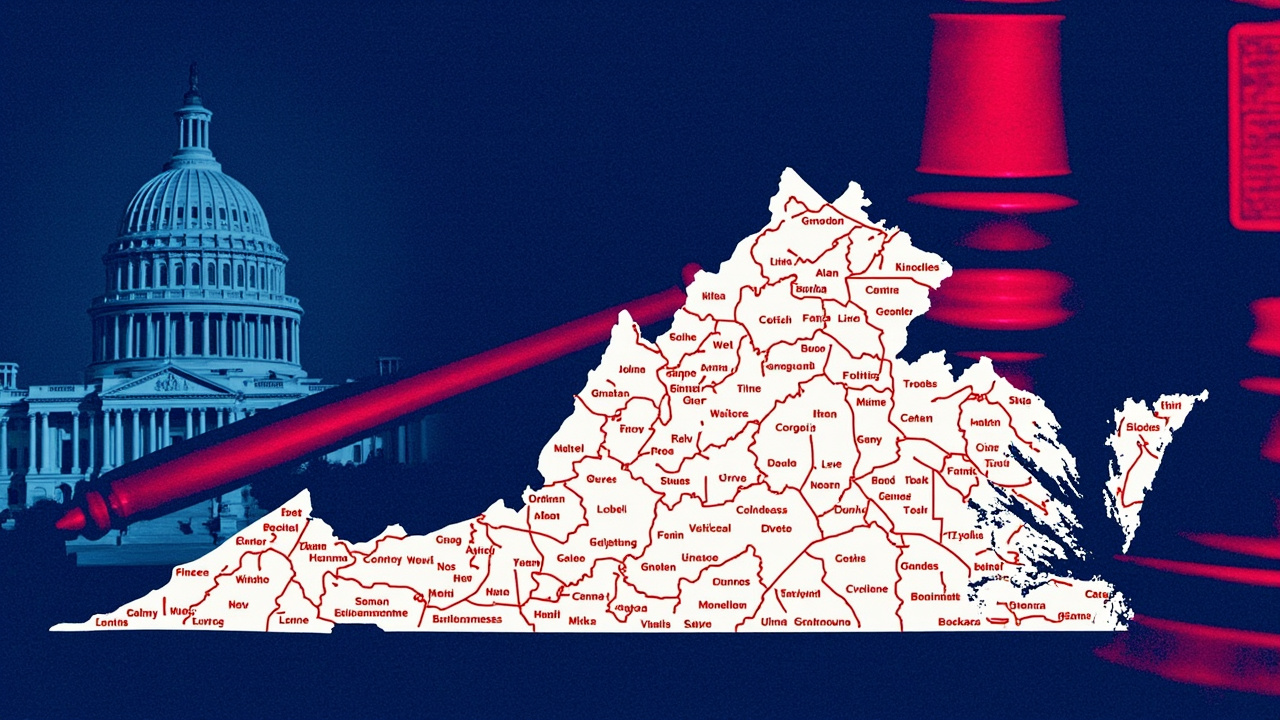
The announcement was accompanied by the public release of a detailed Hormuz Control Map — a cartographic assertion of Iranian authority over the strait that maps transit corridors, checkpoints, and coordination zones under IRGC Navy jurisdiction. The map was published through official Iranian state media channels and circulated to international shipping authorities.
“All vessels — commercial, military, or otherwise — must coordinate their transit through the Strait of Hormuz with the armed forces of the Islamic Republic of Iran. This is not a request. It is the new reality of regional security.”
— Iranian Military Spokesperson, May 4, 2026
Iranian officials argue that the US-Iran conflict has fundamentally altered regional dynamics and that the strait — long recognized as an international passage under the United Nations Convention on the Law of the Sea (UNCLOS) — must now remain under Iranian control due to its use in military operations against the country.
Direct Challenge to US “Operation Project Freedom”
The timing of Iran’s declaration is no coincidence. It comes just hours after the United States announced “Operation Project Freedom” — a naval escort mission involving over 100 aircraft and multiple warships designed to guide commercial vessels through the Strait of Hormuz and break what Washington describes as an Iranian blockade.
President Donald Trump has framed the operation as a humanitarian mission to free trapped cargo ships, but Tehran sees it as a direct military provocation. Iran’s military issued a stark warning that any foreign armed forces entering the strait without IRGC coordination would be considered a ceasefire violation and a legitimate military target.
“Any interference by foreign armed forces in the Strait of Hormuz will be considered a violation of the ceasefire agreement and will be met with an appropriate response.”
— Iranian Foreign Ministry Statement, May 4, 2026
Trump Calls US Navy “Pirates” Amid Escalating Rhetoric
In a remarkable rhetorical escalation, President Trump publicly referred to the US Navy’s blockade of Iranian ports as “piracy” — an extraordinary instance of a US president characterizing his own military’s operations in such terms. The comment came during a press availability at the White House on Sunday evening.
The statement appears to be part of Trump’s broader strategy of maintaining maximum pressure on Iran while simultaneously positioning himself as open to diplomacy. The president reiterated that military action against Iran remains possible, telling reporters: “We might need to restart the war if talks fail.”
Economic Fallout: Oil, Shipping, and Global Trade
The Strait of Hormuz handles approximately 21 million barrels of oil per day — roughly 21% of global petroleum consumption. Iran’s new maritime regime threatens to formalize the disruption that has already sent shockwaves through energy markets:
- 🔴 Oil Prices: Brent crude surged past $105 per barrel, with analysts warning of $120+ if the crisis deepens
- 🔴 Shipping Rerouting: Major carriers including Maersk and MSC have begun rerouting vessels around the Cape of Good Hope, adding 10-14 days to voyages
- 🔴 Air Disruptions: Dubai airport officials reported ongoing airspace restrictions, though they predicted “rapid recovery” as corridors reopen
- 🔴 Spirit Airlines Collapse: The US budget carrier ceased all operations citing, in part, jet fuel costs inflated by the Hormuz crisis
Diplomatic Backchannel: The Pakistan Connection
Despite the escalating rhetoric, diplomatic channels remain active. Iran confirmed on Saturday that it received a formal US response to its 14-point peace proposal, delivered through Pakistan as an intermediary. Tehran described the response as “under review,” though Trump told Israeli media the proposal was “unacceptable.”
Pakistan’s role as a diplomatic bridge between the two adversaries underscores the complexity of the crisis — a nuclear-armed Muslim-majority nation mediating between two military powers on the brink of renewed conflict. The 30-day negotiation clock is ticking, but neither side appears willing to make the first significant concession.
Regional Flashpoints Multiply
The Hormuz crisis is unfolding against a backdrop of multiple simultaneous flashpoints:
- 📍 Lebanon: Israeli forces struck 8 locations in southern Lebanon,
including Debaal, Qana, and Srifa, despite a US-backed ceasefire. More than 30 people were killed in a single day - 📍 Gaza Flotilla: Israel transferred 175 detained activists from the intercepted Global Sumud Flotilla to Greek authorities amid international condemnation
- 📍 Tehran Air Defences: Iranian air defence systems have been activated to counter drones and reconnaissance aircraft, indicating ongoing security threats despite the ceasefire
- 📍 NATO Fissures: Trump’s threats to withdraw troops from Germany, Italy, and Spain continue to strain the alliance
Legal and Strategic Implications
Iran’s assertion of control over the Strait of Hormuz raises profound questions under international law. The strait is classified as an international strait under UNCLOS, through which all ships enjoy the right of transit passage. Iran’s attempt to impose a coordination regime directly contravenes this framework.
However, Tehran’s argument is rooted in military necessity: the United States has imposed a naval blockade on Iranian ports, which Iran considers an act of war regardless of the ceasefire. By asserting control over the strait, Iran is attempting to create leverage — linking the lifting of its maritime restrictions to the end of the US port blockade.
Dr Sultan Al Jaber, the UAE’s industry minister, captured the global consensus at a press conference on Sunday: “The Strait of Hormuz must never be held hostage. It is a lifeline for the global economy.”
What Happens Next
The immediate question is whether the United States will proceed with Operation Project Freedom naval escorts in the face of Iran’s explicit threat. Three scenarios are plausible:
- Escalation: US warships enter the strait with escorts, Iran fires warning shots or engages, ceasefire collapses entirely. Oil hits $120+.
- Standoff: Both sides posture but avoid direct engagement. Ships continue rerouting. Economic pressure mounts on both sides. Diplomatic talks intensify.
- De-escalation: Iran eases coordination requirements as a goodwill gesture; US reduces port blockade pressure. Pakistan-brokered talks produce a framework agreement.
For now, the most likely outcome is scenario two — a prolonged, tense standoff in which neither side backs down but both stop short of reigniting full-scale conflict. The “new maritime regime” may prove to be more negotiating tactic than operational reality. But with over 100 US aircraft deployed, IRGC patrol boats positioning in the strait, and global energy markets on edge, the margin for miscalculation is razor-thin.