The Strait of Hormuz — through which roughly one-fifth of the world’s oil supply transits daily — has become the latest flashpoint in the rapidly deteriorating US-Iran standoff, with both sides trading threats and accusations on a near-hourly basis.
Missile Claims and Denials
Iran’s semi-official Fars News Agency reported early Monday that two missiles struck a US warship “attempting to enter the Strait of Hormuz,” claiming the vessel was forced to retreat. The Pentagon swiftly rejected the account.
“We have seen the Iranian propaganda. No US naval vessel has been struck by missiles in the Strait of Hormuz. Our operations continue as planned.”
A US official, speaking on condition of anonymity, confirmed that a US warship was approached by Iranian fast-attack boats but was not hit. The discrepancy between Iranian and American accounts underscores the fog of war enveloping the strategic waterway.
Separately, the United Kingdom Maritime Trade Operations (UKMTO) reported that a commercial tanker was struck by projectiles approximately 78 nautical miles north of Fujairah, United Arab Emirates, on Sunday. All crew members were reported safe, but the vessel’s identity was not disclosed. The incident adds a commercial dimension to what had been primarily a military confrontation.
Project Freedom Begins
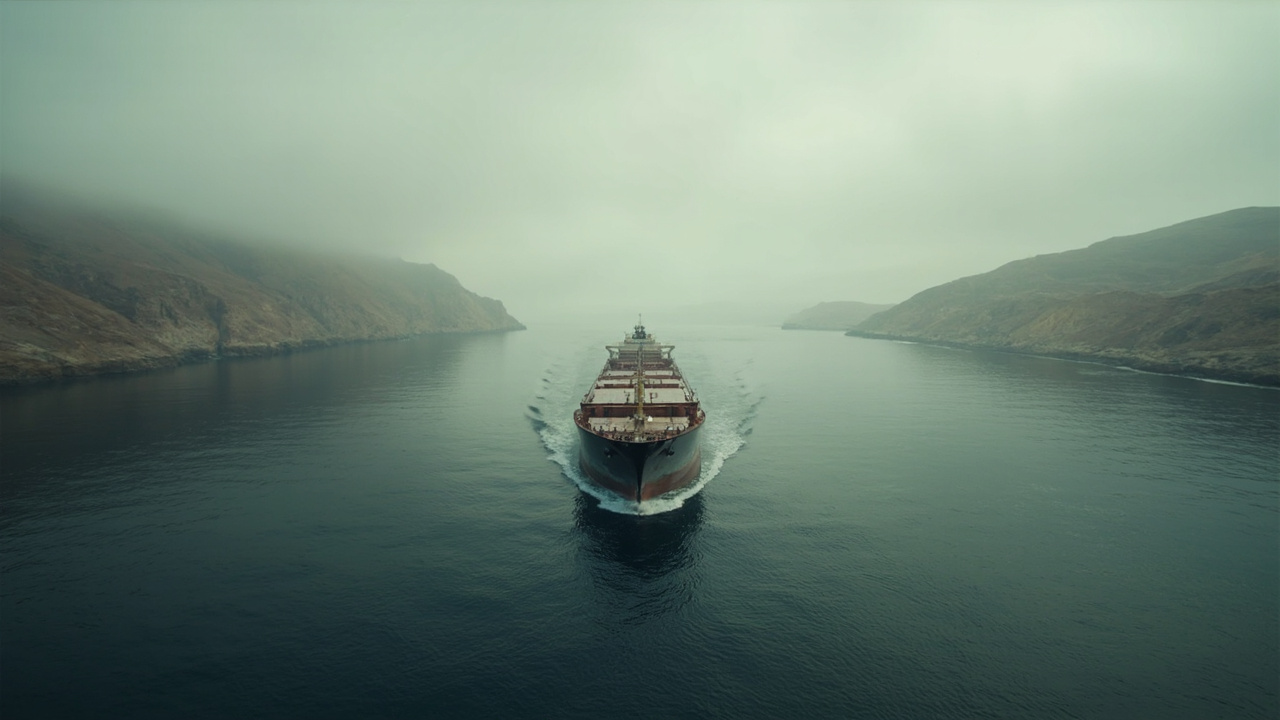
President Trump announced Sunday that the United States would launch “Project Freedom” — a naval operation to guide hundreds of stranded merchant vessels and nearly 20,000 seafarers safely through the Iranian-controlled Strait of Hormuz.
“We have told these countries that we will guide their ships safely out of these restricted waterways, so that they can freely and ably get on with their business.”
The operation formally commenced Monday morning Middle East time. Details remain sparse, but a US-led task force has already begun instructing commercial vessels on new routing protocols. Early reports suggest the task force is recommending ships take alternative passages where possible, rather than risking a direct transit through the contested waterway.
Iran’s Ceasefire Warning
Iran’s Foreign Ministry issued a stark warning Monday, declaring that any US attempt to interfere in the Strait of Hormuz constitutes a “violation of the ceasefire” that has held — tenuously — since April 8.
Iranian military officials went further. Mohammad Jafar Asadi, a senior figure in Iran’s central command, told Fars News Agency that renewed conflict is “likely,” adding: “Evidence has shown that the United States is not committed to any promises or agreements.”
The IRGC issued a separate statement vowing a “kinetic response” to the Project Freedom mission, calling the US escort plan “a direct provocation that will be met with overwhelming force.” The rhetoric marks a significant escalation from Iran’s previous diplomatic posture.
Oil Markets on Edge
Global oil markets reacted nervously to the escalating confrontation. Brent crude held above $108 a barrel after falling as much as 2.4% at the open, as traders weighed Trump’s escort promise against the reality of missile fire in the waterway. West Texas Intermediate hovered near $102.
- 🔹 Brent crude: $108+ per barrel
- 🔹 WTI: ~$102 per barrel
- 🔹 Stranded vessels: Hundreds in the Gulf region
- 🔹 Affected seafarers: Nearly 20,000
- 🔹 Tanker hit: 78 nautical miles north of Fujairah
Diplomatic Parallel Track
Even as military tensions spiked, diplomatic channels remained open — barely. Iran confirmed it had sent a fresh proposal to the United States via Pakistan regarding stalled peace talks, building on the 14-point plan Tehran unveiled last week. Trump said US representatives are in talks with Iran that could lead to something “very positive for all.”
The contradiction between military escalation and diplomatic outreach defines the current moment. Both sides appear to be simultaneously preparing for war and hedging toward peace, creating a volatile mix that analysts say could tip either way within hours.
What Comes Next
The next 48 hours will be decisive. If Project Freedom successfully escorts ships through Hormuz without Iranian retaliation, it could shift the leverage back to Washington. If Iran makes good on its threat of a “kinetic response,” the ceasefire that has held since April 8 will collapse entirely — and with it, any near-term prospect of a diplomatic resolution.
For the nearly 20,000 seafarers trapped aboard stranded vessels in the Gulf, the stakes are not geopolitical. They are personal. And the missiles — real or denied — are already flying.