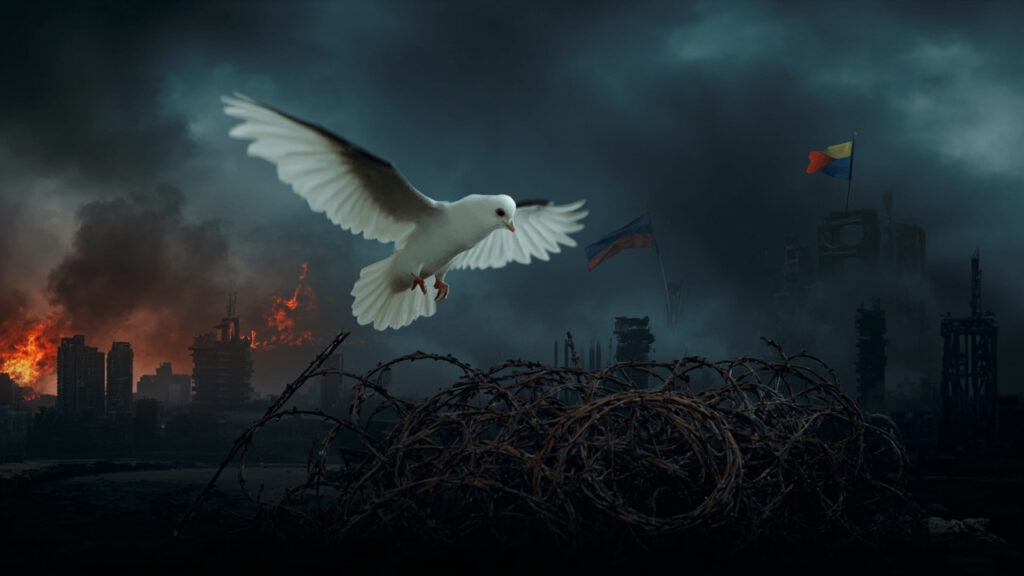
Ukrainian President Volodymyr Zelenskyy has announced an open-ended ceasefire to take effect starting the night of May 5-6, 2026, in a dramatic unilateral move aimed at breaking the deadlock in the three-year conflict with Russia.
The announcement comes just hours after Russia declared its own three-day truce to mark the upcoming Victory Day anniversary on May 9. Zelenskyy’s counter-proposal effectively challenges Moscow to match Ukraine’s commitment or risk being seen as the party blocking peace.
A High-Stakes Gamble
In a televised address from Kyiv on Monday evening, Zelenskyy said Ukrainian forces would cease all offensive operations starting at midnight, provided Russia does the same. “We are extending our hand for peace,” he declared. “The world will now see who truly wants to end this war.”
The move represents a significant shift in Ukraine’s negotiating posture. Until now, Kyiv had rejected short-term truces, arguing they would only allow Russia to regroup and rearm. The open-ended nature of this proposal removes that objection and puts the diplomatic ball firmly in Moscow’s court.
Russia’s Competing Offer
Earlier on Monday, Russian President Vladimir Putin announced a unilateral 72-hour ceasefire from May 8-10 to commemorate the Soviet victory over Nazi Germany in World War II. Ukraine had dismissed that offer as a propaganda stunt designed to portray Russia as a peace-seeker while continuing military operations.
Now, with Zelenskyy’s open-ended counter-proposal, the Kremlin faces a difficult choice: accept a potentially lengthy truce that could freeze the conflict, or reject it and appear as the aggressor before international observers.
International Reactions
The United States welcomed Zelenskyy’s announcement, with the State Department calling it a “courageous step toward peace.” European Union leaders echoed the sentiment, urging Russia to reciprocate immediately. French President Emmanuel Macron called the proposal a “turning point” and said Paris would push for emergency talks in Brussels.
NATO Secretary-General Mark Rutte issued a statement saying the alliance would monitor compliance closely. “If Russia violates this ceasefire, the world will know,” Rutte warned. “The eyes of the international community are fixed on the front lines tonight.”
China, which has maintained a carefully neutral stance throughout the conflict, urged both sides to seize the opportunity for dialogue. Beijing’s foreign ministry spokesperson said a sustained ceasefire could create conditions for a “comprehensive and lasting political settlement.”
On the Ground: Skepticism and Hope
In Kyiv and across Ukraine, reactions were mixed. Many civilians, exhausted by years of air raid sirens and displacement, expressed cautious optimism. “Maybe this time something changes,” said Olena Moroz, a shopkeeper in the capital whose brother is serving on the eastern front. “We’ve heard ceasefire promises before, but this feels different.”
Military analysts, however, remain deeply skeptical. Previous ceasefire attempts in 2022, 2023, and 2024 all collapsed within days, with both sides accusing the other of violations. The complexity of the 1,000-kilometer front line makes monitoring and verification extraordinarily difficult.
“The risk is that both sides use the pause to reposition and resupply,” said Dr. Kateryna Bondarenko, a defense analyst at the Kyiv Institute for Strategic Studies. “Without robust third-party monitoring, a ceasefire could simply become a prelude to more intense fighting.”
What Happens Next
As midnight approaches, military observers and diplomats are holding their breath. A successful ceasefire could open the door to broader negotiations, potentially including discussions on territorial arrangements and security guarantees.
Conversely, a rapid collapse would likely harden positions on both sides and could lead to an even more intense phase of fighting. Either way, the coming 48 hours will be among the most consequential in the war’s three-year history.
For Ukraine, the gamble carries both political and military risks. If Russia accepts and the truce holds, Zelenskyy will have demonstrated leadership and diplomatic initiative. If Russia rejects or violates the ceasefire, Kyiv will have strengthened its moral position on the world stage — but at the cost of prolonging a war that has already claimed hundreds of thousands of lives.