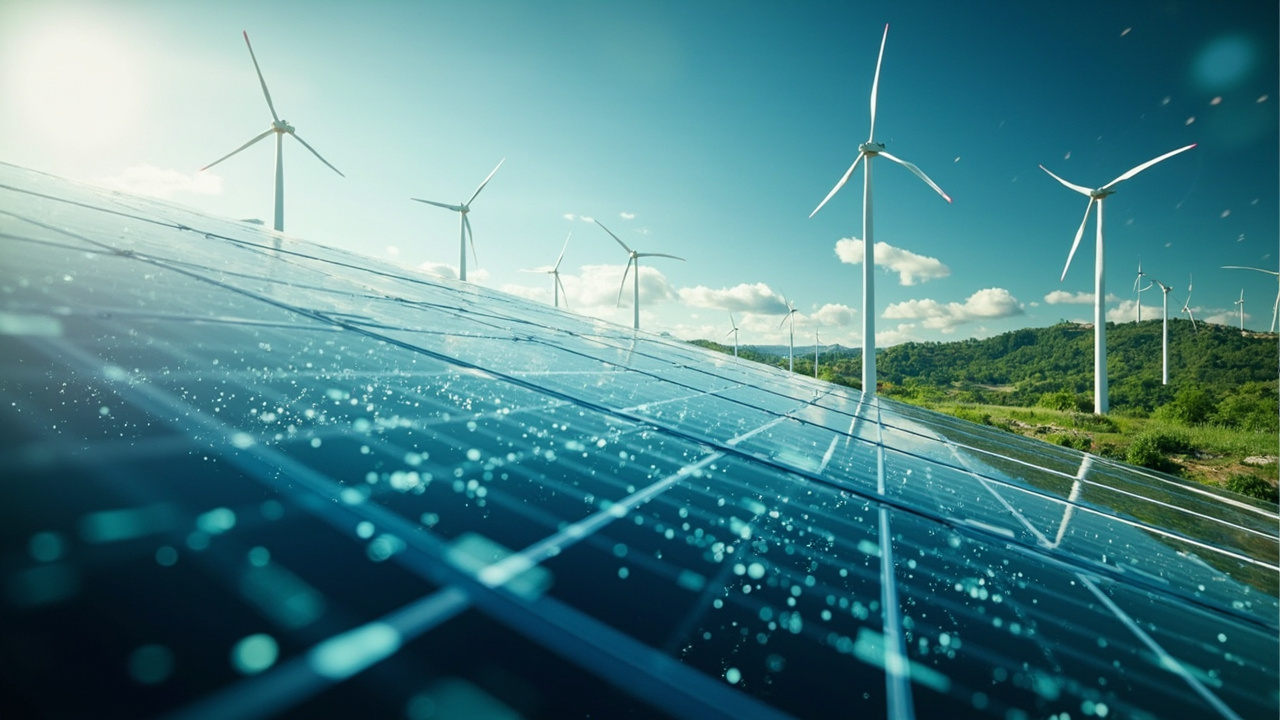
In Q1 2026 something remarkable happened in global capital markets. For the first time in history clean energy investment surpassed fossil fuel investment globally, reaching $1.8 trillion against $1.4 trillion for traditional energy. This is not a trend. It is a structural inflection point driven by four converging forces: the end of economically viable fossil fuel extraction in OECD markets, the rapid decline in solar and battery costs, the regulatory environment created by the Paris Agreement followup framework, and the private sector’s rediscovery of energy security as a strategic imperative. The International Energy Agency reports that every dollar invested in solar photovoltaic generation now produces 40% more electricity over its lifetime than a dollar invested in new coal capacity. Battery storage costs have fallen 94% since 2010, reaching $85 per kilowatt-hour at the pack level in 2025.
Green hydrogen has crossed the $2 per kilogram threshold in seven markets, making it competitive with natural gas for industrial applications in the Nordic countries, the Netherlands, and parts of the Middle East. The energy transition has arrived — not as a political movement, but as an economic fact of the kind that reshapes industries, currencies, and the balance of geopolitical power.
The Geopolitics of Net Zero
The energy transition has become the defining geopolitical contest of the 2020s. The United States and its allies are pursuing net zero targets that require rebuilding significant portions of their industrial base. China has a head start: it manufactures 80% of the world’s solar panels, 60% of its wind turbines, and holds dominant positions in the battery supply chain through CATL, BYD, and the cobalt processing facilities in the Democratic Republic of Congo that it effectively controls. The Inflation Reduction Act committed $369 billion to clean energy manufacturing — the largest industrial policy intervention since World War II. The EU’s Green Deal Industrial Plan and Japan’s GX Roadmap have similar ambitions. The result is a global subsidy race reshaping supply chains, creating trade tensions, and redrawing the map of industrial advantage.
We are witnessing the birth of a new asset class. Green infrastructure is not just an investment category. It is becoming the backbone of national economic security.
— Fatih Birol, IEA Executive Director, March 2026
The Stranded Assets Time Bomb
Global fossil fuel assets carry approximately $10 trillion in stranded asset risk according to the Carbon Tracker Initiative. Banks, pension funds, and sovereign wealth funds face a slow-motion reckoning. The Bank for International Settlements estimates that a 2 degree Celsius warming scenario would impair 15 to 20% of bank capital globally through exposure to carbon-intensive assets. The Federal Reserve’s climate scenario analysis, the ECB’s climate stress tests, and the Bank of England’s biennial exploratory scenario have all pointed to the same conclusion: fossil fuel stranded asset risk is systematically underestimated in current balance sheets.
The energy transition is the biggest capital allocation event in human history. The question is not whether it will happen. The question is who will capture its value.
— Kristalina Georgieva, IMF Managing Director, January 2026
The Carbon Border Adjustment Factor
Europe’s Carbon Border Adjustment Mechanism began phasing in at the EU border in 2026. The CBAM requires importers to purchase certificates corresponding to the carbon price that would have been paid if goods were produced under EU rules. This extends the EU Emissions Trading System outward to cover embedded emissions in imported steel, aluminum, cement, fertilizers, hydrogen, and electricity. The United States and China have both challenged the CBAM as a trade barrier. India, Brazil, and South Africa have formally objected through the World Trade Organization. The CBAM is simultaneously a climate policy, an industrial policy, and a trade negotiation — and its resolution will determine whether the global trading system can accommodate carbon pricing without fragmenting.
The Bottom Line
The countries and companies that capture the transition’s capital flows will set the terms of global economic power for the next thirty years. The United States, through the Inflation Reduction Act, has made the first serious industrial policy bet in fifty years. Europe is betting on regulatory coherence and carbon pricing as competitive advantages. China is betting on manufacturing scale and supply chain control. The outcome will not be determined by which technology is best. It will be determined by which institutions, regulatory frameworks, and financial systems can mobilize capital at the speed and scale the transition requires. That is the contest that is actually underway, and it is far more consequential than the headline climate numbers suggest.
David Foster is a Senior Analyst for Media Hook, specializing in geopolitical analysis, economic trends, and the forces reshaping the global order.