A Bolivian military transport plane crashes near La Paz, killing 22 people and scattering $62 million in cash across the crash site. As investigators arrest the pilots, questions mount about what the money was doing on board and who it belonged to.
The Crash
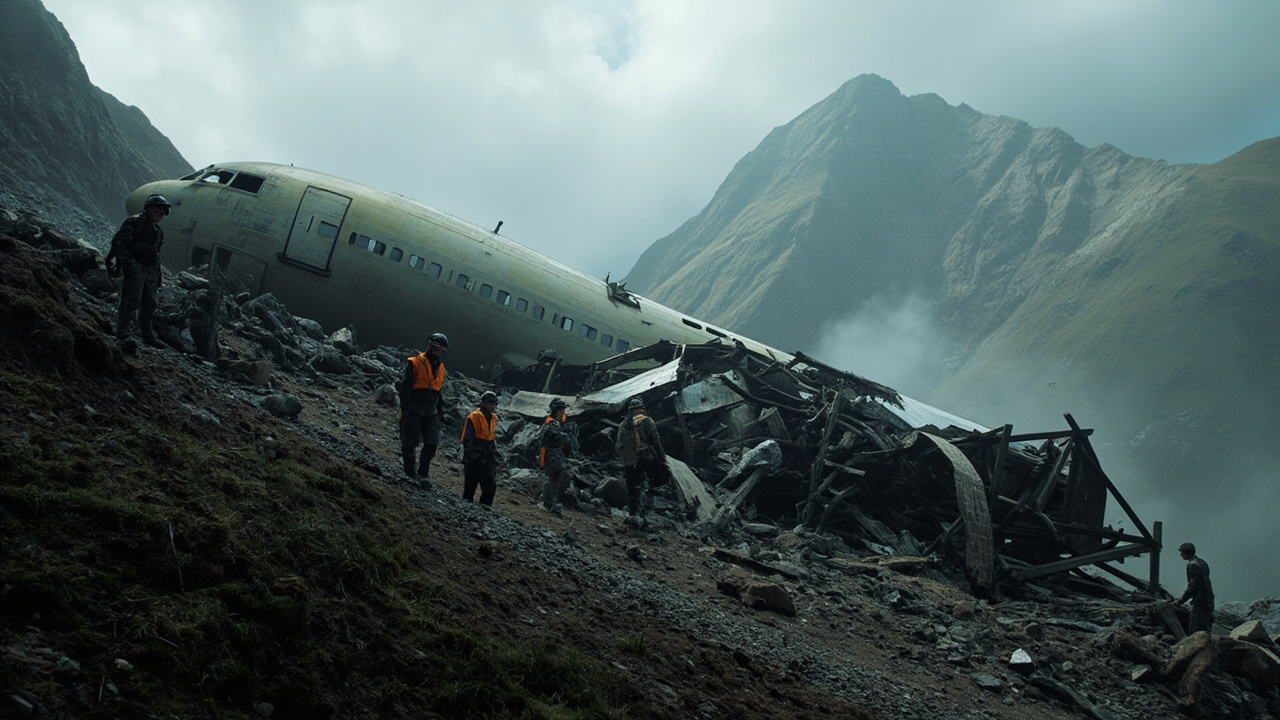
On May 3, 2026, a Bolivian Air Force Lockheed C-130 Hercules crashed in a mountainous region near El Alto, just outside the capital city of La Paz. The aircraft, which was carrying military personnel and a large shipment of cash, went down shortly after takeoff from El Alto International Airport, killing all 22 people on board.
The crash occurred in foggy conditions, with visibility severely limited. Witnesses reported hearing the aircraft’s engines struggle before impact. The plane struck a hillside and broke apart, scattering debris and its unusual cargo across a wide area.
Rescue teams faced significant challenges reaching the remote crash site due to the rugged terrain and poor weather. By the time they arrived, there were no survivors. Among the dead were 17 military personnel, including high-ranking officers, and 5 civilian contractors.
The $62 Million Question
What has transformed this tragedy from a routine aviation disaster into an international mystery is the discovery of approximately $62 million in cash scattered around the crash site. The money, contained in sealed packages, was apparently being transported as part of the aircraft’s cargo.
Bolivian authorities have been tight-lipped about the origin and intended destination of the funds. The Bolivian Air Force issued a brief statement acknowledging the crash and the presence of “monetary cargo” on board, but declined to specify who the money belonged to or why it was being moved by military aircraft.
Defense Minister Edmundo Novillo told reporters that an investigation was underway and that the government would “provide transparency once the facts are established.” However, opposition politicians have already begun demanding answers, with some suggesting the money may have been connected to illicit activities or political slush funds.
“Twenty-two people are dead, and we don’t even know why that plane was carrying enough cash to fund a small country’s annual budget,” said opposition senator Andrea Barrientos. “The military doesn’t transport civilian bank shipments. This stinks of corruption.”
Pilots Arrested
On May 5, Bolivian authorities arrested the pilot and co-pilot who had been scheduled to fly the aircraft but were replaced at the last minute due to what the Air Force described as “routine crew rotation.” The arrested pilots had originally been assigned to the flight but did not board the ill-fated plane.
The arrests raised eyebrows among aviation experts, who questioned why pilots who never boarded the aircraft would be held responsible for the crash. Prosecutors, however, indicated that the pilots were being investigated for potential involvement in flight planning irregularities and possible tampering with cargo documentation.
“We are looking at all angles, including whether proper protocols were followed in loading and securing the cargo,” said prosecutor Franklin Rojas. “The presence of such a large sum of money on a military transport raises serious procedural questions.”
Aviation safety analysts have pointed to the C-130’s age as a potential factor. The Bolivian Air Force operates several vintage Hercules aircraft, some dating back to the 1970s. Maintenance records for the crashed plane have not been released, but experts note that Bolivia’s military aviation fleet has faced chronic underfunding.
Regional Context
The crash comes at a sensitive time for Bolivia, which has been grappling with economic instability and political polarization since the 2019 ouster of longtime leader Evo Morales. President Luis Arce’s government has struggled to maintain stability amid rising inflation, fuel shortages, and social unrest.
The presence of $62 million in cash on a military aircraft has fueled speculation about potential connections to Bolivia’s coca industry or cross-border money laundering operations. Bolivia is one of the world’s largest producers of coca leaf, and while much of the production is legal for traditional use, significant quantities are diverted to cocaine production.
International observers, including the Organization of American States (OAS), have called for an independent investigation into the crash and the money’s origin. “The circumstances demand full transparency,” said OAS Secretary General Luis Almagro. “Twenty-two families deserve answers, and the Bolivian people deserve accountability.”
The United States, which provided the C-130 to Bolivia decades ago as part of military aid, has offered to send investigators to assist with the crash probe. The Bolivian government has not yet responded to the offer.
What Happens Next
The crash investigation is expected to take months, with Bolivia’s aviation authority leading the technical probe while prosecutors investigate the money’s origin. The recovered cash has been placed under guard at the Central Bank of Bolivia, with officials promising a full audit.
For the families of the 22 victims, however, answers cannot come soon enough. “My brother was a good man, a career soldier,” said Maria Elena Flores, whose sibling was among the dead. “He told me the flight was routine. Now he’s gone, and nobody will tell us what really happened.”
As Bolivia waits for answers, the crash has become a symbol of the opacity and institutional weakness that have plagued the country’s military and political establishment. Whether the investigation produces genuine accountability or simply more unanswered questions may determine whether this tragedy becomes a catalyst for reform or yet another footnote in Bolivia’s long history of unexplained disasters.