
Kenya Floods Kill at Least Ten as Heavy Rains Devastate Communities and Displace Thousands
East African nation faces mounting humanitarian emergency as seasonal rains trigger landslides and flash flooding across multiple regions, exposing critical infrastructure gaps and climate vulnerability.
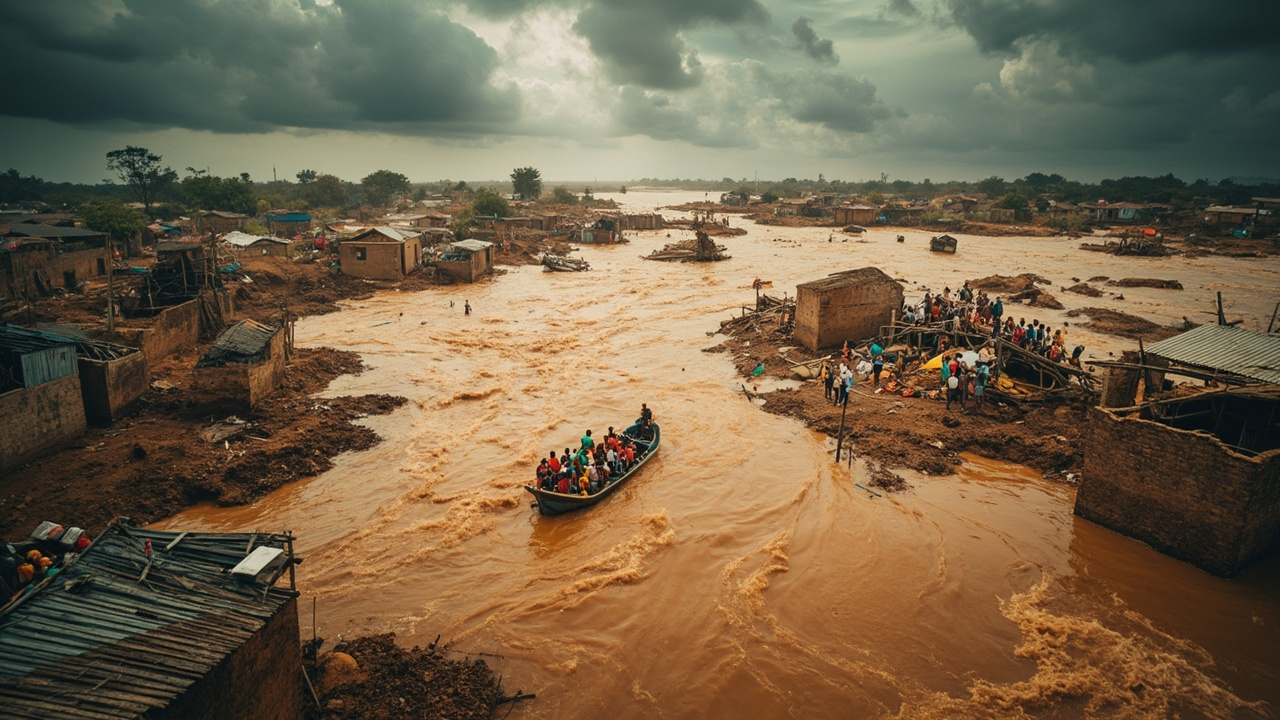
NAIROBI — At least ten people have been killed and thousands displaced across Kenya after torrential rains triggered devastating floods and landslides in several regions of the East African country, according to reports from May 2, 2026. The disaster has overwhelmed local emergency services and exposed the nation’s persistent vulnerability to extreme weather events exacerbated by climate change.
The flooding, which struck multiple counties including Nairobi, Kiambu, Murang’a, and parts of the Rift Valley, has destroyed homes, washed away roads, and submerged critical infrastructure. Kenyan authorities have confirmed that rescue operations are ongoing in the hardest-hit areas, where swollen rivers burst their banks and triggered deadly mudslides that buried entire settlements.
Emergency Response Under Strain
Kenya’s National Disaster Management Unit has activated emergency protocols and deployed rescue teams to the affected regions, but officials acknowledge that resources are stretched thin. The Kenya Red Cross Society has established temporary shelters for displaced families and is distributing food, clean water, and medical supplies to communities cut off by floodwaters.
“We are facing an unprecedented situation in several counties simultaneously,” said a spokesperson for the Kenya Meteorological Department. “The rainfall intensity has exceeded our forecasts, and the ground saturation levels mean that even moderate rains now trigger flash floods.”
The Kenya Defence Forces have been mobilized to assist in rescue and evacuation efforts, particularly in remote areas where civilian emergency vehicles cannot access submerged roads. Helicopter rescues have been conducted in the most isolated communities, though poor weather conditions have hampered aerial operations.
Infrastructure Collapse Exposes Systemic Weaknesses
The floods have laid bare Kenya’s infrastructure vulnerabilities, with major roads including sections of the Nairobi-Nakuru highway rendered impassable. Bridges in Murang’a and Kiambu counties have been washed away, severing transport links and forcing residents to rely on makeshift rope crossings to access essential services.
In Nairobi’s informal settlements, including Kibera and Mathare, flooding has been particularly severe. Poor drainage systems and unplanned construction on riparian land have amplified the destruction, with sewage-contaminated floodwaters posing serious health risks to residents.
“Every year we face the same crisis, yet the drainage infrastructure remains inadequate,” said Mary Wanjiku, a resident of Kibera whose home was partially submerged. “We need permanent solutions, not just emergency relief when disaster strikes.”
Climate Change Amplifying East African Weather Extremes
Climate scientists have long warned that East Africa faces increasingly erratic rainfall patterns due to global warming. The current disaster follows a pattern of intensifying seasonal rains that have grown more destructive in recent years, with Kenya experiencing severe flooding episodes in 2024 and 2025 that claimed dozens of lives.
The Intergovernmental Authority on Development (IGAD) Climate Prediction and Applications Centre has documented a trend toward more extreme weather events across the Horn of Africa region, where prolonged droughts are increasingly punctuated by intense rainfall episodes that the region’s infrastructure is ill-equipped to manage.
“What we’re seeing is the new normal for East Africa,” said Dr. James Mwangi, a climate researcher at the University of Nairobi. “The long rains are becoming shorter but more intense, and our urban planning has not adapted to this reality.”
Humanitarian Impact and International Response
The United Nations Office for the Coordination of Humanitarian Affairs (OCHA) has indicated that preliminary assessments suggest at least 50,000 people have been affected by the flooding, with that number expected to rise as damage reports arrive from remote areas. The UN has pledged emergency funding and is coordinating with international partners to scale up relief operations.
The World Food Programme has pre-positioned food stocks in Nairobi and is preparing to distribute emergency rations to displaced families. Health agencies have warned of potential disease outbreaks, including cholera and typhoid, as contaminated water sources create breeding grounds for waterborne illnesses.
Neighbouring countries including Uganda and Tanzania have offered assistance, though their own emergency services are preparing for similar rainfall patterns forecast across the wider East African region in coming weeks.
Political Accountability and Long-Term Solutions
The disaster has reignited political debate over Kenya’s disaster preparedness and climate adaptation policies. Opposition leaders have criticised the government’s response as reactive rather than preventive, pointing to repeated failures to implement flood mitigation measures recommended after previous disasters.
President William Ruto’s administration has announced an emergency cabinet meeting to review the national disaster response and has pledged increased funding for flood mitigation infrastructure. However, critics note that similar promises were made after previous flooding episodes with limited follow-through.
Environmental advocates are calling for accelerated implementation of the Nairobi River Regeneration Programme and stricter enforcement of building codes in flood-prone areas. They argue that Kenya’s development trajectory must prioritise climate resilience or face recurring humanitarian catastrophes.
About the author: Rachel Torres is a staff writer covering international affairs and humanitarian crises.