Beirut Under Fire Again
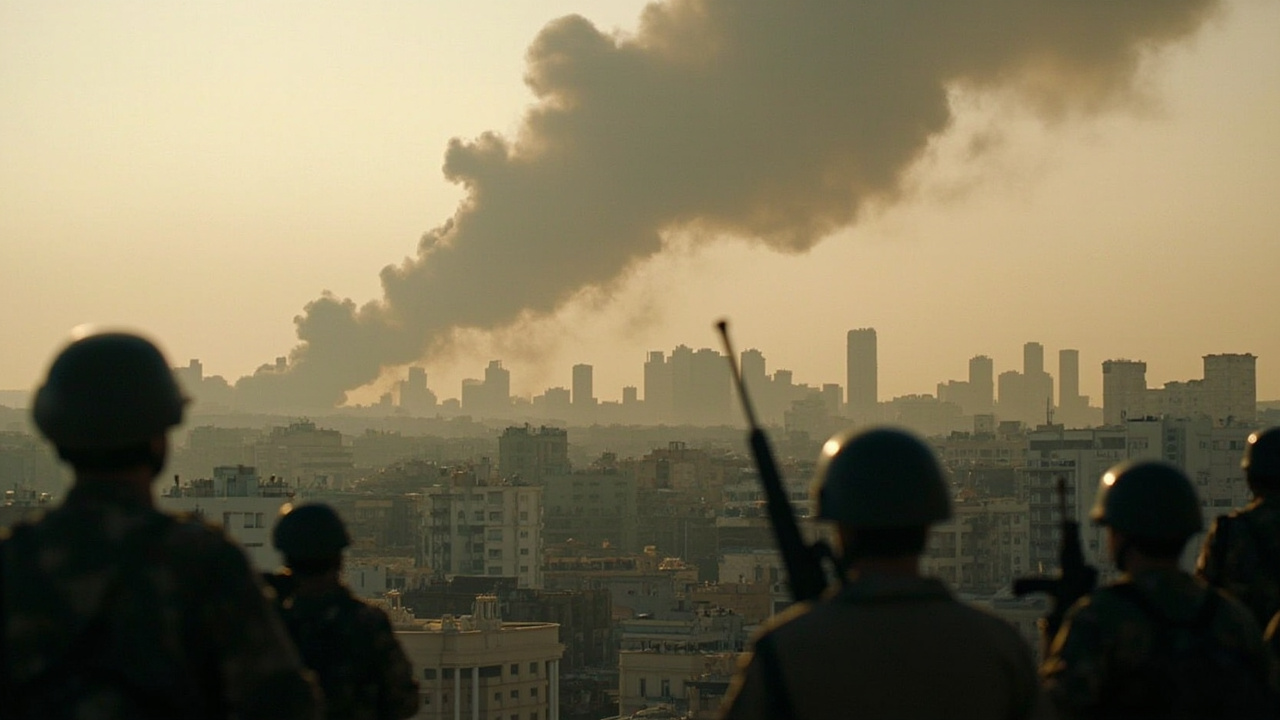
An Israeli airstrike shattered the fragile calm of Beirut on Wednesday, marking the first attack on the Lebanese capital since the April 16 ceasefire and threatening to plunge the region back into full-scale conflict.
The strike targeted a building in Beirut, allegedly killing a top commander of Hezbollah’s elite Radwan Forces. The attack represents a dramatic escalation that has drawn immediate condemnation from international observers and raised fears that the ceasefire agreement — barely three weeks old — may be collapsing entirely.
The Strike That Broke the Ceasefire
Israeli warplanes struck a residential building in a southern suburb of Beirut long associated with Hezbollah operatives. According to Lebanese security sources, the target was a senior commander within Hezbollah’s elite Radwan Forces — the unit responsible for the group’s special operations and cross-border capabilities.
The precision of the strike suggested detailed intelligence planning, with Israel apparently tracking the commander’s movements in the weeks since the ceasefire took hold. The building was reduced to rubble, and rescue workers combed through the debris for hours afterward.
This is the first Israeli airstrike on Beirut since April 16, when the ceasefire was supposed to end months of devastating attacks on the Lebanese capital and its surrounding areas.
The timing is significant. The ceasefire had held for just 21 days — a period during which both Hezbollah and Israel had largely observed the terms of the agreement, even as tensions simmered beneath the surface. This strike effectively shatters that fragile equilibrium.
Southern Lebanon Under Simultaneous Attack
The Beirut strike did not occur in isolation. Across southern Lebanon, Israeli drone strikes and airstrikes killed at least five people and injured three paramedics on the same day, according to medical sources. The attacks targeted areas near the border that have been flashpoints throughout the conflict.
Lebanese health officials described a coordinated assault pattern, with strikes hitting multiple locations within a short timeframe. The attacks on medical personnel are particularly controversial — international humanitarian law explicitly protects medics and medical facilities during armed conflict.
For residents of southern Lebanon, the attacks represent a cruel déjà vu. Many had only just begun returning to their homes after being displaced during the earlier phase of the conflict. The renewed violence has forced fresh evacuations and strained already overwhelmed humanitarian resources.
The Ceasefire’s Unraveling
The April 16 ceasefire was always fragile — negotiated under intense international pressure but never accompanied by the kind of enforcement mechanism that could guarantee compliance. Both sides reserved the right to respond to provocations, creating a loophole wide enough to drive a tank through.
Israel has consistently maintained that it will act against imminent threats regardless of ceasefire terms. The targeting of a Radwan Forces commander suggests Israel viewed this individual as an active threat — perhaps involved in planning operations against Israeli targets even during the ceasefire period.
Hezbollah, for its part, has faced internal pressure to respond. The group’s leadership has struggled to balance the desire for de-escalation with the demands of its base, who view any Israeli attack as requiring retaliation. The Beirut strike may have eliminated whatever internal support existed for restraint.
Regional Ripple Effects
The Beirut strike comes at a moment of extraordinary regional volatility. The Iran war ceasefire is still holding — barely — and the Strait of Hormuz crisis continues to threaten global energy supplies. France has deployed the aircraft carrier Charles de Gaulle to the Red Sea as part of a proposed British-French mission to secure maritime traffic.
A reignited Lebanon front would complicate an already impossible diplomatic landscape. Iran, Hezbollah’s primary patron, is simultaneously negotiating with the United States to formalize the ceasefire in the broader conflict. A Hezbollah escalation could undermine those negotiations and drag Tehran back into direct confrontation with Washington.
Lebanon’s government — already weakened by years of economic collapse and political paralysis — has little capacity to respond meaningfully. Prime Minister Nawaf Salam’s administration has condemned the strikes but lacks both the military capability and the political unity to alter the dynamics on the ground.
International Response
The international community has reacted with alarm. The United Nations Interim Force in Lebanon (UNIFIL) has called for an immediate de-escalation and urged both parties to respect the ceasefire terms. European diplomats have scrambled to arrange emergency consultations.
The United States — already stretched thin trying to manage the Iran ceasefire and the Strait of Hormuz crisis — faces the prospect of yet another Middle Eastern front requiring its attention. The administration had invested significant diplomatic capital in brokering the April ceasefire and now watches that investment potentially evaporate.
Arab League nations have condemned the strikes, with several calling for an emergency session to address what they describe as a systematic violation of Lebanese sovereignty. Egypt and Qatar, which played key mediation roles in the original ceasefire, have offered to facilitate renewed talks.
What Comes Next
The critical question is whether Hezbollah chooses to retaliate. A measured response — perhaps a limited rocket attack on military targets near the border — could allow both sides to claim they have acted while avoiding full-scale escalation. An ambitious response — a significant missile barrage targeting Israeli cities — would almost certainly trigger a devastating Israeli counteroffensive and the effective end of the ceasefire.
For the people of Lebanon, the calculation is grim. Another full-scale conflict would compound an already catastrophic humanitarian situation. Over a million people remain displaced from the earlier fighting. Infrastructure damage runs into billions of dollars. The economy has virtually collapsed.
The Beirut strike has demonstrated, once again, that ceasefires in the Middle East are only as durable as the political will that sustains them. With the Radwan Forces commander killed and Hezbollah’s honor challenged, that political will is being tested to its breaking point.
By Rachel Torres | Media Hook News