The trade war that began as a negotiating tactic has become something far more structural. In 2026, tariffs are no longer a policy instrument used sparingly — they have become the architecture of a new global economic order, reshaping supply chains, realigning alliances, and forcing companies to make choices they never anticipated having to make.
The escalation that defined the first quarter of 2026 was not a surprise to those who had been watching the underlying dynamics. For three years, the United States had used tariff threats as leverage in bilateral negotiations, with mixed results. But by early 2026, a critical mass of retaliatory measures had accumulated, triggering a cascade effect that transformed the trade landscape from a set of bilateral disputes into something approaching a systemic rupture.
The Escalation Timeline
The catalyst was a combination of factors that converged in the first quarter of 2026. A new round of tech tariffs targeted semiconductor equipment and AI-related exports, drawing sharp responses from the Netherlands, Japan, and South Korea — countries that supply critical components to the global chip ecosystem. Meanwhile, the European Union moved to impose counter-tariffs on US agricultural exports, targeting politically sensitive states ahead of midterm elections.
What made the 2026 escalation different from previous rounds was its breadth. Tariffs were no longer concentrated in manufacturing. Services — long considered immune to trade conflict — came under pressure, with financial services, cloud computing, and software platforms becoming the subject of retaliatory restrictions in multiple jurisdictions simultaneously.
We are witnessing the end of the era of hyperglobalization. What comes next is not deglobalization — it is regionalization, with deeper intra-bloc integration and higher barriers between blocs. Companies need to plan for this as a structural shift, not a temporary disruption.
— Gita Menon, Chief Economist, Asian Development Bank, April 2026
The semiconductor sector has been at the epicenter of the conflict. US restrictions on advanced chip equipment exports to China have been progressively tightened since 2022, and by 2026, they had expanded to include not just manufacturing equipment but also design software, advanced memory, and AI accelerators. The cumulative effect has been to effectively partition the global semiconductor industry into two largely separate ecosystems, each with its own supply chain, its own standards, and its own set of strategic dependencies.
Supply Chain Restructuring: The Visible Cost
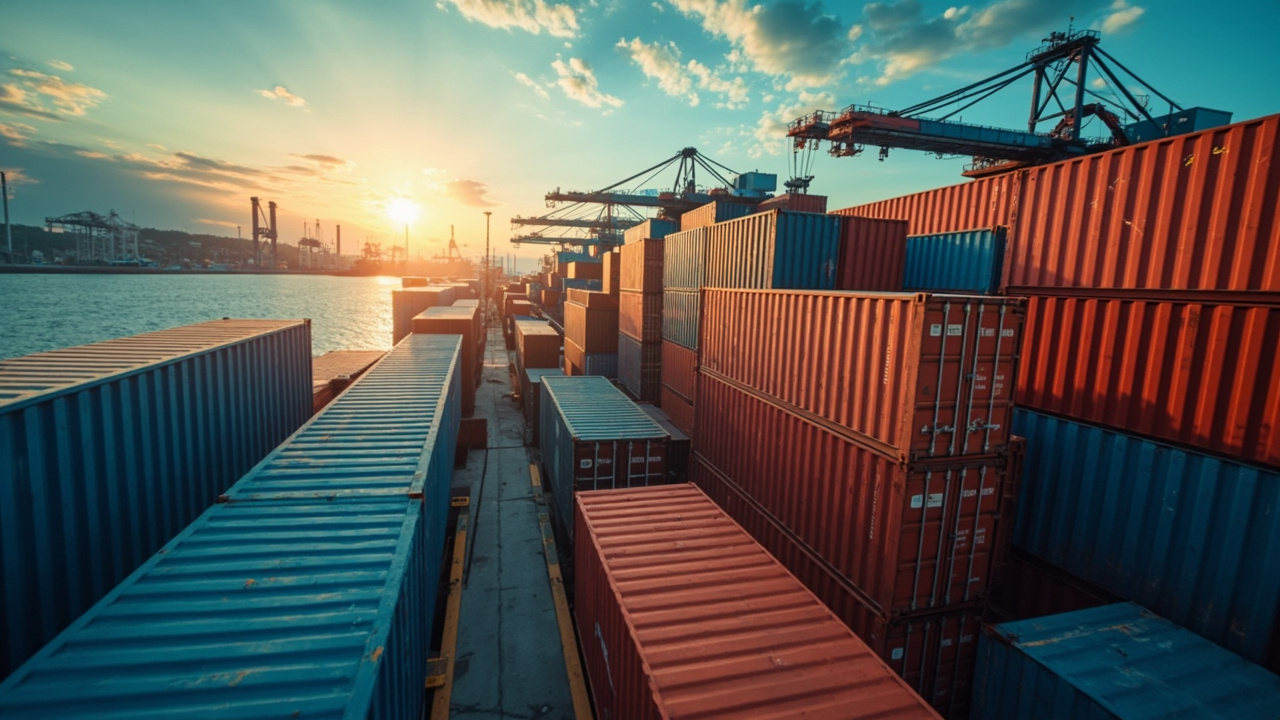
For multinational corporations, the restructuring of supply chains in response to tariff pressures has moved from theoretical planning to operational reality. The China-plus-one strategy — maintaining China operations while developing a secondary manufacturing base in Vietnam, India, or Mexico — has become a minimum requirement rather than an optional diversification. Companies that delayed the pivot are now facing a three-to-five-year lag in capacity building at their alternative sites while absorbing the tariff costs on existing China-heavy operations.
The automotive sector provides a stark illustration. Prior to 2026, most major automakers had concentrated their EV battery supply chains in China, dependent on Chinese-processed lithium and cobalt and Chinese-assembled battery cells. The tariff structure introduced in 2025 and expanded in 2026 has made this configuration economically untenable for the US market. The result is a frantic scramble to qualify new suppliers, shift processing to non-China jurisdictions, and renegotiate supply agreements that were signed when the tariff environment was radically different.
The costs are substantial and visible. EV prices have increased by 12 to 18 percent for vehicles dependent on tariffed components, suppressing demand at precisely the moment that many governments are trying to accelerate the transition to electric mobility. The contradiction — climate policy objectives being undermined by trade policy instruments — has become a central tension in the politics of the green transition.
Winners, Losers, and the Middle
The tariff war has not produced uniform losers. Certain sectors and regions have benefited from the redirection of trade flows and the reshoring of manufacturing. US industrial employment in the machinery and equipment sector has seen its first sustained growth in over a decade, though economists debate how much of this represents new jobs versus relocated ones. Mexico has emerged as the primary beneficiary of supply chain relocation, with its manufacturing sector absorbing record levels of foreign direct investment in 2025 and early 2026.
For emerging markets, the picture is more complex. Countries that have positioned themselves as alternative manufacturing bases — Vietnam, India, Indonesia — are seeing investment inflows and infrastructure development that would have taken decades under normal circumstances. But they are also facing the challenge of building the institutional capacity, workforce skills, and logistics infrastructure that Chinese manufacturing took forty years to develop. The transition is happening faster than most anticipated, but not fast enough to prevent significant disruption in global goods availability.
The consumers who are paying the price are, predictably, those least able to absorb it. Studies by the Peterson Institute and the IMF have estimated that the cumulative effect of tariff escalation through 2026 has cost the average American household between $1,200 and $1,800 per year in higher prices, with disproportionate impacts on lower-income households that spend a higher share of income on tariffed goods. The political economy of this is increasingly fraught.
The Multilateral System Under Pressure
Perhaps the most consequential long-term impact of the tariff escalation is the damage it has done to the multilateral trading system. The WTO, already weakened by the blockage of its appellate body and the proliferation of bilateral arrangements that circumvent its dispute resolution mechanisms, has found itself increasingly irrelevant as a venue for resolving the current conflicts. Both the United States and its trading partners have shown willingness to impose tariffs outside of WTO-consistent frameworks, and the institution has lacked both the authority and the enforcement tools to respond effectively.
This matters not because the WTO was ever a perfect institution, but because the rules-based trading system it embodied provided a predictable framework within which global commerce could function. The erosion of that predictability has a cost that is difficult to measure but widely recognized: companies factor uncertainty into their investment decisions, and uncertainty has risen markedly as the tariff war has escalated.
What Comes Next
The direction of travel depends significantly on the political calendar. US midterms in 2026 will reshape the legislative landscape for trade policy, and candidates in both parties are finding that tariff hawkishness plays well in manufacturing-heavy districts — even as economists warn about the inflationary and growth costs. The incentive structure for politicians to escalate is, if anything, stronger than it was when the trade conflict began.
The private sector, meanwhile, is doing what it always does: adapting to the environment it actually has, not the one it wishes it had. Supply chains are being rebuilt, pricing models are being revised, and strategic planning is being rewritten around a world of higher and more variable tariff rates. The firms that are handling the transition best are those that treated tariff risk as a permanent feature of the landscape rather than a temporary aberration — a distinction that is likely to define competitive outcomes for the next decade.
James Wright is the Economy Correspondent for Media Hook, covering markets, monetary policy, and the forces shaping the American economy.