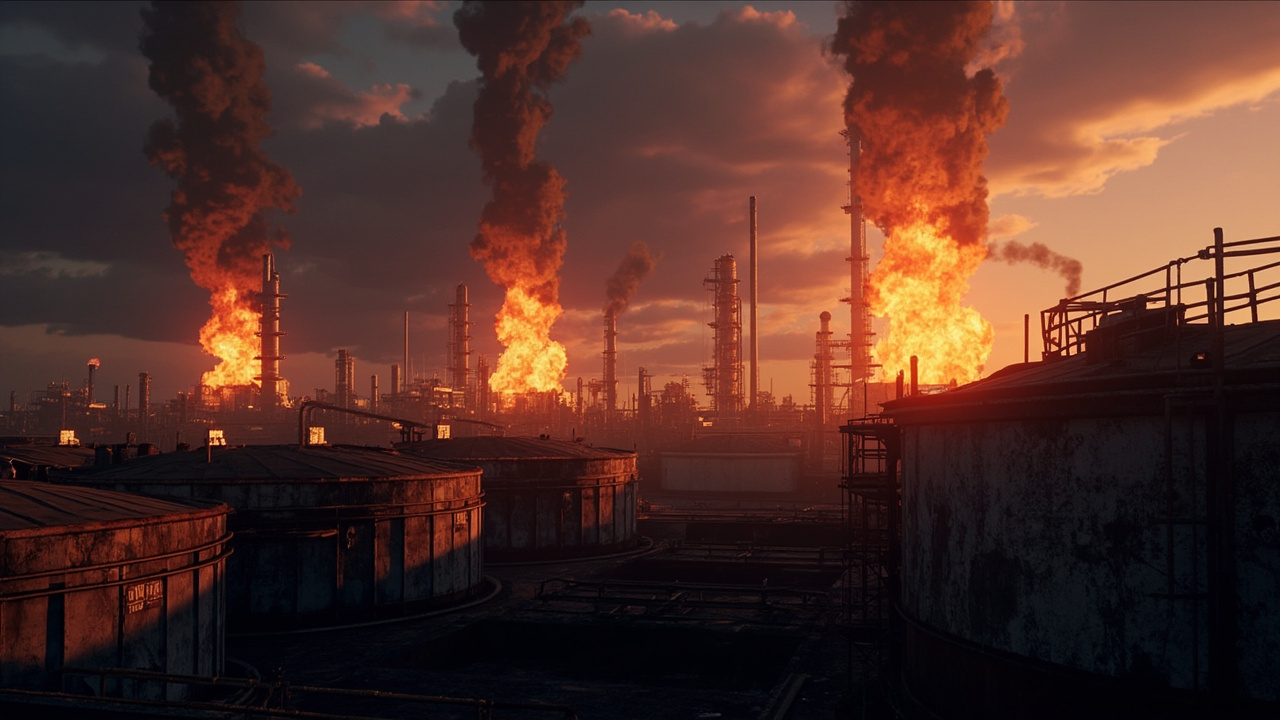
CARACAS — Venezuela’s national oil company PDVSA declared force majeure on exports Friday, citing U.S. sanctions reimposed this week that have frozen its access to international banking channels, preventing tankers from offloading in India and China. The move could remove up to 700,000 barrels per day from global markets within weeks, adding fresh pressure on oil prices already elevated by geopolitical uncertainty in the Middle East and Russia-Ukraine ceasefire negotiations.
The State Department reimposed the full sanctions package after Venezuela’s electoral council disqualified Maria Corina Machado from the presidential race for the third time, a decision that triggered immediate condemnation from Washington, Brussels, and the Lima Group of regional governments. President Maduro called the decision an act of economic war and threatened to redirect all exports to Russia and Iran. The Russian embassy in Caracas confirmed it was in active talks to purchase Venezuelan crude at steep discounts, though logistics for transporting the oil remain unresolved.
Gasoline shortages have already begun in Caracas and Maracaibo where state subsidies have historically kept pump prices near zero. Queues of dozens of vehicles formed outside state-owned service stations Friday morning, and the government banned private fuel sales pending a review of supply arrangements. The IMF warned that Venezuela’s GDP, which had shown tentative signs of recovery following the partial sanctions rollback in 2024, could contract by as much as 12% if the force majeure persists through the third quarter.
Food inflation, which the Central Bank recorded at 180% in April, is widely expected to accelerate as the PDVSA disruption reduces foreign-exchange earnings the government uses to subsidize food imports. The minimum monthly wage of roughly $3.50 at the official exchange rate has already been insufficient to cover basic food costs for a family of four, according to the Venezuelan Observatory of Social Finance.
India’s Reliance Industries, one of PDVSA’s largest customers before the 2019 sanctions, declined to comment. China’s PetroChina, which has maintained a smaller Venezuelan import portfolio, said it was reviewing its contractual obligations. Both companies face the same U.S. secondary sanctions risk that forced them to dramatically reduce purchases during the peak sanctions years.
Written by Diego Vargas, Latin America Correspondent