Draghi Warns Europe Faces ‘Truly Alone Together’ Moment as U.S. Security Guarantee Erodes
What We Know
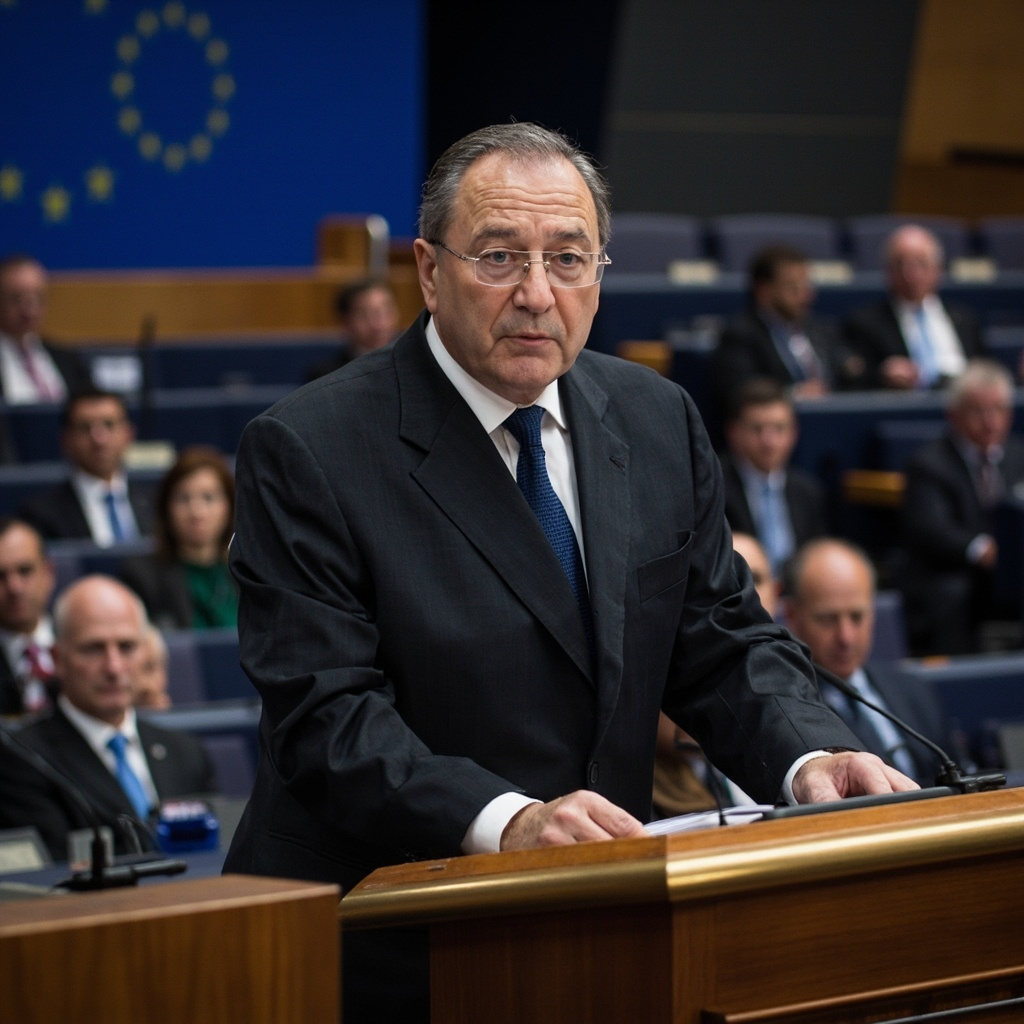
Former European Central Bank President Mario Draghi delivered a sobering assessment Thursday that for the first time in living memory, Europe must confront a geopolitical landscape in which the United States can no longer be counted on as a reliable security guarantor. Delivering the keynote address upon accepting the International Charlemagne Prize in Aachen, Germany, Draghi declared that Europe stands “truly alone together” — a phrase capturing both the unity required and the gravity of the moment.
The address drew a distinguished audience including German Chancellor Friedrich Merz, Draghi’s successor at the ECB Christine Lagarde, and Greek Prime Minister Kyriakos Mitsotakis. All witnessed a stark warning that Europe must rapidly recalibrate its strategic posture or risk irrelevance in an increasingly hostile global order.
“Every strategic dependence must now be re-examined,” Draghi told the assembly, adding that if openness remains Europe’s only response to external pressure, it amounts to “the absence of a decision.” The former Italian prime minister has been a leading voice for continental economic reform since publishing his landmark blueprint in 2024 to reverse Europe’s productivity decline — a plan whose estimated annual cost has since climbed to €1.2 trillion.
The Context
The remarks land against a backdrop of mounting uncertainty over American reliability. President Donald Trump’s return to the White House has accelerated a shift in Washington’s posture toward Europe — one Draghi described as “more adversarial and unpredictable.” Trade confrontations and military withdrawal decisions have unsettled allies across the continent, prompting a broad reassessment of European defense autonomy.
Draghi singled out two domains as critical where Europe must scale investment without delay: artificial intelligence and defense capability. He argued that the AI race will determine the continent’s competitive standing for decades, while European defense industrial capacity remains insufficient to meet the threat environment now taking shape. Beyond technology, he stressed that energy infrastructure is fundamental to both economic competitiveness and national security — a vulnerability exposed all too clearly in recent years.
The former central banker also offered a pointed critique of the EU’s own decision-making machinery, lamenting that Brussels often “dilutes and delays” action until results fall short of what the moment demands. “Weak delivery erodes legitimacy, and weak legitimacy makes delivery harder still,” he said. “We must break that cycle.” The comment reflects growing frustration within European policy circles that institutional inertia is costing the bloc precious time as the international environment deteriorates.
Why It Matters
The Charlemagne Prize, awarded annually in Aachen, recognizes individuals who have made outstanding contributions to European unity. Draghi’s selection this year signals recognition that the challenges he has articulated — economic stagnation, geopolitical vulnerability, strategic dependence on unreliable partners — represent the defining test for the continent in this era.
Chancellor Merz, who attended the ceremony, faces immediate pressure to advance Germany’s own defense spending commitments in the weeks ahead. The new German government has signaled plans to meet NATO’s two-percent-of-GDP defense spending target, a threshold many European members still fail to reach. Draghi’s address is likely to intensify that pressure across the bloc.
European officials acknowledge that the path forward requires not just higher spending but deeper political integration — a difficult sell in member states where public support for expanded EU powers remains contested. Yet Draghi’s message Thursday was unambiguous: the era of depending on American leadership is over. Europe must now provide its own.
