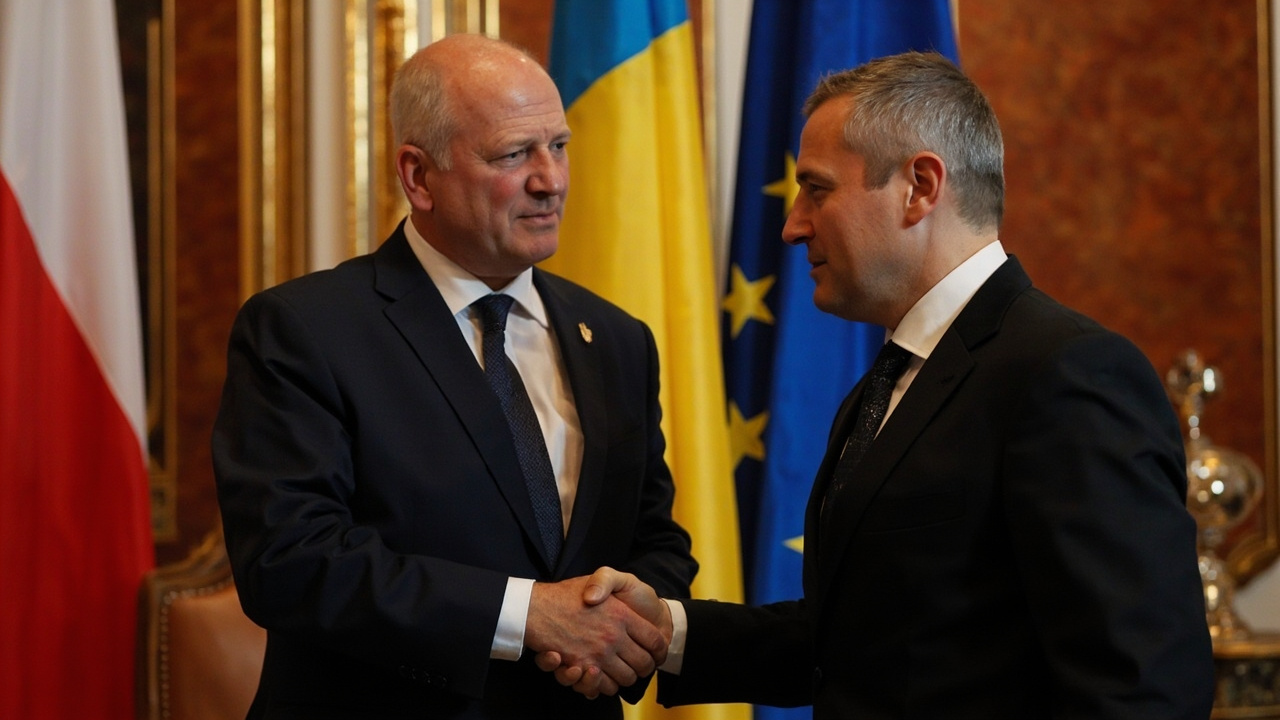
Poland Revokes Zelenskyy’s Top Honor, Strain on Alliance Deepens
Warsaw stripped Ukrainian President Volodymyr Zelenskyy of the Order of the White Eagle on Friday, June 20, 2026, as a bitter diplomatic row over World War II history erupted at the highest levels of Polish-Ukrainian relations. Within hours, Zelenskyy returned the award, transforming a gesture of wartime solidarity into an open fracture between two nations united against Russia.
The honor — Poland’s highest national accolade — had been granted to Zelenskyy in 2023 as recognition of his wartime leadership. Its revocation, ordered by Polish President Karol Nawrocki, came days before Zelenskyy was expected to visit Warsaw, according to reports from POLITICO and CNN. The sequence of events caught Western diplomats by surprise, unfolding across a 36-hour window that began with a social media announcement from Nawrocki’s office and ended with an official ceremony in Warsaw returning the medal to Polish custodians.
Roots of the Conflict
The dispute centers on Zelenskyy’s decision to name a military unit after the Ukrainian Insurgent Army (UPA), a WWII-era force that fought against both Nazi Germany and Soviet occupation. For Poland, any reference to the UPA carries the weight of a massacre: UPA partisans murdered tens of thousands of ethnic Poles in the Volhynia and Eastern Galicia regions during an ethnic cleansing campaign in 1943-1945. The killings, part of a broader effort to establish a Ukrainian ethnic state, involved brutal attacks on villages, churches, and fleeing civilians. Historians estimate between 70,000 and 100,000 Poles were killed. The wounds from that chapter of history run deep in Polish society and politics, and successive Polish governments have demanded that Kyiv formally acknowledge the massacre as genocide.
Nawrocki, a historian who has specialized in research on Nazi and Soviet crimes against Poles, framed the revocation as a moral imperative. “Poles must not betray the sacrifices of our ancestors with silence,” his office said in a statement late Friday. The president stressed the move did not represent a strategic shift in Poland’s support for Ukraine in its war against Russia, but the political damage was immediate and visible.
Kyiv Responds
Ukrainian Foreign Minister Andriy Sybiha condemned Nawrocki’s decision sharply. “This is a strategic mistake from which only Moscow benefits,” Sybiha said in a post on social media, echoing a warning that analysts across Europe quickly amplified. The Kremlin has long sought to drive wedges between Kyiv and its Western partners, and the diplomatic spat provided an immediate opening for Russian state media to amplify historical grievances and portray the alliance as fragile and transactional.
Zelenskyy confirmed Saturday that he had returned the award to Poland, a move interpreted in Warsaw as dignified but pointed. The Ukrainian leader has yet to comment publicly beyond the return of the honor, though officials in Kyiv have signaled they view the episode as a deliberate provocation by Nawrocki’s nationalist camp, timed to consolidate domestic support ahead of local elections expected later this year.
Alliance at a Crossroads
Poland has been among the most consistent and generous supporters of Ukraine since Russia’s full-scale invasion in 2022, providing weapons, training, and shelter for more than a million refugees. That relationship has been a cornerstone of NATO’s eastern flank strategy, and Warsaw has repeatedly pushed for faster arms deliveries and tougher sanctions on Moscow. Yet Poland’s nationalist government has increasingly sought to mobilize domestic political support around historical grievances and migration policy, testing the limits of the wartime alliance.
European diplomats expressed concern that the dispute could complicate ongoing military and financial support packages. Several EU officials, speaking on condition of anonymity, told reporters the bloc was watching closely to see whether the spat remained a bilateral flare-up or escalated into a broader fracture in Western unity ahead of a key NATO summit scheduled for July.
What Comes Next
Zelenskyy’s planned visit to Warsaw remains on the calendar, though officials on both sides acknowledged it would now be overshadowed by the controversy. Negotiations to defuse the crisis are expected to dominate diplomatic contacts in the coming week, with the Ukrainian ambassador in Warsaw and the Polish foreign minister both indicating a willingness to talk. For now, two leaders who stood together against a common enemy are navigating their most public rupture since the war began.