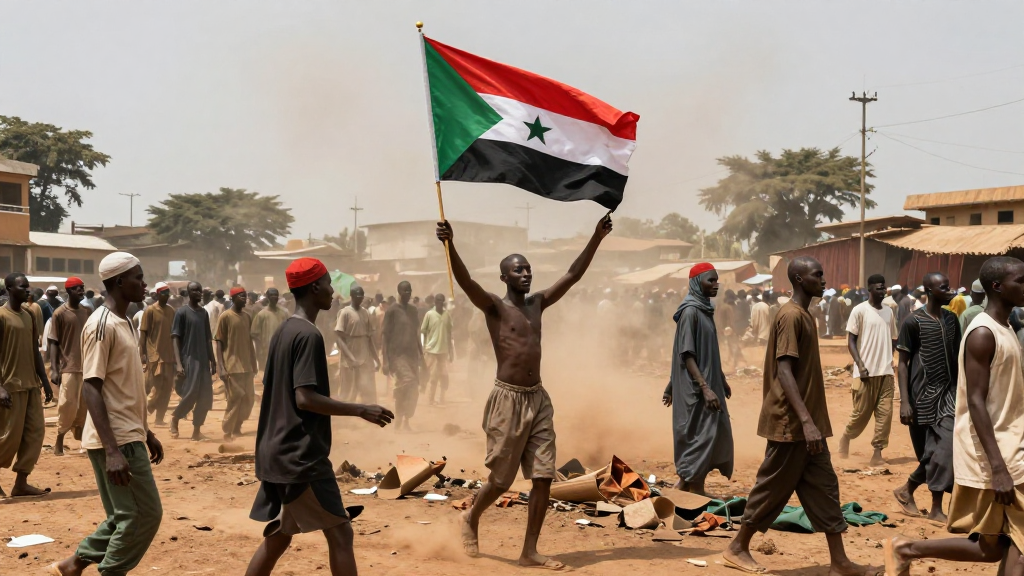
Islamist rebels have intensified their siege on Bamako, Mali’s capital, cutting fuel supplies and disrupting transportation and electricity access across the city, according to a detailed Human Rights Watch report released this week. The escalation marks a dangerous new phase in Mali’s grinding conflict, which has displaced more than 737,000 people and left 1.5 million others facing acute food insecurity.
The al-Qaeda-linked coalition known as JNIM, led by veteran insurgent Iyad Ag Ghaly, has systematically targeted economic infrastructure to erode government authority. Since September, the group has laid siege to Bamako and blocked fuel convoys, forcing the military junta to temporarily shut down all schools and universities across the country. The coordinated campaign represents the closest the insurgency has come to the capital since the conflict began.
Mali Rebels Expand Siege on Capital
The tactics have mirrored patterns seen across the Sahel. JNIM fighters have sabotaged construction equipment along key roads, targeted local officials accused of cooperating with the army, and executed civilians in villages they consider sympathetic to the government. On February 7, unidentified Islamist fighters ambushed a civilian convoy escorted by Malian soldiers in northeastern Mali, killing at least 34 civilians when the attackers opened fire at Kobe village. The assault occurred in an area where the Islamic State Sahel group has operated for more than three years.
The insurgents have also moved against individuals deemed collaborators. On November 7, presumed JNIM fighters executed Mariam Cissé, a social media influencer in Tonka, Timbuktu region, accusing her of supporting the Malian army. The case drew widespread attention on social media across West Africa.
The Human Rights Watch assessment describes a conflict where all sides bear responsibility for serious violations. Beyond rebel atrocities, the report documents how Malian government forces and allied foreign fighters have carried out unlawful killings and destroyed civilian property during counterinsurgency sweeps. Many victims have been from the Fulani ethnic community, which has faced disproportionate targeting by both sides.
Russia-Linked Forces Implicated in Civilian Killings
The military junta, which seized power in a 2021 coup and elevated General Assimi Goïta as president until 2030 without elections, has relied heavily on Russian-linked security contractors. The Wagner Group, which had operated openly in Mali for years, announced in June that it was withdrawing after what it described as the completion of its mission. Fighters were replaced by Africa Corps, a paramilitary force placed under direct control of the Russian government following the death of Wagner founder Yevgeny Prigozhin in 2023.
Human Rights Watch documented how Malian forces and fighters associated with Wagner and Africa Corps were implicated in unlawful killings of civilians and destruction of property during counterinsurgency operations. The abuses occurred primarily in areas where Fulani communities were present, reflecting a broader pattern of ethnic targeting that observers say risks deepening communal fractures across the Sahel.
The junta has simultaneously cracked down on political dissent at home. Between April and July, all political parties were banned, civic space was further restricted, and General Goïta formalized his hold on power through constitutional changes that extend his rule beyond any credible transition timeline. The move drew condemnation from regional bodies, including the African Union, which warned it would further destabilize an already fragile security environment.
In January, Mali, Burkina Faso, and Niger formally left the Economic Community of West African States, severing citizens’ access to the ECOWAS Community Court of Justice for redress of human rights violations. The three countries later announced their planned withdrawal from the International Criminal Court treaty, a move human rights groups say will shield actors on all sides of the conflict from accountability.
US Slaps Sanctions on Sudan War Networks as Humanitarian Crisis Deepens
While Mali’s crisis has drawn growing international concern, the United States escalated its own response to Sudan’s parallel catastrophe. The Treasury Department’s Office of Foreign Assets Control announced a new round of sanctions targeting networks accused of recruiting fighters, procuring weapons, and funnelling resources to both the Sudanese Armed Forces and the Rapid Support Forces. The measures target eight individuals and entities, and include broader financial and trade restrictions under chemical weapons-related legislation.
The announcement warned that continued external support to both warring factions is deepening what the US describes as the world’s worst humanitarian crisis. More than three years of conflict between the SAF and RSF have produced widespread displacement, mass atrocities, and conditions that the UN has repeatedly characterised as approaching famine. Washington reiterated its call for an immediate humanitarian truce and accused both sides of obstructing aid access to civilians caught between the fighting lines.