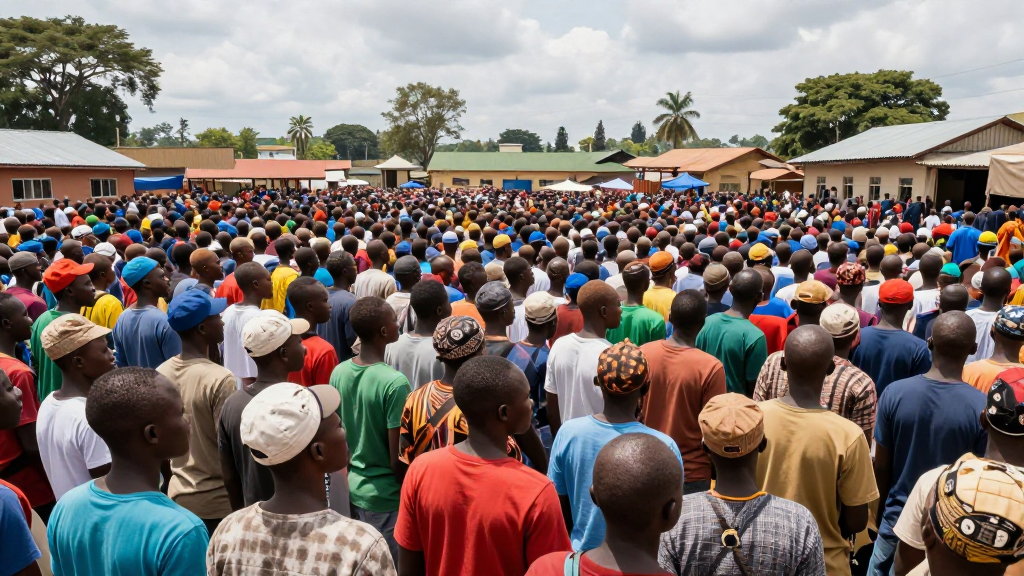
Tens of thousands of Malawian migrants stranded in South Africa are awaiting repatriation as an unofficial June 30 deadline set by anti-immigrant groups approaches, amid rising xenophobic violence that has already claimed several lives and displaced thousands across Africa’s most industrialised economy.
Over 15,000 Malawians Processed for Repatriation
More than 15,000 Malawian nationals have so far been processed for deportation and repatriation, with authorities stating most lacked valid immigration documents. Thousands more remain in overcrowded makeshift camps where food, clean water and sanitation are in short supply. The crisis has strained diplomatic ties between Lilongwe and Pretoria as both governments scramble to manage the outflow.
The crackdown follows weeks of anti-immigrant protests and deadly attacks that have claimed the lives of two Mozambicans and one Malawian. President Cyril Ramaphosa’s government has condemned the violence and pledged heightened security ahead of planned anti-migrant marches, warning that anyone taking the law into their own hands will face arrest.
“The South African government has stated that immigration enforcement remains the sole responsibility of the state and must be carried out in line with constitutional and legal procedures,” the Malawi Department of Disaster Management Affairs said in a statement, adding that it had activated a “comprehensive response plan” to ensure the “safe, orderly and dignified” return of those affected.
Janet Kapito, a 27-year-old mother of three, told Al Jazeera she fled with her eight-month-old baby after fleeing anti-foreigner violence in Durban. “I was staying indoors after the protests started and I could not work,” she said. She said the dust from the open field where she had sheltered during the attacks had affected her throat. Her Malawian husband, whom she met in South Africa, is still on his way home.
Well-wishers have raised money to help bus stranded Malawians back home, while the Malawi government has set up processing centres to receive returnees. Many migrants told journalists they had borrowed money at high interest to travel to South Africa and were still repaying loans after COVID-19 lockdowns disrupted their livelihoods.
Uganda Military Chief Orders Shutdown of Leading Media Group
Separately, Uganda’s leading independent media group said it was under a “military siege” after the army chief ordered the shutdown of its newspapers, television station and radio outlets. Armed soldiers surrounded the Nation Media Group Kampala offices on Sunday, forcing NTV Uganda and Spark TV off air. The stations went off air in the early hours, with broadcasts displaying the message: “Video unavailable.”
Headquartered in Kenya, NMG is East Africa’s largest independent media company, and in Uganda also owns the influential Daily Monitor, The East African and other platforms. The news came after the head of Uganda’s military, General Muhoozi Kainerugaba, announced on social media that the outlets would cease operations immediately.
“In Uganda, I DO NOT believe in a free press! The press should be guided by cadres of the revolution,” Kainerugaba said in a post on X. The general, who is President Yoweri Museveni’s son, confirmed on the platform that the orders had been approved by his father, who has ruled Uganda for 40 years and said the outlets “will not re-open without my permission.”
The Committee to Protect Journalists and opposition leader Bobi Wine have condemned the media shutdown. Uganda ranks 143 out of 180 countries on Reporters Without Borders’ press freedom index, which says journalists in Uganda face intimidation and violence on a nearly daily basis.
Mali Warring Parties Commit Grave Rights Abuses, HRW Finds
In West Africa, Human Rights Watch released a report on Sunday documenting grave abuses committed by all sides in Mali’s renewed conflict. Since fighting escalated in April 2026, Islamist armed groups, Malian armed forces and their allies have committed serious violations against civilians with apparent impunity, the rights group said.
On April 25, the Al-Qaeda-linked Group for the Support of Islam and Muslims (JNIM) carried out coordinated attacks across Mali, joining forces with Tuareg fighters of the Azawad Liberation Front seeking to overthrow the military junta led by General Assimi Goita. JNIM subsequently announced a “total siege” of the capital, Bamako, threatened to kill civilians obstructing its operations, and attacked civilian vehicles.
Malian armed forces and their Russian-backed allies from Africa Corps responded with apparent reprisals against civilians. Homes and shops were destroyed and looted. All parties to the conflict have displayed a blatant disregard for civilian lives, HRW said, calling on the international community to press all sides to protect civilians and hold those responsible to account.
“All warring parties in Mali have shown a reckless disregard for civilian lives,” said a senior HRW researcher. “The international community must demand accountability and ensure that those responsible for these abuses face justice.” The findings add to the mounting humanitarian crisis in the Sahel region, where millions have been displaced by insurgency and counter-insurgency operations.