U.S.-Iran Nuclear Inspection Dispute Threatens Fragile Peace Deal
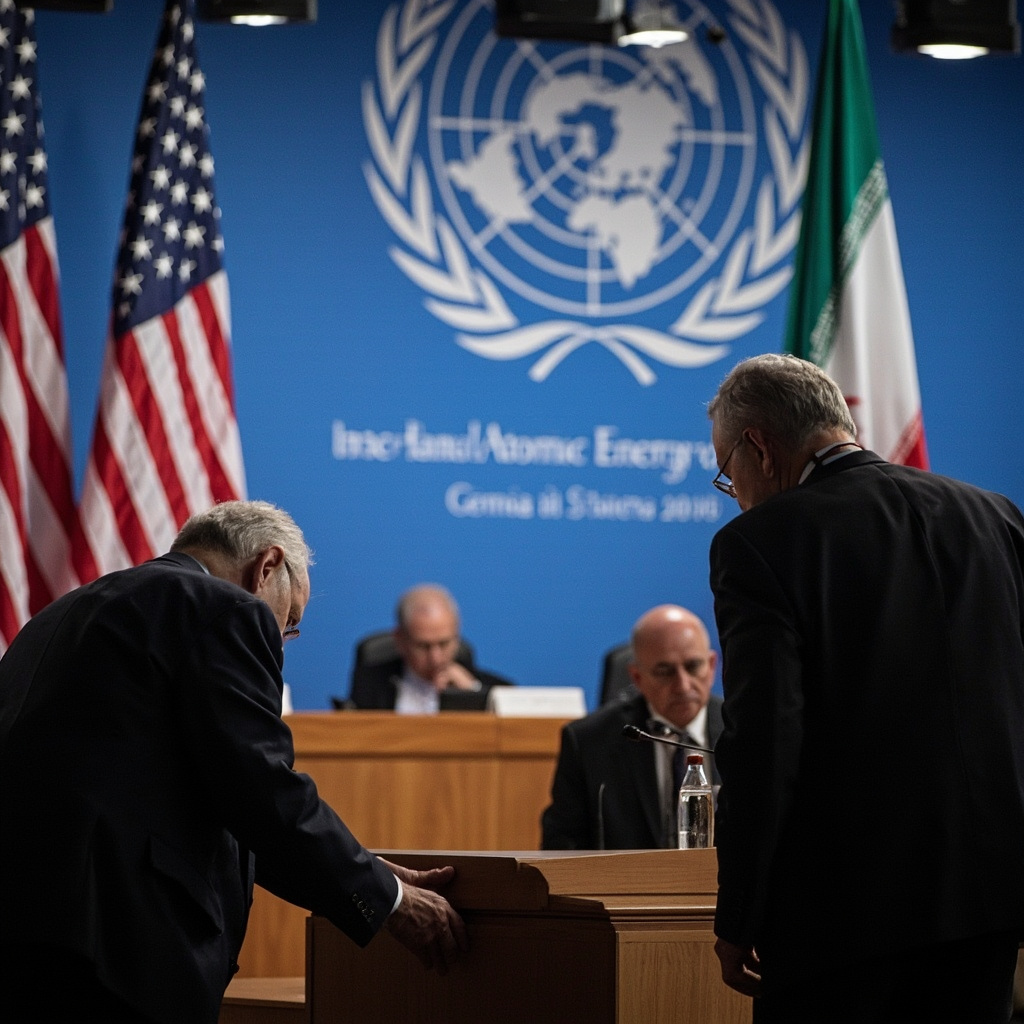
ISLAMABAD — The United States and Iran remained locked in a direct dispute Wednesday over whether Tehran had agreed to allow U.N. inspectors access to bombed nuclear sites, clouding efforts to finalize a permanent end to their 15-week war and threatening the fragile diplomatic momentum that followed a preliminary ceasefire agreement. The clash erupted publicly after U.S. Vice President JD Vance said Monday that Iran had committed to long-term nuclear inspections as part of an emerging peace framework. Iran’s Foreign Ministry responded within hours, telling reporters in Tehran that no such inspection of bombed facilities was scheduled. President Donald Trump fired back on social media, declaring that Iran had agreed to inspections “long into the future” and warning that without the concession “there would be no further negotiations!” The International Atomic Energy Agency has not publicly confirmed any agreement on access to enrichment sites targeted by U.S. strikes last year.
The Inspection Dispute at the Core of the Negotiations
The disagreement centers on whether Iran’s emerging peace deal with Washington includes IAEA access to sites damaged during last year’s U.S. military campaign — a demand the United States has pressed as a non-negotiable condition for lifting economic sanctions. Iranian officials maintain that the preliminary memorandum of understanding, expected to be formally signed in Geneva, covers broader nuclear monitoring frameworks but does not commit to on-site inspections of facilities that have already been partially destroyed. U.S. officials, speaking on background to reporters traveling with the delegation in Switzerland, insisted the inspection provisions were “explicit and binding” and part of the written draft circulating between the two governments. Neither side has released the full text of the interim memorandum, leaving key terms open to conflicting public interpretations.
Diplomatic Mediation and Regional Complications
The nuclear dispute surfaced as Iran’s President Masoud Pezeshkian met with Pakistani officials in Islamabad, where mediators from Pakistan and Oman have been working to bridge gaps between the two sides. Pakistan’s President Asif Ali Zardari and Prime Minister Shehbaz Sharif served as intermediaries during a day of talks that officials described as “productive but unresolved.” Technical teams from both governments remained in Switzerland working through the remaining sticking points, including the inspection language, the timeline for sanctions relief, and the status of Iranian oil exports. Meanwhile, the ceasefire that paused the fighting has already shown strain. Iran briefly closed the Strait of Hormuz again following Israeli strikes on Iranian-backed Hezbollah positions in Lebanon, underscoring how easily regional actors can destabilize a bilateral agreement.
Shipping and Economic Stakes of a Hormuz Resolution
The broader economic implications of a peace deal have drawn intense attention from energy markets and shipping executives. The International Maritime Organization announced Tuesday that a coordinated plan is underway to evacuate approximately 11,000 stranded seafarers through the Strait of Hormuz — a waterway through which roughly a fifth of the world’s oil and natural gas passed before the conflict. IMO Secretary-General Arsenio Dominguez said in a statement that “necessary safety guarantees” had been secured and conditions for safe navigation thoroughly verified. “We have secured the necessary safety guarantees and have thoroughly verified the conditions for safe navigation to support these operations,” he said. Shipping associations and maritime insurers have urged caution, noting that mine-clearing operations remain incomplete along major transit lanes and that war-risk insurance premiums have not yet fallen to pre-conflict levels. Traders have driven oil prices sharply lower in recent days on expectations that a durable ceasefire would unlock Iranian crude exports, but analysts warn that without a verified Hormuz reopening, market optimism could reverse quickly.
What Comes Next
Negotiators are under pressure to resolve the inspection dispute before the planned Geneva signing ceremony, which U.S. and Iranian officials have tentatively scheduled for later this week. A senior State Department official said Wednesday that the two governments were “closer than ever to a comprehensive framework” but acknowledged that nuclear verification remained the single largest obstacle. If the inspection terms can be reconciled, officials expect a final 14-point interim memorandum to be released publicly, clearing the way for a 60-day negotiating period on the long-term nuclear agreement. If they cannot, the preliminary ceasefire risks unraveling — and with it, the prospect of reopening one of the world’s most critical maritime chokepoints.
