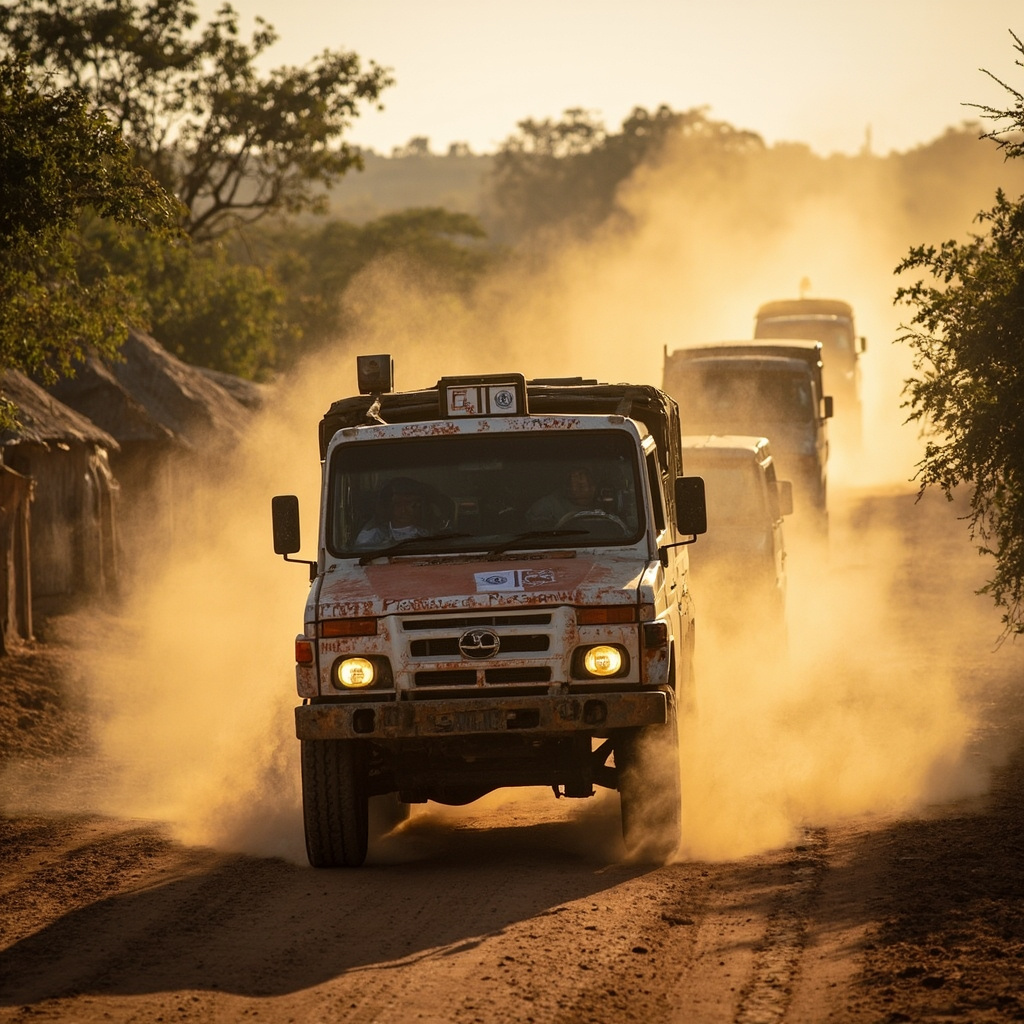
Five humanitarian workers were killed and four others injured Monday when their convoy was ambushed in South Sudan’s Jonglei State, the United Nations confirmed Tuesday, in what the John Dau Foundation described as the most devastating single incident in its 20-year history of operating in the country. The attack, in Duk County’s Panyang Payam area, targeted staff returning from a World Food Programme-supported training session aboard a vehicle clearly marked with humanitarian insignia.
Attack Details and Immediate Aftermath
The convoy was travelling between Payuel Payam and Pajut in Panyang Payam, Duk County, when it was set upon by unidentified armed attackers. The John Dau Foundation, which operated the convoy, said the route had been used without major incident for years. UN spokesperson Stephane Dujarric told reporters at a New York press briefing that the convoy was operated by a local partner and bore all appropriate humanitarian markings at the time of the attack.
“Four others were injured, and several civilians were also reportedly killed or injured,” Dujarric said. “We join our resident and humanitarian coordinator, Ramanathan Balakrishnan, in strongly condemning the attack.” The JDF said in a statement that several staff members remained unaccounted for immediately after the ambush, though rescue teams later confirmed all personnel had been located.
Escalating Violence Against Aid Workers
The Duk County ambush marks a sharp deterioration in the security environment for humanitarian workers in South Sudan. Since January 2026, 29 humanitarian workers and contractors have been killed across the country, Dujarric confirmed — a figure that represents a significant escalation compared to the 19 killed in the same period in 2025. The JDF described the toll as a crisis within a crisis as South Sudan contends with food insecurity, flooding, and ongoing intercommunal violence.
“While JDF has endured significant losses over the years, this incident represents the most grievous and sombre chapter in our organization’s history,” the foundation said. “We call upon all stakeholders, partners, and the wider community to offer their prayers, solidarity, and support.” The organization, which provides medical services to communities in Jonglei, has operated in South Sudan for two decades.
Jonglei State’s Cycle of Violence
South Sudan has been locked in cyclical intercommunal violence since winning independence from Sudan in 2011. Jonglei State — the country’s largest by area — has been among the most volatile regions, plagued by clashes between pastoralist Dinka and Nuer groups, militia activity, and spillover effects from Sudan’s own civil war. An estimated 7.2 million South Sudanese required humanitarian assistance in 2026, according to UN estimates, a figure aid agencies warn is rising as access to remote conflict zones grows more dangerous.
International humanitarian groups operating in Jonglei said the attack underscored the difficulty of maintaining neutral, impartial humanitarian access in an increasingly militarized environment. Several donors have warned that continued attacks on aid workers could force operational withdrawals from the most volatile areas, leaving the most vulnerable populations without support.
International Condemnation and What Happens Next
The UN Mission in South Sudan said it was working with national authorities to investigate the attack and identify those responsible. South Sudan’s national government issued a statement deploring the violence but did not announce any arrests. International humanitarian groups operating in Jonglei said they were reviewing security protocols following the incident, and several said they would assess whether to continue operations on the affected routes.
The killing drew immediate condemnation from donor governments. A UK Foreign Office spokesperson said: “Targeting aid workers is a war crime. Those responsible must be held accountable.” The US State Department called the attack “unconscionable” and said Washington was monitoring the investigation closely. Human rights groups say the attack illustrates the widening gap between international pledges to protect humanitarian workers and the reality on the ground in South Sudan’s most remote and dangerous regions.