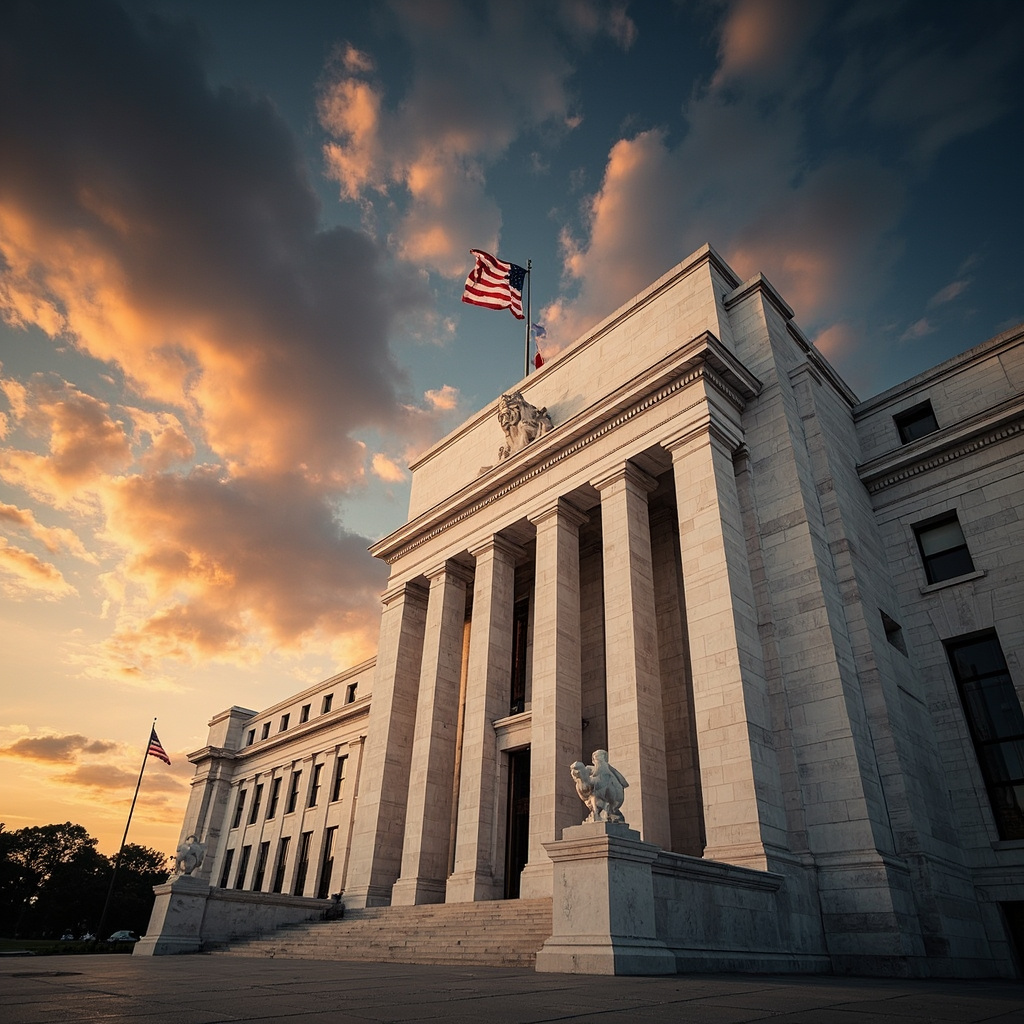
The U.S. economy faces a mounting set of crosscurrents as tariff-related inflation persists, consumer spending shows signs of softening, and the Federal Reserve signals reluctance to ease monetary policy amid escalating global trade tensions that have frayed business confidence and rattled financial markets across the developed world.
Consumer inflation held at an annualized rate of 3.1 percent in the most recent reading of the Fed’s preferred gauge, with tariff pass-through effects becoming increasingly visible in retail pricing for imported goods ranging from consumer electronics to agricultural products, according to data compiled by the Bureau of Labor Statistics. The persistence of elevated price pressures has forced a broad reassessment of the timeline for Federal Reserve rate cuts, with futures markets now pricing just one reduction before year-end, down from the three cuts anticipated at the start of the year.
Consumers Absorbing Rising Costs
American households have thus far shouldered a larger share of the tariff burden than economists initially projected, with consumer price increases for heavily imported items running at two to three times the overall inflation rate in recent months, according to the CNN tracking analysis. Price increases for tomatoes and other seasonal produce have been particularly acute, reflecting both the direct tariff impact and supply chain disruptions from the escalating conflict in the Middle East that has constricted shipping routes through key chokepoints.
“Businesses have been absorbing a significant portion of the tariff costs to preserve market share, but that strategy is reaching its limit,” said a senior economist at a major New York bank who asked not to be named due to sensitivity around client relationships. “The war with Iran has introduced a new cost layer that companies can no longer offset through operational efficiencies alone. Passing costs to consumers is now inevitable across a broader range of categories.”
Trade Tensions Weigh on Business Investment
Business investment has emerged as a critical vulnerability in the U.S. economic outlook, with corporate capital expenditure plans scaled back sharply in response to policy uncertainty and the sustained elevation of borrowing costs. The Federal Reserve’s decision to hold rates at their highest level in more than two decades has compounded the challenge for companies seeking financing for expansion or modernization projects, particularly in rate-sensitive sectors such as commercial real estate and manufacturing.
The Chamber of Commerce reported that its business confidence index fell to its lowest reading since early 2023, with members citing regulatory uncertainty, labor costs, and the unpredictable tariff regime as the top concerns heading into the second half of the year. A majority of surveyed executives indicated they had deferred or cancelled planned capital investments pending greater clarity on the policy environment, a trend that, if sustained, could weigh on productivity growth and long-term economic capacity.
Fed Policy Path Remains Uncertain
Federal Reserve officials have made clear that the central bank remains prepared to keep rates elevated for an extended period, prioritizing the return of inflation to its 2 percent target over near-term growth concerns. The revised dot plot released after the most recent FOMC meeting showed officials broadly comfortable with the current stance of policy, though several policymakers indicated in post-meeting commentary that they would reassess their positions if the labor market showed meaningful deterioration or if inflation surprised to the downside.
Markets have struggled to find direction amid the conflicting signals, with equity indices alternating between modest gains and losses as investors parse Fed communications and incoming economic data for clues about the future path of monetary policy. The 10-year Treasury yield has stabilized in the 4.7 to 4.9 percent range, reflecting a view among bond investors that rate cuts are unlikely before late in the fourth quarter at the earliest.
The housing market has emerged as one of the most rate-sensitive sectors of the economy, with existing home sales falling to their lowest annual pace in more than a decade as the combination of elevated mortgage rates and persistent home price inflation keeps transactions historically subdued. The 30-year fixed mortgage rate has climbed to approximately 7.5 percent in recent weeks, putting homeownership out of reach for a growing share of potential buyers and creating a logjam in the market that has persisted despite strong demand signals in theory. New residential construction has also slowed, with builders citing regulatory barriers, land costs, and uncertainty about future demand as reasons for restraint, contributing to an ongoing shortage of available inventory that continues to put upward pressure on prices even in a slower market.
Looking ahead, economists surveyed by a major research organization expect U.S. GDP growth to moderate to roughly 1.5 to 1.8 percent for the full year 2026, with the range reflecting divergent views on the magnitude of tariff drag on trade volumes and the extent to which consumer spending can hold up in the face of continued real income pressure. A key wildcard remains the trajectory of energy prices, which have risen sharply in recent months due to geopolitical disruption in the Middle East, adding another layer of cost pressure that could prove difficult for businesses to absorb without passing it through to end consumers.