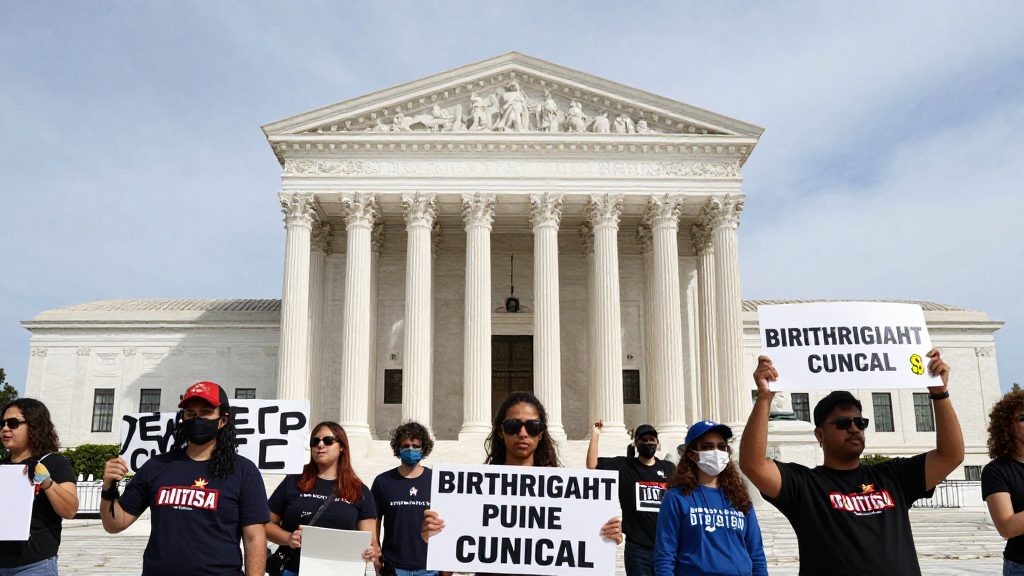
The Supreme Court on Tuesday struck down President Donald Trump’s executive order attempting to end birthright citizenship, delivering the most consequential defeat of his administration’s aggressive use of executive power and exposing deep fractures within the conservative legal movement. The 5-4 ruling in Miller v. Mayorkas upheld the 14th Amendment’s guarantee of citizenship for all children born on American soil, with Justice Brett Kavanaugh joining the four liberal justices in the majority. Trump immediately responded on Truth Social, posting “THE JUSTICES SHOULD NOT HAVE DONE THIS. THE PEOPLE WANT A DO OVER!” and urging Congress to pass legislation to override the court’s decision.
Barrett Faces Conservative Backlash Over Birthright Ruling
The ruling triggered fierce backlash against Justice Amy Coney Barrett, a Trump-appointed conservative who joined the majority — marking the second consecutive term that Barrett has sided with the court’s liberal wing on a major Trump administration policy. Conservative commentators and Republican lawmakers roundly criticized the decision, with some calling for term limits or structural reforms to the court. The Federalist Society’s executive vice president Leonard Leo called the ruling “a textualist betrayal of the Constitution’s original public meaning.” Barrett, speaking through a court spokesperson, declined to comment on the criticism.
The White House escalated the pressure on Thursday, with Trump telling reporters he sees “real opportunity” in Brett Kavanaugh’s dissent — a 30-page opinion arguing the executive branch has plenary power over citizenship classification. “Justice Kavanaugh wrote a magnificent opinion,” Trump said from the Oval Office. “The American people clearly agree with him, and that’s why we’re going to fight this in Congress.” Legal scholars warned that Trump’s push for a legislative override faces steep constitutional hurdles, since the 14th Amendment’s Citizenship Clause was specifically designed to prevent Congress from restricting birthright rights.
Senate Spending Talks Collapse, Shutdown Fears Resurface
While the Supreme Court dominated headlines, bipartisan Senate spending negotiations collapsed for the second time in two weeks, reigniting concerns about a government shutdown with less than 90 days before the fiscal year ends. Senator Thom Tillis, R-N.C., declared the SAVE America Act “dead,” saying time has run out to implement stricter voting documentation requirements that Republicans demanded as a condition for passing spending bills. Senate Majority Leader John Thune called the breakdown “deeply frustrating” and warned that without a continuing resolution by late September, federal agencies face an orderly shutdown.
Democratic leaders blamed Republican infighting for the stalemate. Senate Minority Leader Chuck Schumer said the collapse “exposes the GOP’s inability to govern” ahead of the November midterm elections. “Every spending bill they bring to the floor blows up in their own faces,” Schumer told reporters. “The SAVE Act was always a non-starter, and now they’re holding the entire government hostage to a fringe immigration policy that even their own members won’t vote for.” Republicans countered that Democrats bear equal blame for refusing to negotiate on border security provisions. The Senate has yet to pass any of the 12 annual appropriations bills, raising the prospect of a lengthy continuing resolution that would lock in current spending levels.
The political stakes are particularly high given that all 435 House seats and 34 Senate seats are on the ballot in November. Both parties are eager to avoid a shutdown that could alienate swing voters, but neither appears willing to make the first major concession. Senior Senate aides told The Hill that negotiations are expected to resume the week of July 7, though confidence is low on both sides that a deal can be reached before the August recess.
Geopolitical Tensions Complicate Domestic Agenda
Abroad, the administration faced fresh scrutiny over its handling of Iran, with a bipartisan group of senators urging the White House to declassify intelligence about Iran’s nuclear program following intelligence reports that Tehran is enriching uranium to near-weapons-grade levels. Senator Chris Coons, D-Del., who sits on the Foreign Relations Committee, told the Associated Press that the administration’s “maximum pressure” campaign has failed to slow Iran’s nuclear advances. “We need a new strategy, and we need it now,” Coons said. Separately, Defense Secretary Pete Hegseth clashed with protesters at a National Guard event in Washington, with video showing Hegseth confronting activists chanting “Free D.C.” over the city’s failed statehood bid.
The convergence of these domestic and international crises has left the White House scrambling to project competence ahead of the midterms. Senior administration officials privately acknowledge that the birthright citizenship ruling has energized Democratic turnout efforts, with several battleground state Democratic parties reporting record volunteer sign-ups since the decision. Republican strategists, meanwhile, are divided on whether to continue fighting the ruling legally or pivot to the legislative override that Trump has demanded — a strategy that even sympathetic legal analysts call constitutionally questionable.
With the Supreme Court’s term concluded and Congress deadlocked on spending, the next several weeks will test whether either branch has the capacity to resolve the multiple crises consuming Washington’s attention. For now, birthright citizenship remains the law of the land, the government’s funding remains uncertain, and both parties are preparing for a November electoral battle that these court battles and legislative failures have only sharpened.