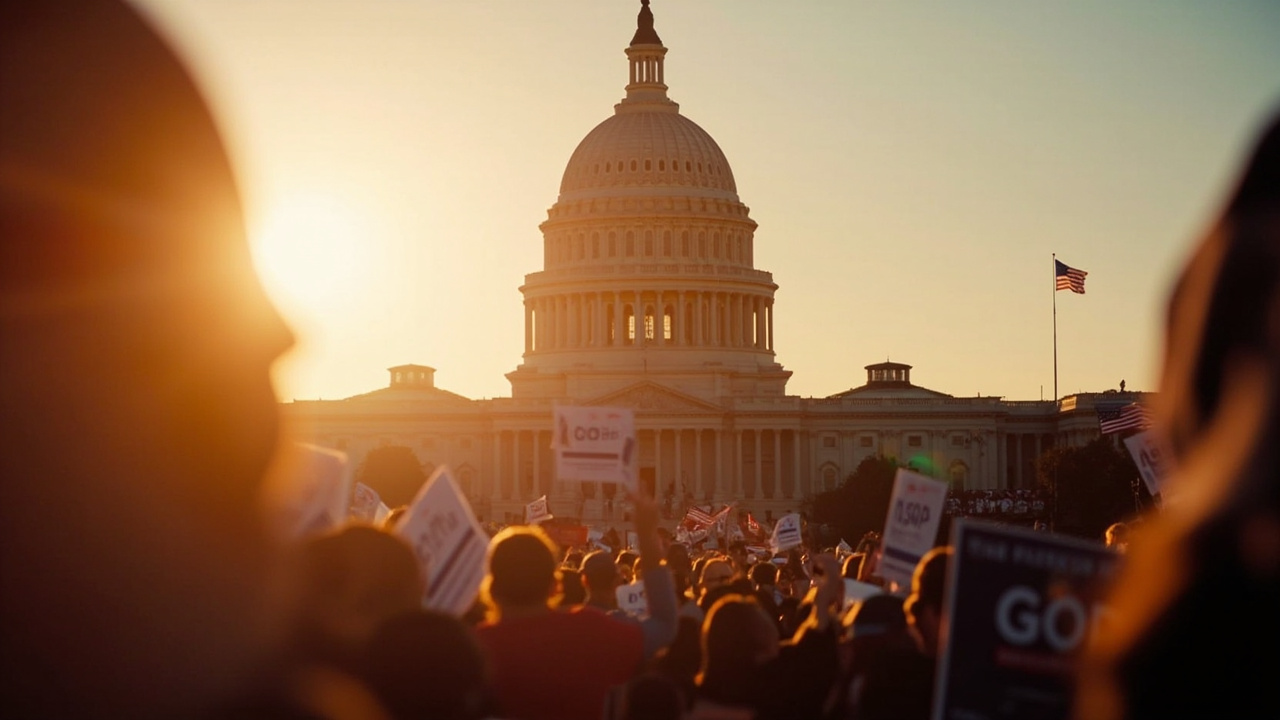
With President Trump’s approval ratings sinking to 36% and gas prices nearing $4 per gallon, Republicans are quietly rewriting their midterm playbook — promoting Trump’s policies while trying to distance their candidates from the president himself.
The Strategy Shift
In a closed-door meeting this week at Washington’s Waldorf Astoria hotel, President Trump’s top political advisers laid out a new blueprint for the November midterm elections: embrace the policies, distance from the man. According to four people familiar with the gathering, White House chief of staff Susie Wiles, political chief James Blair, and longtime pollster Tony Fabrizio urged Republican candidates to promote tax cuts and inflation-fighting measures while avoiding making Trump himself the centerpiece of their campaigns.
The recalibration comes as Trump faces mounting headwinds. A Reuters/Ipsos poll released Friday found just 36% of Americans approve of his job performance — the lowest of his current term. Rising gas prices, now averaging near $4 per gallon nationally according to AAA, threaten to undermine the economic messaging Republicans hoped would carry them through November. Meanwhile, the war with Iran drags on with no clear resolution in sight, leaving the Strait of Hormuz blocked and global energy markets volatile.
“Democrats are going to try to nationalize the election and say we’re a rubber stamp for Trump. We have to break out of that and show race by race why we’re the better choice.”
Virginia’s Warning Shot
The risks of the new strategy were exposed almost immediately. At the Monday meeting, Trump’s team predicted Republicans would win a redistricting referendum in Virginia the following day. Instead, Virginia voters approved a new congressional map drawn by Democrats — a defeat that some Republican insiders say raises questions about the political operation’s confidence.
“If the people framing this approach are confident about Virginia and they get beat in Virginia, you have to question, are they overconfident about the whole package?” one person familiar with the meeting told Reuters.
The Virginia loss is particularly concerning for Republicans because it suggests that even in a state with a Republican governor, voters are not automatically aligning with the party’s priorities. With competitive House and Senate races in states like Arizona, Nevada, and Pennsylvania, the margin for error is slim.
Trump’s Team Pushes Back
Despite the setbacks, Trump’s political operation remains publicly confident. Kiersten Pels, national press secretary for the Republican National Committee, said Trump would remain “the most powerful driver” of conservative voter turnout in the midterms, and that Republican candidates are eagerly seeking his endorsement.
White House spokeswoman Olivia Wales echoed that sentiment, stating Trump was the “unequivocal leader of the Republican party and he is committed to maintaining Republicans’ majority in Congress.”
But behind closed doors, the mood is more cautious. Multiple Republican operatives who spoke on condition of anonymity expressed concern that Trump’s political clout may be diminishing, particularly among independent voters who will decide competitive races. The president’s age — he turned 79 in June — and a series of explosive public outbursts have also raised questions among some Republicans about his temperament and mental sharpness.
The Policy vs. Personality Dilemma
The core challenge for Republicans is a paradox of their own making. Trump’s “One Big Beautiful Bill Act” — the signature legislative achievement of his second term — delivered tax cuts and economic measures that remain popular with the conservative base. But the president’s personal approval has become a liability in swing districts, forcing candidates to navigate a narrow path between supporting the agenda and avoiding the association.
“It’s a difficult balance,” said a Republican strategist involved in House races. “You need the base to turn out, and they love Trump. But you also need suburban voters who are exhausted by the chaos.”
Democrats, meanwhile, are preparing to exploit the gap. Party strategists say they plan to tie every Republican candidate to Trump in competitive districts, arguing that a vote for any Republican is effectively a vote for the president’s agenda.
Key Questions Answered
What is Trump’s current approval rating? According to a Reuters/Ipsos poll, just 36% of Americans approve of Trump’s job performance — the lowest of his current term.
Why are Republicans distancing from Trump? Strategists worry that Trump’s sagging approval and the ongoing Iran war could hurt Republican candidates in competitive congressional races.
What happened in Virginia? Voters approved a Democratic-drawn congressional map, defeating Republican expectations and signaling potential weakness in the party’s midterm strategy.
What Happens Next
With six months until Election Day, Republicans face a critical test of whether they can execute the delicate maneuver their strategists have mapped out. The party must hold its narrow House majority and defend Senate seats in states where Trump’s brand may not be an asset.
For Trump, the midterms represent more than just congressional control — they are a referendum on his political durability. If Republicans lose one or both chambers, the president’s ability to advance his agenda in the final two years of his term will be severely constrained. And for a leader who has built his identity on winning, that may be the most painful outcome of all.