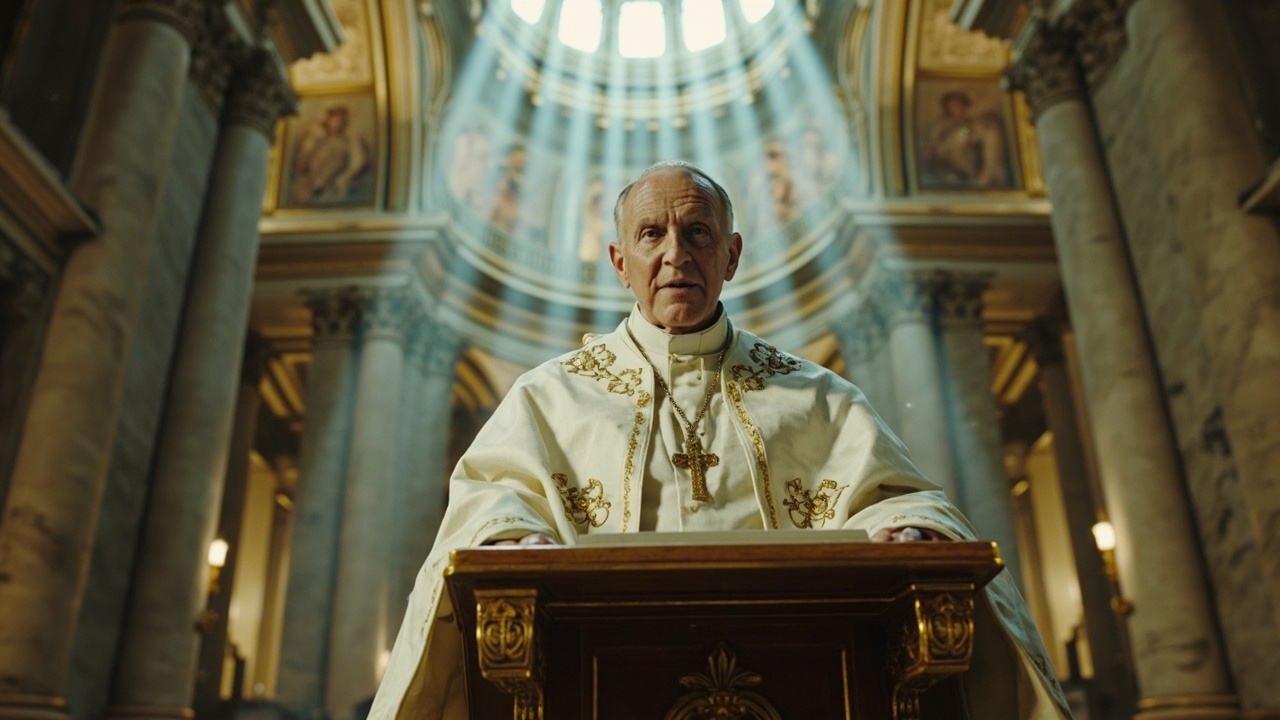
VATICAN CITY — Pope Leo XIV has issued his most sweeping call for global ethical governance of artificial intelligence, warning in his first major encyclical that the technology is accelerating warfare and concentrating dangerous power in the hands of a privileged few, according to the Vatican document published Monday.
The 42,300-word encyclical, titled Magnifica Humanitas and dated May 15, 2026, is the most substantial contribution to global AI ethics debate from any world leader or institution this year. It calls for AI systems used in military contexts to be subject to “the most rigorous ethical constraints” and demands that control of the technology “not remain in the hands of a few.”
A Doctrinal Shift on War
In a move that will reverberate through theological and political circles alike, Pope Leo declared the centuries-old Catholic “just war” doctrine — the framework governing when military force is morally justified — as “now outdated.” The pontiff wrote that the use of force could only be sanctioned for “self-defense in the strictest sense,” a dramatically narrower threshold than previous teaching allowed.
“The construction of a world in a state of perpetual conflict is a perverse logic that generates only suffering,” the encyclical states, echoing language the Pope has deployed since his election. “Force, violence and weapons ultimately have disastrous consequences for civilian populations.”
AI at the Center of Global Conflict
The encyclical positions artificial intelligence as the defining geopolitical and moral challenge of the current era. Rather than treating AI as a technological matter, Pope Leo frames it as fundamentally a human rights and humanitarian question — one inseparable from the ongoing Iran-Ukraine conflict and a range of regional wars.
He calls on governments, technology companies, and international institutions to treat AI governance with the same urgency applied to nuclear arms control. The document also sharply criticizes the concentration of AI power among a small number of corporations and nations, describing it as a structural threat to human dignity and democratic governance.
Church Confronts Its Own History
In a significant historical gesture, the encyclical offers a formal apology for the Catholic Church’s role in “legitimizing slavery” and its long delay in formally denouncing the practice — a confession that breaks new ground even by the standards of recent papal apologies. The Pope also declared that the treatment of migrants and refugees would serve as “the litmus test” for social justice under Catholic teaching, reinforcing a central pillar of his pastoral priorities.
The document arrives as the Vatican under Pope Leo has sought to position itself as a moral arbiter in an era of fragmenting international order. Since his election, the Pope has mediated discreetly between parties in the Iran conflict and maintained a consistent public appeal for ceasefire negotiations across all active war zones.
A Document for the Age
Unlike many papal encyclicals, which are addressed primarily to Catholics, Magnifica Humanitas is written in language intended to resonate with policymakers, technology leaders, and people of all faiths. Vatican officials say the document was drafted with input from ethicists, military lawyers, and AI researchers.
The encyclical is expected to dominate the agenda at upcoming international forums on AI governance and to intensify pressure on technology companies to accept binding ethical oversight of autonomous weapons systems. Reactions from Western governments and AI firms were still developing as of Monday morning.
