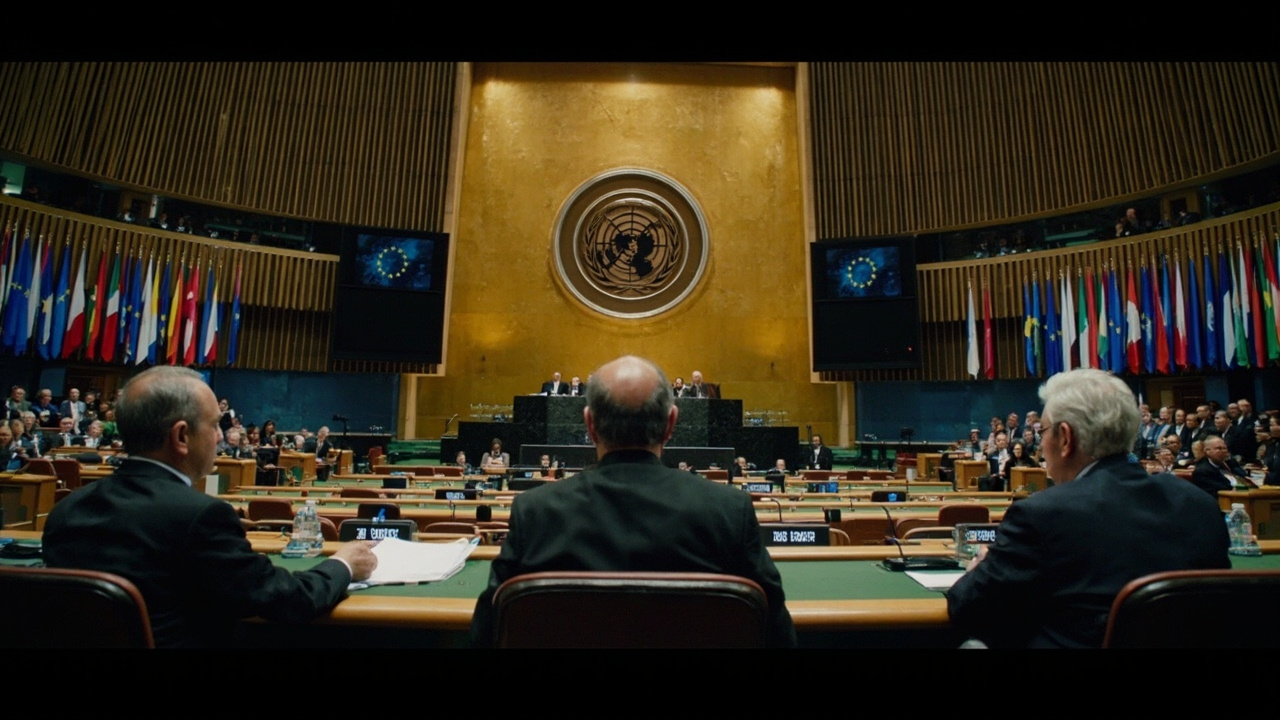
Federal Reserve Chair Jerome Powell used his Friday remarks to crack the door, a fraction of an inch, on a possibility markets had spent eighteen months refusing to price: that inflation could remain sticky enough to delay the cuts Wall Street had already spent. By the close, traders had pushed the implied probability of a quarter-point cut at the June FOMC from roughly 51 percent to under 30 percent, and the bond market’s verdict was swift and brutal.
Written by James Wright, Economy Correspondent
The two-year Treasury yield, the maturity most sensitive to Fed expectations, fell 16 basis points to 4.50 percent, but the move is a head fake. It reflects a curve-flattening trade, not a relief rally. The 10-year note finished at 4.82 percent, and the 30-year bond cleared its highest level since 2007. Every Treasury maturity from one year out now trades above 4 percent, a threshold last sustained in the pre-Great-Financial-Crisis era. The implied terminal rate for 2026, derived from overnight index swaps, climbed to 4.52 percent, up from 3.97 percent a fortnight ago. Traders no longer believe the Fed will deliver two cuts this year, and a meaningful minority now expects none at all.
The catalyst was Powell’s most explicit acknowledgment since 2022 that supply-side price pressures may prove “more persistent than the disinflationary trend would suggest.” That phrasing, buried in a paragraph on services inflation, was enough to undo a month of dovish positioning. When the long end rises even as the front end falls, it implies investors accept the Fed will be patient, but they are increasingly skeptical about the path after patience ends.
“We may be in a period where the last mile of disinflation requires a different kind of policy stance than the first. Patience is not the same as complacency.”
