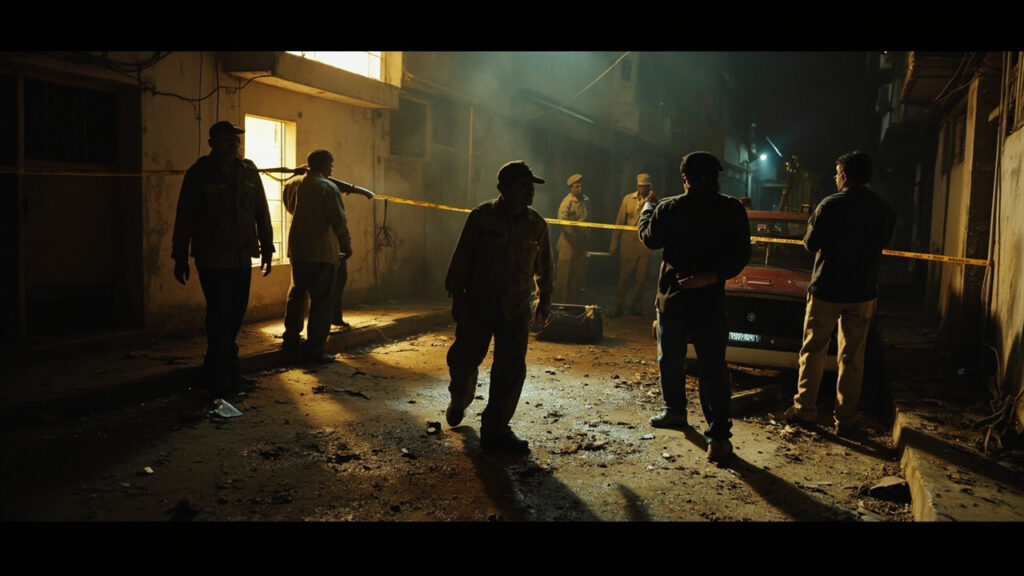
Russia launched a devastating ballistic missile and drone attack on Kyiv on Sunday, deploying at least 90 missiles including multiple hypersonic Oreshnik warheads in what military analysts described as the most intense single-day strike on the Ukrainian capital since the full-scale invasion began. At least four people were killed and more than 100 others were injured in the barrage, which struck residential buildings, a children’s hospital, and critical infrastructure across the city.
The strikes mark the second time Russia has used the Oreshnik — a novel hypersonic ballistic missile that travels at more than 10 times the speed of sound — against a European city. The first combat use was against a Ukrainian city in late 2024. Ukrainian air defenses managed to intercept some incoming weapons, but officials acknowledged that the speed and trajectory of the Oreshnik system left little time for effective countermeasures.
“These are weapons that simply cannot be stopped with current air defense systems,” said a senior Ukrainian military official who spoke on condition of anonymity. “We are running out of interceptor missiles, and every night brings new attacks.”
Among the confirmed casualties were two children killed when a missile struck near a primary school in the Darnytskyi district. Rescuers spent hours searching through the rubble of a collapsed residential building, pulling survivors from basement shelters as smoke rose from multiple fires across the city. Ukraine’s State Emergency Service reported that at least 12 residential blocks were partially destroyed or severely damaged.
Ukrainian President Volodymyr Zelensky said in an emergency address that the attack was “a direct challenge to every nation that speaks of peace in Europe.” He called on Western allies to authorize long-range strikes inside Russian territory, saying the current restrictions on how Ukraine can use Western-provided weapons were “a death sentence for our people.”
The attack comes at an especially delicate moment in international diplomacy. US President Donald Trump said just hours before the strike that a peace agreement with Iran — which has been coordinating with Russia on regional strategy — was “largely negotiated” and could be announced shortly. The renewed Russian bombardment of Kyiv immediately drew criticism from Washington, with Secretary of State Marco Rubio warning that the strikes would complicate efforts to broker a broader ceasefire in the region.
“Every time Russia escalates like this, it makes diplomacy harder,” Rubio told reporters in New Delhi during a visit to India. “We are still working toward de-escalation, but actions like this do not help.” Kremlin spokesman Dmitry Peskov dismissed the criticism, saying the strikes were “a legitimate response to Ukrainian provocations” and part of Russia’s ongoing military operation.
Alongside the residential strikes, Russian forces targeted multiple Ukrainian power generation facilities, triggering cascading blackouts across Kyiv and five surrounding oblasts. Ukrainian energy company Ukrenergo announced emergency power cuts affecting more than 800,000 residents, with hospitals and emergency services running on backup generators. The attacks on energy infrastructure follow a pattern that Ukrainian officials say is designed to break civilian morale and exhaust the country’s air defense stockpiles through continuous attrition.
NATO Secretary General Mark Rutte condemned the strikes in a post on social media, calling them “a blatant violation of international humanitarian law” and urging allies to accelerate air defense deliveries to Ukraine. “There is no military justification for targeting civilian infrastructure at this scale,” Rutte said.
Ukrainian officials have repeatedly warned that delays in Western military aid — particularly air defense interceptors — have left the country’s eastern cities dangerously exposed. Sunday’s attack was preceded by a 72-hour period in which no new interceptor shipments arrived, leaving battery positions critically understocked. Military analysts say Russia has been deliberately timing large-scale strikes to exploit these gaps, launching waves of missiles in quick succession to overwhelm whatever air defenses remain in position.
The death toll from Sunday’s attack is expected to rise as search and rescue teams continue their work through the wreckage. At least 100 people were hospitalized with injuries ranging from shrapnel wounds to blast trauma. Ukraine’s Health Ministry declared a state of emergency across the capital region, calling for emergency blood donations to treat the wounded.
International Red Cross teams were deployed to assist local emergency services, with the organization calling the scale of destruction “comparable to some of the worst urban attacks of the past decade.” Aid workers warned that the ongoing targeting of civilian infrastructure is creating a humanitarian crisis that extends well beyond the immediate casualty figures.
Written by Layla Hassan, Middle East Correspondent
Layla Hassan
Layla Hassan covers Middle East politics, conflict, and diplomacy from the Gulf to the Levant.