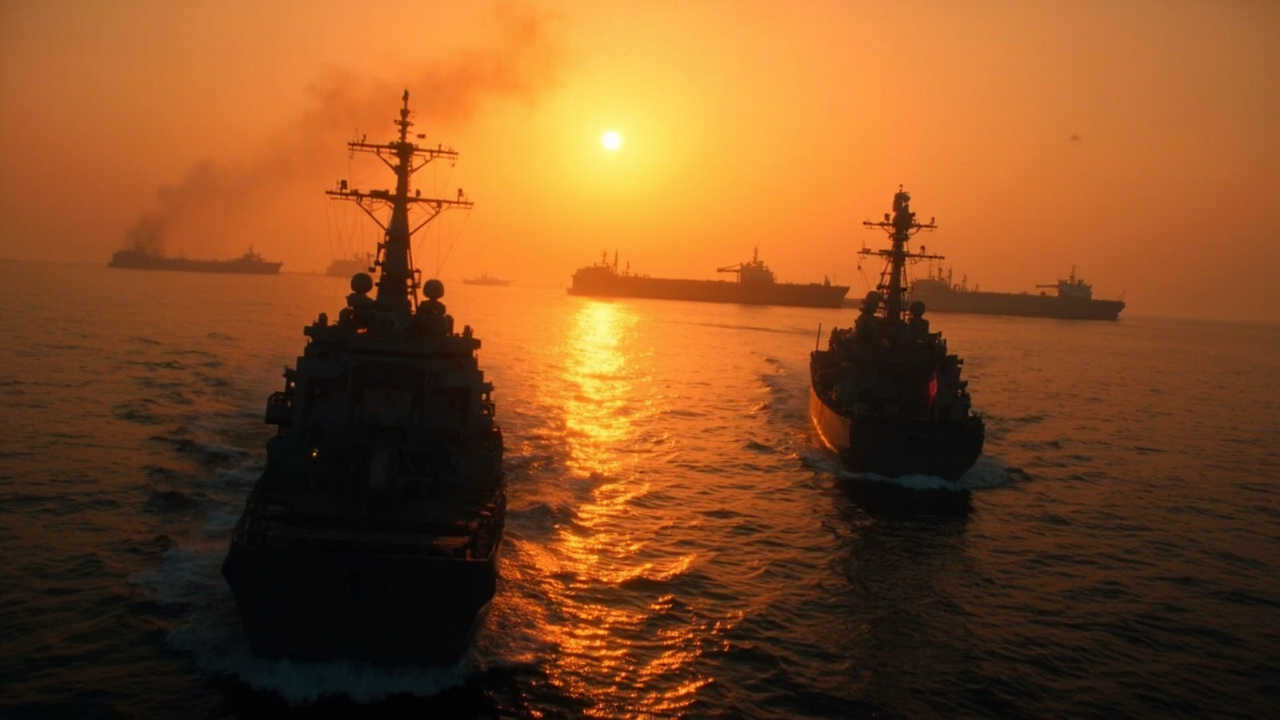
DUBAI — June 7, 2026
The US-Iran military confrontation entered its 100th day on Sunday as American forces shot down two Iranian attack drones threatening international shipping in the Strait of Hormuz — the latest in a relentless cycle of strikes and interceptions that has gripped the Gulf region since late February.
US Central Command confirmed the interceptions, saying the drones were heading toward commercial vessels in the strategic chokepoint through which roughly 20% of the world’s oil flows. The downing brought the total number of Iranian drones intercepted near Hormuz to at least six in 48 hours.
In a parallel development, Pakistan’s Interior Minister Mohsin Naqvi arrived in Tehran on Sunday carrying a sealed letter from Prime Minister Shehbaz Sharif and Army Chief General Asim Munir addressed to Iran’s Supreme Leader Mojtaba Khamenei. Naqvi delivered the message during a meeting with Iranian Foreign Minister Abbas Araghchi, the GEO news network reported, citing Iranian state media. Islamabad has positioned itself as a key mediator between Washington and Tehran since the April 8 ceasefire, and officials said the letter was aimed at preventing the fragile truce from collapsing entirely.
The letter comes as both sides appear to be testing each other’s limits. Washington is considering redirecting $24 billion in frozen Iranian assets to pay Gulf allies for war damage caused by Iranian strikes — rather than releasing them to Tehran as Iran demands. A source familiar with Treasury Secretary Scott Bessent’s thinking told media the US would “utilise all tools available” to make those funds available to Bahrain, Kuwait, and other Gulf states for repairs. Iran’s military adviser to the supreme leader reiterated Tehran’s demand for the assets’ release.
In Lebanon, the situation remained volatile. Israel issued a new evacuation warning for the city of Tyre and surrounding areas in southern Lebanon on Sunday, military spokesman Avichay Adraee announced on X. The IDF said it would strike Hezbollah positions in the specified zones. Separately, Israeli warplanes targeted approximately 150 Hezbollah sites overnight, Khaama Press reported. Hezbollah rejected the latest ceasefire proposal, with a senior official saying the group would not agree to any halt in fighting while Israeli forces remain on Lebanese soil.
Meanwhile, a powerful explosion was heard near Iran’s strategic Kharg Island on Sunday, according to OmidRadio. The cause was not immediately clear, though the island houses Iran’s largest crude oil terminal and has been the subject of prior military concern during the conflict. Iran’s IRGC had previously warned of “decisive retaliation” against any further American strikes.
Kuwait and Bahrain both continued to grapple with the aftermath of Iranian ballistic missile strikes launched Saturday. Kuwait’s air defenses have now intercepted 15 cruise missiles, 372 ballistic missiles, and 869 UAVs since the start of Iranian hostilities, authorities said. An Iranian attack on Kuwait International Airport on Wednesday killed an Indian national and injured 63 others.
Tehran’s foreign ministry condemned Washington’s latest strikes as “flagrant violations” and accused the US of “hostile and provocative behaviour” in the Gulf. Secretary of State Marco Rubio, speaking from an unspecified Gulf location, said the US would “continue to defend its forces and partners” and rejected any notion that the ceasefire was still in effect along certain front lines.
The Strait of Hormuz remained open to commercial traffic as of Sunday, though maritime insurance premiums for Gulf transits have risen sharply. Analysts at Lloyd’s of London said the 100-day conflict has cost the global insurance industry an estimated $4.7 billion in war-risk claims.
Written by Layla Hassan, Middle East Correspondent
Layla Hassan
Layla Hassan covers Middle East politics, conflict, and diplomacy from the Gulf to the Levant.