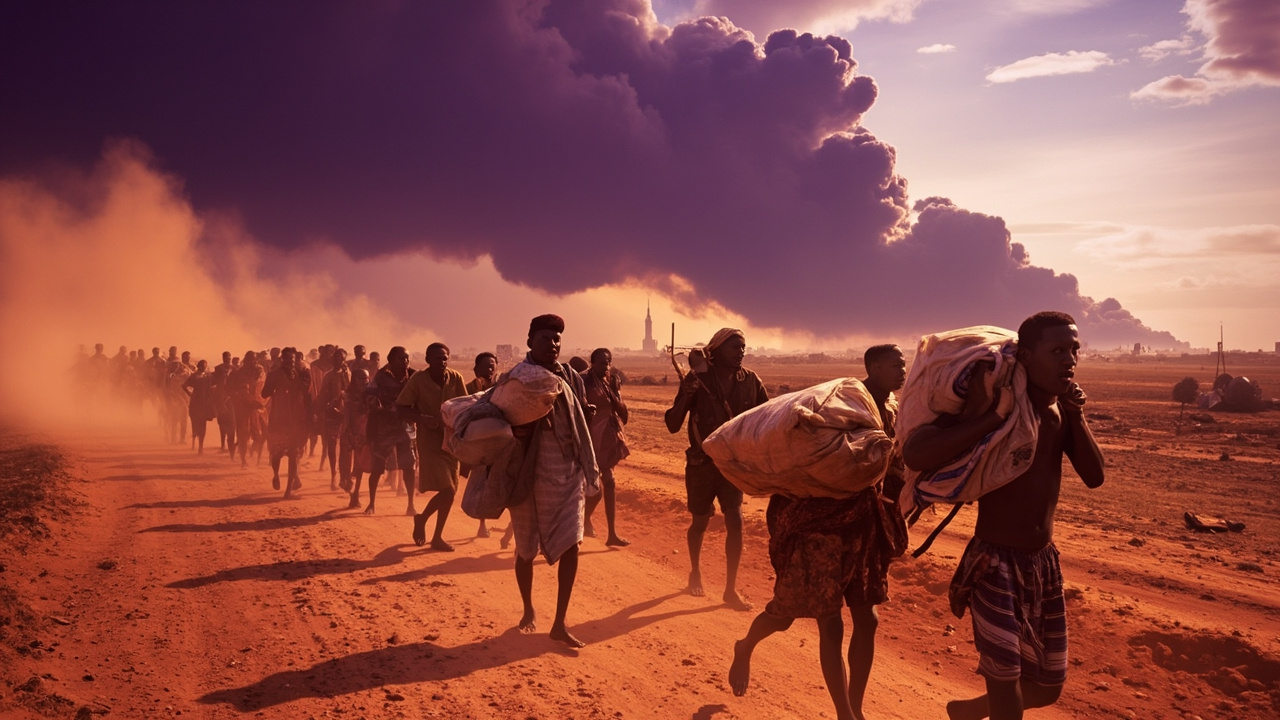
DUBAI — Sudan’s Rapid Support Forces have besieged the city of El-Fasher for a 12th consecutive day, cutting off the last humanitarian corridor into the capital of North Darfur and trapping an estimated 700,000 civilians — including 100,000 children under five — with minimal food and water access, the UN’s World Food Programme confirmed Monday.
The WFP said its last convoy to reach El-Fasher carried supplies for only 10,000 people and was unable to return to its base in El-Obeid due to ongoing RSF checkpoints. Sudan Armed Forces launched an air assault on RSF positions south of the city on Monday, as the African Union convened an emergency session on the worsening crisis.
“The people of El-Fasher are being slowly starved. This is a man-made famine unfolding in real time.” — WFP Executive Director Cindy McCain
RSF commander Mohamed Hamdan Dagalo (known as Hemedti) rejected all international calls for a ceasefire, saying his forces would not “leave El-Fasher until the terrorist militia is defeated.” The RSF has controlled most of greater Darfur since April 2023. A UN report confirmed famine had already been declared in five displacement camps as of April 2026.
UN investigators said in February that the RSF’s assault on El-Fasher last October bore “hallmarks of genocide” against the Zaghawa and Fur communities — citing mass killings, summary executions, torture, and sexual violence used as weapons of war. At least 6,000 people were killed in three days during that assault, according to the UN mission.
Egypt’s Foreign Ministry said it was working with the African Union on an emergency evacuation corridor for Egyptian nationals trapped in the city. The UN estimates more than 13 million people have been displaced since the war between the RSF and the Sudanese Armed Forces began in April 2023.
Both the RSF and the SAF have been accused of war crimes. The US and Human Rights Watch have said the RSF and its allies have waged a genocide in western Darfur against the Massalit people and other non-Arab communities.
⚑ DEVELOPING
Written by Layla Hassan, Middle East Correspondent
Layla Hassan
Layla Hassan covers Middle East politics, conflict, and diplomacy from the Gulf to the Levant.