Britain on High Alert: UK Raises Terror Threat to ‘Severe’ for First Time in Four Years After Golders Green Synagogue Attack
The United Kingdom has raised its national terror threat level to “severe” for the first time in four years, Prime Minister Keir Starmer confirmed on Thursday, following a mass casualty attack outside a synagogue in Golders Green, north London. The move marks the highest alert status the country has faced since the poisoning of former Russian spy Sergei Skripal in Salisbury in 2018.
“The threat to the United Kingdom from international terrorism is assessed as severe,” the Prime Minister said in a statement from Downing Street. “This means a terrorist attack is highly likely. The security services and police are working around the clock, and I urge every Briton to remain vigilant.”
What Happened in Golders Green
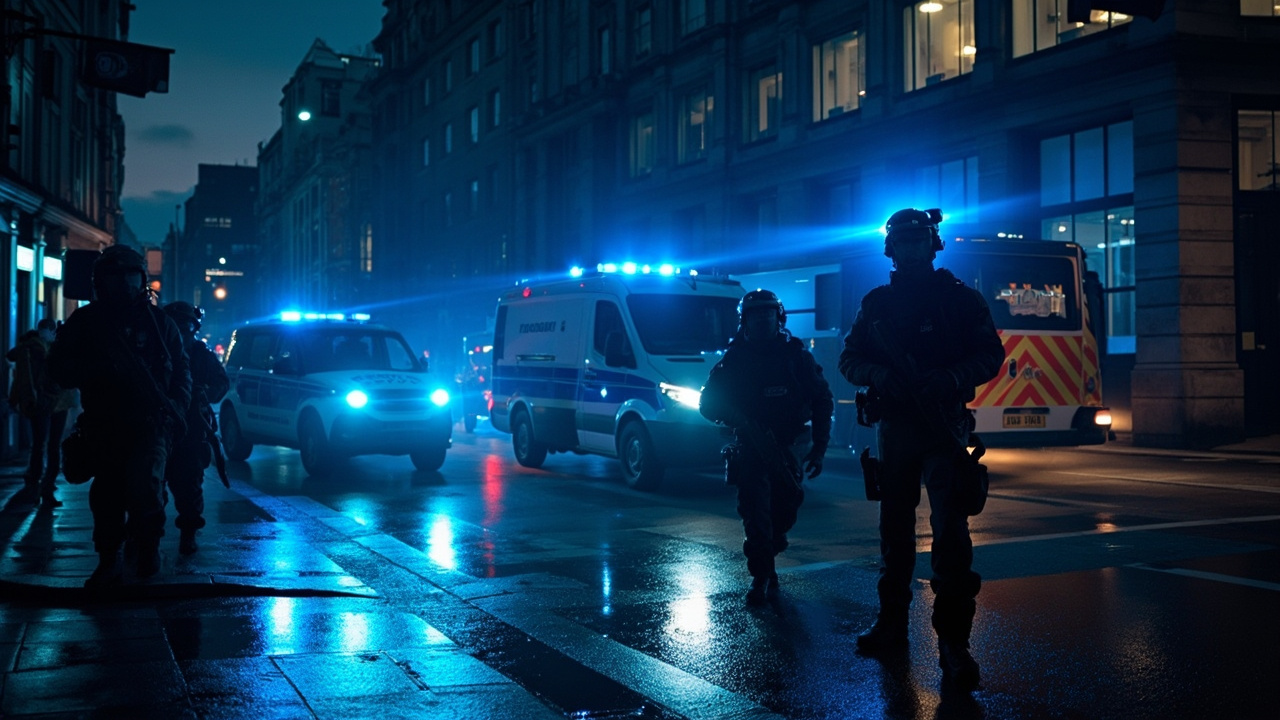
The crisis began on Wednesday evening when a vehicle was deliberately driven into a group of pedestrians outside a synagogue on the Finchley Road, followed by a stabbing spree that left 11 people injured — three critically. Metropolitan Police officers shot and arrested the suspect, later identified by unnamed sources as a 32-year-old British-born man with a known interest in far-right extremism, at the scene within minutes of the first emergency call.
Among the victims were members of the Jewish community attending a cultural event at the synagogue. The London Jewish Cultural Centre confirmed that several of its members were among the injured. The community was observing a minor festival when the attack unfolded, leaving hundreds of worshippers sheltering inside the building as armed police surrounded the perimeter.
Counter-terrorism officers from the Metropolitan Police’s SO15 command took over the investigation within hours, classifying the incident as a terrorist attack “motivated by Islamist ideology” based on initial evidence recovered from the scene, including written materials found on the suspect.
The Decision to Raise the Threat Level
The Joint Terrorism Analysis Centre (JTAC), an independent body that assesses threat levels independently of government, made the recommendation to elevate the national threat level from “substantial” to “severe.” The change reflects an assessment that the attack, and the sympathy messaging that has followed it across jihadist propaganda channels, could inspire copycat violence in the immediate term.
The “severe” classification is the second-highest tier on the UK’s five-point terrorism threat scale, sitting above “substantial” but below “critical.” The last time the UK operated at “severe” was in the period immediately following the 2017 Manchester Arena suicide bombing, which killed 22 people and wounded over 100 more.
“We have seen — across the world — how a single attack can create a contagion effect. The decision to move to severe is not taken lightly, but the information we now have demands it.”
—Security Minister Dan Whittle
Security Minister Dan Whittle told the House of Commons that the government was “throwing every resource available” at the investigation and at hardening potential targets, including Jewish community centres, mosques, and other faith venues across the country.
National and International Reaction
The attack sent shockwaves through the UK’s Jewish community, which had already been on edge following a documented rise in antisemitic incidents across the country over the past 18 months. The Community Security Trust, a charity that monitors antisemitism, reported a 340 percent increase in reported incidents in the first quarter of 2026 compared to the same period in 2025.
World leaders responded with condemnations. United States President Donald Trump called the attack “an act of pure hatred” and pledged full intelligence-sharing cooperation with the UK. Israeli Prime Minister Benjamin Netanyahu spoke directly with Prime Minister Starmer and offered Mossad assets to assist the investigation — an offer accepted under diplomatic protocols governing joint counter-terrorism operations.
The European Union’s foreign policy chief called for an emergency meeting of the EU Security Council, while France, Germany, and the Netherlands all announced they were reviewing their own national threat assessments as a precautionary measure. The Golders Green attack follows a series of vehicle-ramming and knife attacks in European cities over the past two years, a modus operandi that security analysts say reflects the low-cost, high-impact model favoured by Islamic State and affiliated groups.
Security Response and Public Advisory
Police patrols have been increased across major cities, with uniformed officers stationed at synagogues, mosques, temples, and other potential targets of hate-motivated violence. The public has been advised to report suspicious behaviour via the ACT (Action Counters Terrorism) helpline and the gov.uk terror alert app.
Transport for London announced enhanced security screening on the London Underground, while British Transport Police boosted visibility at major railway stations. The National Counter Terrorism Police Headquarters urged event organisers to conduct venue security reviews and warned that public gatherings associated with minority communities could face heightened risk in the coming days.
The Prime Minister stopped short of invoking emergency powers but confirmed that cross-government Cobra meetings had been convened at both the ministerial and official levels. A fuller public briefing from the Home Secretary is expected on Friday morning.
What Comes Next
The suspect remains in police custody under Section 41 of the Terrorism Act 2000, which permits detention without charge for up to 14 days. Counter-terrorism sources said investigators are pursuing multiple lines of inquiry, including potential overseas financing, online radicalisation networks, and possible co-conspirators in the UK.
For the UK’s Jewish community, the psychological impact extends far beyond Wednesday evening. The Board of Deputies of British Jews called for calm but also for solidarity. “This was an attack on all of us,” chief executive Phil Goldberg said. “We have weathered dark days before. We will do so again, together with our fellow citizens.”
With the terror threat level at “severe,” the UK enters a period of heightened alert with the knowledge that the line between assessment and tragedy has, once again, been crossed.