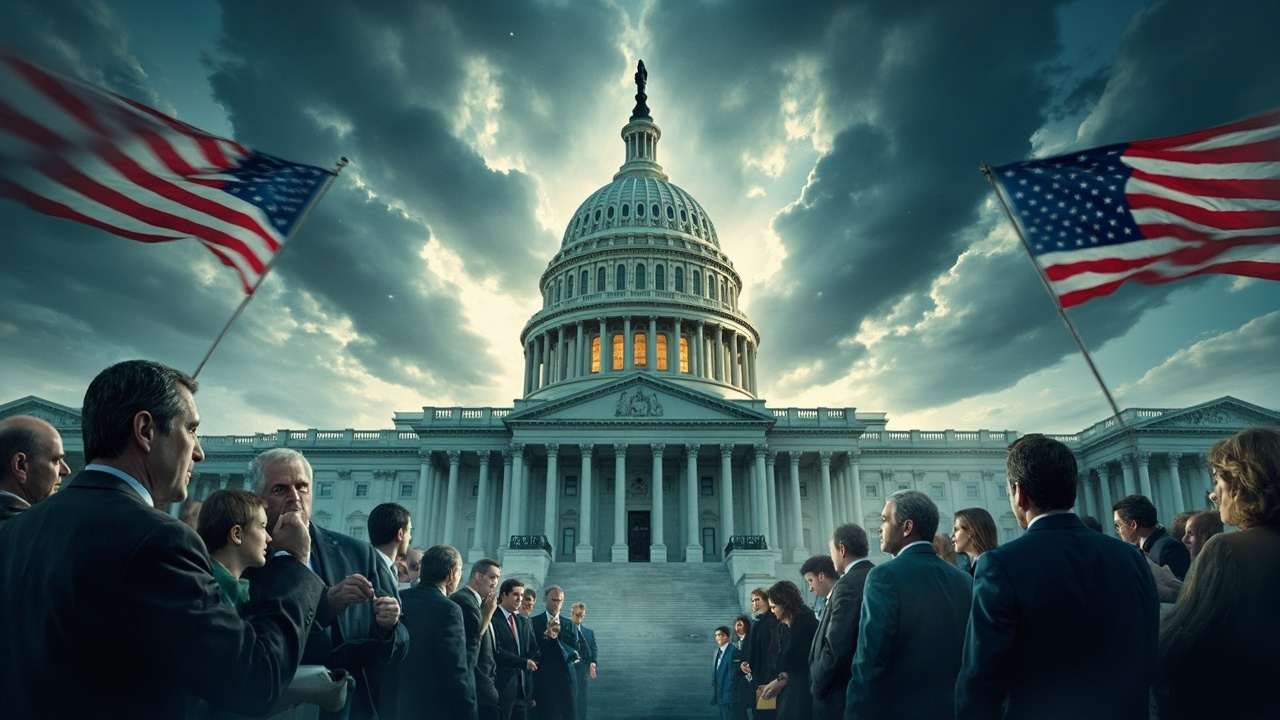
Washington, D.C. — Congress voted Thursday to reopen key parts of the Department of Homeland Security after a record-breaking 75-day partial shutdown that left TSA agents working without pay, snarled airport security lines across the nation, and exposed deep fissures in the Republican Party’s ability to govern.
President Donald Trump signed the bill into law shortly after the House passed it by voice vote — a deliberate move to avoid putting individual Republicans on record. The package funds DHS agencies including the Transportation Security Administration, the Coast Guard, and FEMA, but critically includes no money for federal immigration enforcement, marking a significant concession by House GOP leadership and a clear victory for Democrats.
How the Shutdown Ended
Speaker Mike Johnson made the decision to move forward after a private leadership meeting Thursday morning where his team concluded they had no other choice, according to multiple sources familiar with the discussions. Centrist Republicans had been warning for weeks that the situation was becoming politically untenable, and DHS Secretary Markwayne Mullin — a former House member himself — had repeatedly warned leadership that the department was almost out of money.
The breaking point came when GOP leaders recognized that the deteriorating situation at airports and border facilities would only further underscore their party’s diminishing ability to govern in a House rife with divisions and infighting. Johnson, who had spent weeks trying to placate ultraconservative hardliners demanding immigration enforcement funding be included in any DHS package, ultimately chose survival over ideology.
The Conservative Revolt That Wasn’t
Conservative hardliners who had held up the bill for weeks eventually admitted they had lost their leverage. Rep. Andy Harris, who leads the House’s ultraconservative bloc, told reporters bluntly: “You really can’t stop anything from passing” when dozens of Democrats are willing to help.
Senate Majority Leader John Thune, who had been pressing House Republicans to approve the legislation for weeks, reacted with barely concealed relief. “I’m glad they passed it,” he said softly, smiling without gloating. When a reporter noted the House had followed the Senate’s lead by avoiding a recorded vote, Thune smiled wider but bit his tongue. “Yeah,” he said before a long pause. “I probably shouldn’t.”
Not all Republicans were gracious. Rep. Chip Roy of Texas called his party’s funding strategy “asinine.” But even Roy and other ultraconservatives largely defended Johnson, with Rep. Clay Higgins of Louisiana saying the speaker “handled, under the circumstances, very well.”
What the Shutdown Cost
The 75-day partial shutdown — the longest in the department’s history — had cascading effects across the country:
- TSA delays: Security checkpoint wait times at major airports exceeded 90 minutes during peak hours, with some airports reporting screening lanes closing due to staff shortages as unpaid workers called in sick.
- Coast Guard operations: Maritime patrols were reduced by an estimated 40 percent, with the service prioritizing search-and-rescue over drug interdiction and fisheries enforcement.
- FEMA preparedness: The agency’s disaster response capabilities were degraded heading into hurricane season, with training exercises postponed and supply chain contracts left unsigned.
- Worker hardship: Approximately 160,000 DHS employees worked without pay for periods ranging from several weeks to the full 75 days, with many forced to rely on food banks and emergency loans.
The Immigration Enforcement Fight Isn’t Over
The department’s funding woes are not fully resolved. Republicans now plan to fund Immigration and Customs Enforcement separately through a complex budgetary maneuver known as reconciliation, which requires only a simple majority and cannot be filibustered by Democrats in the Senate. The GOP separately funded ICE through the same process last year, eliminating any immediate crisis at the immigration enforcement agency.
However, the political damage has been done. Democrats have already begun using the shutdown as a campaign weapon, arguing that Republicans prioritized ideological purity over national security and the livelihoods of hundreds of thousands of federal workers. The episode has also raised fresh questions about Speaker Johnson’s grip on his conference, with multiple GOP sources describing a leader increasingly caught between an uncompromising right flank and vulnerable moderates facing tough re-election campaigns.
What Happens Next
The immediate crisis is over, but the structural problems that created it remain. DHS is funded only through the end of the fiscal year, setting up another potential showdown in September. The reconciliation process for ICE funding could take weeks, and there is no guarantee it will succeed given the narrow House Republican majority.
Meanwhile, the 75-day shutdown has already entered the record books as the longest partial government shutdown involving a Cabinet-level department, surpassing the 35-day shutdown of 2018-2019. Its political reverberations will be felt well beyond the halls of Congress — in airport terminals, along coastlines, and at the ballot box in November.