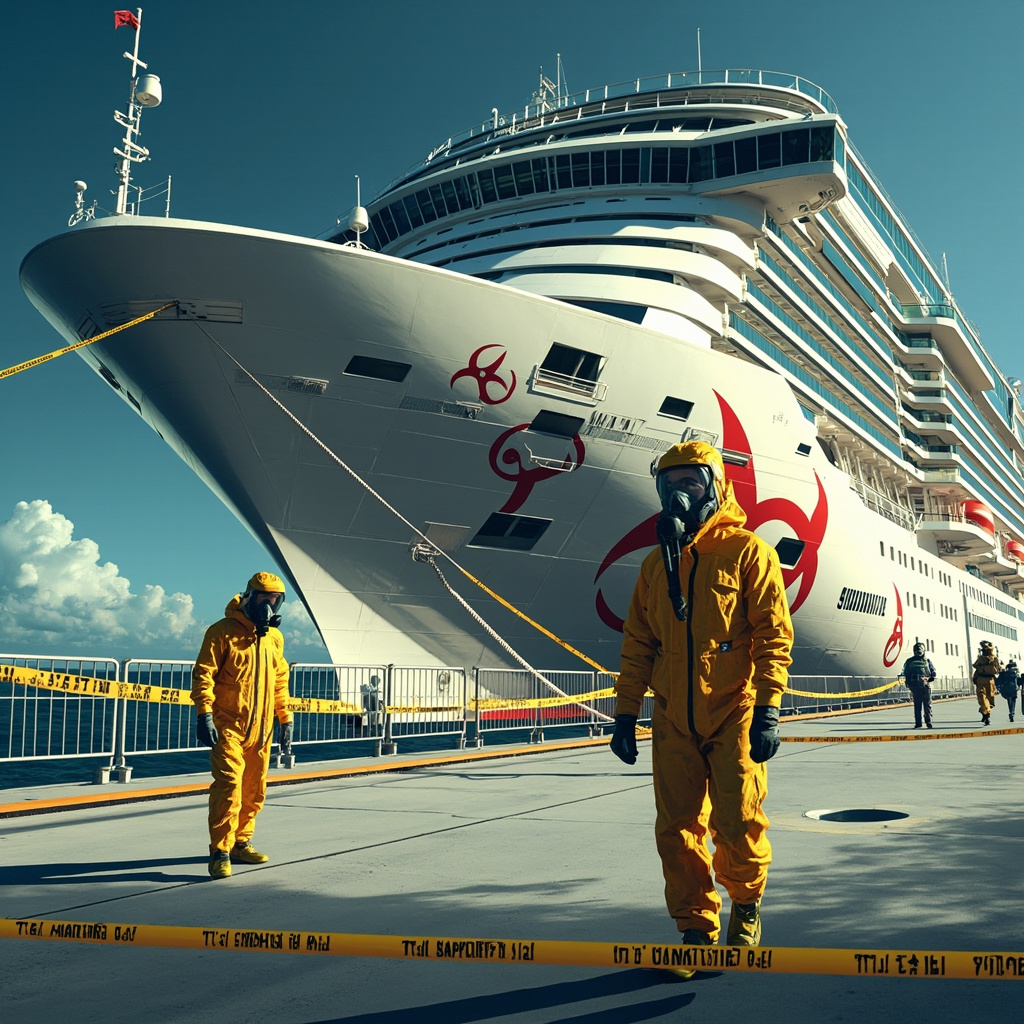
A rare and deadly hantavirus strain capable of human-to-human transmission has killed three passengers aboard a Dutch-flagged cruise ship, triggering an international health emergency and forcing 145 people into quarantine off the coast of Cape Verde.
Three Dead, Seven Infected: A Cruise Turns Into a Medical Nightmare
What began as an Antarctic cruise adventure has become a floating medical crisis. On May 2, 2026, the World Health Organization received notification from the United Kingdom about a cluster of severe acute respiratory illness aboard the MV Hondius, a Dutch-flagged expedition vessel operated by Oceanwide Expeditions. By May 4, the toll was grim: seven confirmed and suspected cases of hantavirus, including three deaths and one patient in critical condition.
The vessel, carrying 147 passengers and crew, departed Ushuaia, Argentina on April 1, 2026, following an itinerary across the South Atlantic with stops in Antarctica, South Georgia, Nightingale Island, Tristan da Cunha, and Saint Helena. It was during this voyage that passengers began falling ill with symptoms ranging from fever and gastrointestinal distress to rapid progression to pneumonia, acute respiratory distress syndrome, and shock.
Laboratory testing conducted in South Africa confirmed hantavirus infection in the critically ill patient. The Andes virus strain — a specific species of hantavirus endemic to South America — was identified as the culprit. Unlike most hantaviruses, Andes virus is notable for its rare but documented ability to spread through human-to-human transmission, a characteristic that has placed global health authorities on high alert.
Evacuation and Quarantine: 145 Remain Aboard
Three infected passengers were evacuated from the ship while it was stationed off the coast of Cape Verde to receive medical treatment in the Netherlands. Several Spanish citizens among the remaining 145 people on board prompted Spanish authorities to allow the vessel to dock at the Canary Islands, where additional medical support could be provided.
The WHO currently assesses the risk to the global population as low but has emphasized that the situation remains fluid. “WHO currently assesses the risk to the global population from this event as low and will continue to monitor the epidemiological situation and update the risk assessment,” the organization stated in its Disease Outbreak News report published May 4, 2026.
However, the discovery that at least 62 more people may have been exposed to the virus has escalated concerns. Contact tracing and medical monitoring are ongoing, with health authorities in multiple countries coordinating the international response. The ship’s remote itinerary — visiting ecologically diverse and isolated regions — has complicated efforts to track potential exposure routes.
What Is Hantavirus and Why Is Andes Virus So Dangerous?
Hantaviruses are a family of viruses transmitted primarily through contact with the urine, feces, or saliva of infected rodents. In the Americas, hantavirus pulmonary syndrome (HPS) has a case fatality rate of approximately 36 percent, making it one of the most lethal viral respiratory diseases known to medicine.
The Andes virus, endemic to Chile and Argentina, is the only hantavirus known to be capable of person-to-person transmission. Previous outbreaks in Chile have demonstrated limited but documented human-to-human spread, particularly in close-contact settings — exactly the environment a cruise ship provides.
“Human hantavirus infection is primarily acquired through contact with the urine, faeces, or saliva of infected rodents. It is a rare but severe disease that can be deadly,” the WHO report noted. “Although uncommon, limited human to human transmission has been reported in previous outbreaks of Andes virus.”
International Response and Travel Industry Implications
The outbreak has triggered a coordinated international response involving health authorities from the United Kingdom, the Netherlands, South Africa, Spain, and Cape Verde. The WHO is managing the crisis through in-depth investigations, case isolation and care, medical evacuation procedures, and laboratory analyses.
For the cruise industry, already battered by the COVID-19 pandemic’s devastating impact on public confidence, the MV Hondius outbreak represents a new challenge. Expedition cruises to remote destinations like Antarctica have been a growth market, attracting adventure travelers willing to pay premium prices for unique experiences. But the combination of remote itineraries, limited medical facilities, and close-quarter living conditions makes these vessels potential incubators for infectious disease.
The timing is particularly sensitive, as global health authorities are still rebuilding trust after the COVID-19 pandemic. The WHO’s careful language — stressing low global risk while simultaneously monitoring 62 additional potential exposures — reflects the delicate balance between transparency and avoiding panic.
What Happens Next?
As the MV Hondius makes its way toward the Canary Islands, several critical questions remain unanswered: How did the virus initially infect passengers — through rodent exposure at one of the remote ports of call, or through human-to-human transmission from an initially infected individual? Are the 62 additional potentially exposed individuals showing any symptoms? And most critically, will the Andes virus’s limited human-to-human transmission capability manifest in secondary infections aboard the ship?
For now, the world watches as a small cruise ship off the coast of West Africa becomes the latest test of global pandemic preparedness — a reminder that the next health emergency can emerge from the most unexpected of places.
Rachel Torres is a breaking news correspondent covering international affairs and global health.