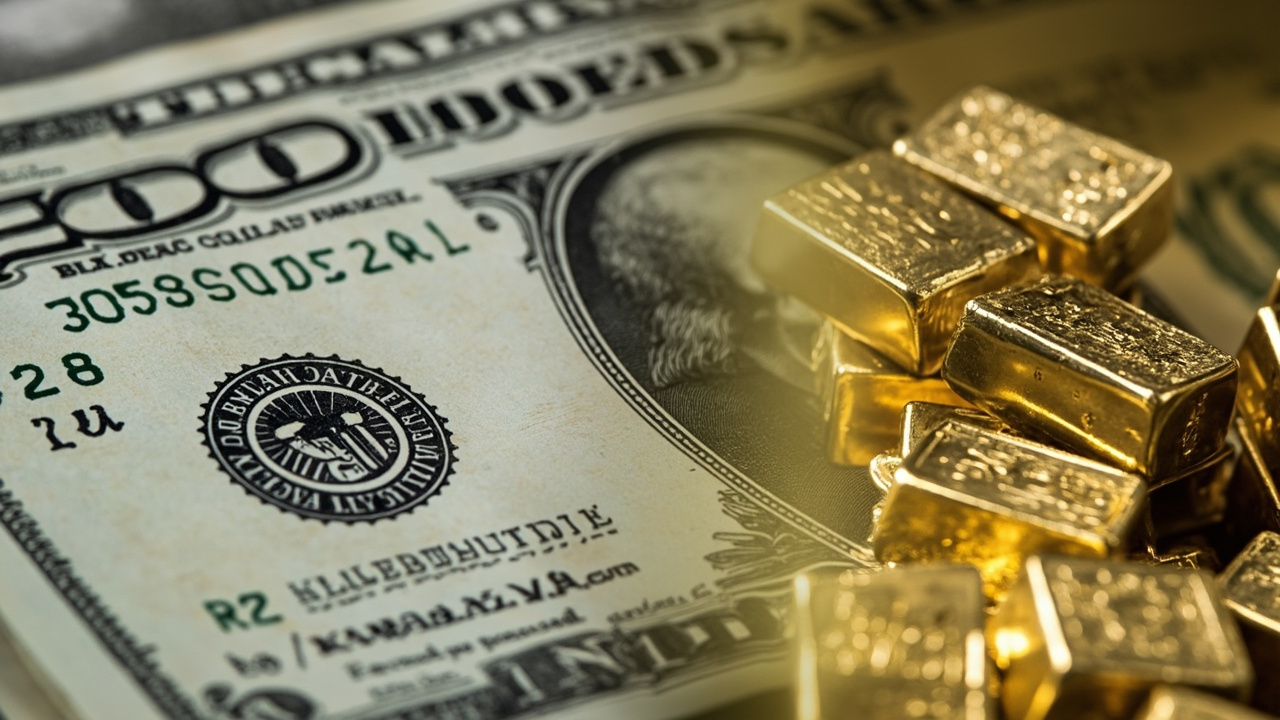
For more than eight decades, the US dollar has served as the bedrock of the global financial system — the currency in which oil is traded, commodities are priced, and central banks hold their reserves. That status, long assumed to be unassailable, is now being quietly tested in ways that would have seemed unthinkable a generation ago.
A confluence of factors — fiscal deterioration in Washington, the weaponization of the dollar through sanctions, the rise of rival financial infrastructure, and a growing consensus that the current system serves American interests less than it once did — has accelerated a structural shift that economists have long warned about but policymakers have preferred to ignore.
The Sanctions Paradox
The United States has wielded the dollar as a foreign policy weapon with increasing frequency over the past decade, freezing central bank reserves, expelling banks from the SWIFT messaging system, and imposing cascading sanctions on adversaries and, occasionally, allies. Each action achieved its immediate tactical objective. But the cumulative effect has been to demonstrate — to governments, central banks, and corporations around the world — that dollar access is a privilege that can be revoked at the pleasure of Washington.
The consequences are now visible in reserve composition data. The share of global central bank reserves held in dollars has fallen to 54 percent, its lowest level since the Bretton Woods system was dismantled in 1971. China, Russia, India, Brazil, and a dozen smaller economies are actively reducing their dollar exposure, swapping dollar holdings for gold, euros, yuan, and bilateral currency agreements that sidestep the American financial system entirely.
We are witnessing the beginning of the end of dollar hegemony. Not through a sudden crisis, but through a gradual, rational diversification by actors who have concluded that the risks of dollar dependence now outweigh the benefits.
Former US Treasury Secretary, Council on Foreign Relations, April 2026
The Gold Revival
Perhaps the most striking indicator of the shift is the renaissance of gold. Central banks worldwide have purchased more gold in the past three years than at any point since the Cold War, with China, Turkey, India, and Poland leading the accumulation. Unlike dollar-denominated assets, gold carries no counterparty risk, cannot be frozen by sanctions, and does not depend on the continued goodwill of Washington.
The metal has outperformed most major asset classes over the past two years, breaking through $4,000 per ounce in early 2026 as demand from central banks and retail investors converged. Mining companies are struggling to increase supply fast enough to meet demand, a structural constraint that analysts expect to keep prices elevated for years.
BRICS Currency Experiments
The BRICS grouping has made the creation of an alternative to the dollar-denominated financial system a stated policy objective. The BRICS Bridge payment platform, launched in late 2025, allows member nations to settle bilateral trade directly in local currencies without touching dollars or the SWIFT network.
Over 40 percent of China-Russia trade now bypasses the dollar entirely. Saudi Arabia has begun pricing some oil contracts in yuan. The UAE and India have established a rupee-dirham settlement corridor. Each individual development is modest; collectively, they represent a systematic dismantling of dollar exclusivity.
The Fiscal Reality
Underlying the geopolitical competition is a simpler, more troubling arithmetic. The United States federal debt now exceeds $38 trillion, with annual interest payments surpassing $1.2 trillion — more than the defense budget. The Congressional Budget Office projects that interest costs will exceed $1.5 trillion within three years even under baseline assumptions. This is the dollar’s deepest vulnerability: a reserve currency sustained by a government whose fiscal trajectory is widely viewed as unsustainable by international investors.
So far, the market has given Washington extraordinary latitude. The dollar remains strong, and US borrowing costs, while elevated, have not spiraled. But this patience is not infinite. The moment foreign investors begin demanding a meaningful risk premium on US debt — the way they once demanded on Greek or Argentinian debt — the adjustment could be sudden and severe.
What It Means for Americans
The erosion of dollar dominance is not an abstract macroeconomic phenomenon. It has direct consequences for American living standards. When the dollar weakens — as it inevitably will if reserve status diminishes — imports become more expensive, driving up consumer prices. The United States’ ability to borrow cheaply, which depends on foreign capital flowing into dollar assets, becomes more costly.
The transition, if managed well, need not be catastrophic. A gradual, negotiated shift toward a more multipolar monetary system — with the dollar remaining important but less dominant — is the most likely outcome. But that outcome requires facing uncomfortable truths about fiscal policy, sanctions overreach, and the limits of financial warfare as a foreign policy tool.
The dollar’s reign is not ending tonight. But the clock is running, and the decisions made in Washington in the next five years will determine whether the transition is orderly or disorderly.
James Wright is the Economy Correspondent for Media Hook, covering markets, monetary policy, and the forces shaping the American economy.