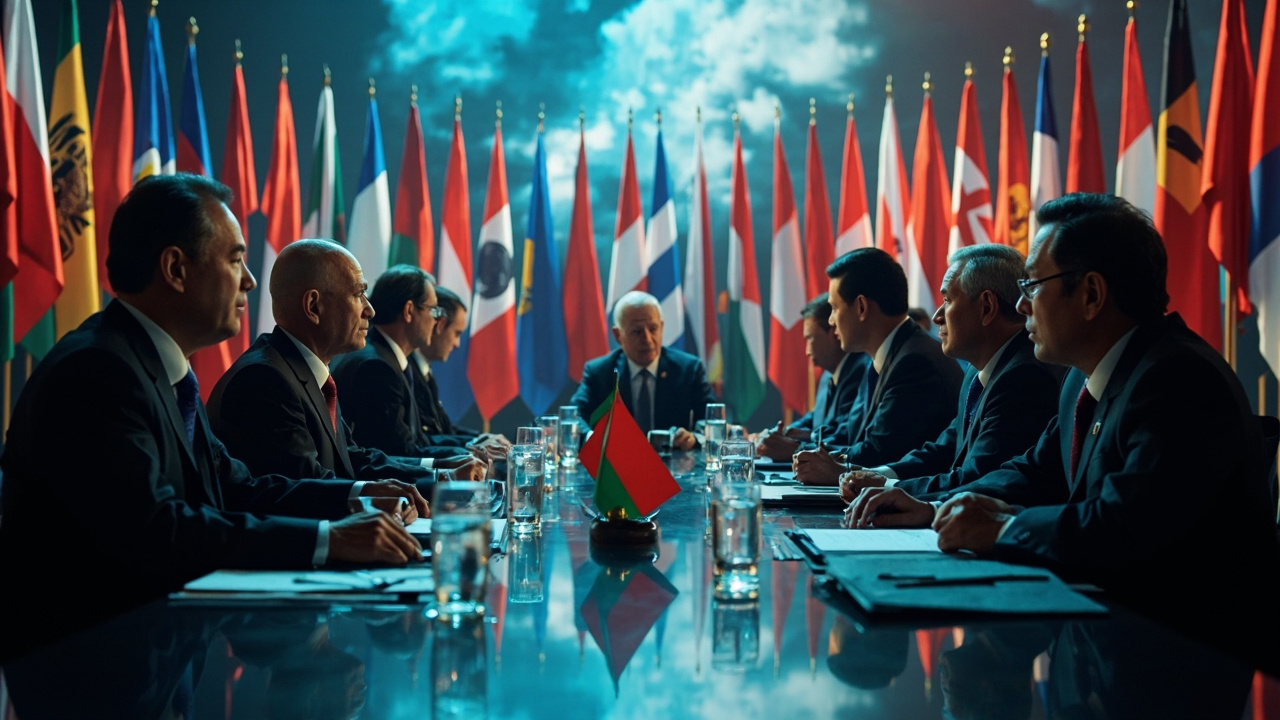
On May 12, 2026, a cargo vessel departed Rotterdam carrying 40 German Leopard 2 tanks bound for a NATO eastern flank staging point. It was one of thousands of equipment movements Europe is now funding, scheduling, and executing without a single American approval. That is new. And it is only the beginning.
The Numbers That Shook the Alliance
Europe’s defense spending trajectory has fundamentally shifted. According to data released this week by the Hague-based European Defence Agency, EU member states collectively committed €800 billion toward defense modernization over the 2026–2032 period — the largest such commitment in the continent’s peacetime history. This is not reactive procurement. It is strategic intent, codified in procurement schedules, ratified by national parliaments, and backstopped by a new EU defense bond instrument that bypasses traditional capital markets.
The proximate driver is the accelerating American military withdrawal from Germany and Spain, confirmed by TIME on May 3. The drawdown — described by one Pentagon official as “the first stage of a structured reallocation” — reduces U.S. deployed forces in Europe by an estimated 40 percent over 18 months. For European defence planners who spent decades factoring American airpower, logistics chains, and tactical nuclear deterrence into their war scenarios, that is not an abstraction. It is a force planning gap that needs filling by Thursday.
“Europe is no longer asking whether it can afford strategic autonomy. It is asking how fast it can acquire it.” — Dr. Hanna Fischer, German Institute for Defence Studies, May 7, 2026
Independent analysis from the Hague Centre for Strategic Studies, published April 2026, quantifies the specific gap: Europe needs an additional $55 billion annually — above existing NATO commitment thresholds — to achieve meaningful independent operational capacity. The math is not soft. It involves fleet availability rates for strategic airlift, ammunition stockpiles calibrated for high-intensity conflict durations, and industrial base depth sufficient to sustain a prolonged conventional fight without American logistics backstops.
The Strategic Compass Gets Real
The EU’s Strategic Compass for Security and Defence — long derided as a policy document without a wallet — has changed character. The Compass now has a funding architecture attached to it: the European Defence Fund, the ASAP military mobility corridors, and a newly authorized €100 billion defense sovereign bond program. The May 7 DefenseNews reporting on the €50 billion annual threshold confirms that European defence analysts now consider full strategic autonomy a credible, if still expensive, destination rather than a political slogan.
What this means operationally is a restructuring of European force design. NATO’s eastern flank states — Poland, the Baltic trio, Romania, and Finland — are moving fastest, driven by geographic proximity to potential conflict zones and a cultural comfort with defence investment that their western European counterparts are still learning to emulate. Warsaw has committed 5 percent of GDP to defence, a figure that would have seemed inconceivable a decade ago and that is now the benchmark against which the EU’s broader ambition is measured.
The structural implication is significant: Europe is no longer a security consumer. It is attempting — awkwardly, unevenly, but genuinely — to become a security provider. That transition has diplomatic consequences that have nothing to do with procurement schedules.
The Diplomatic Cost of Self-Help
European strategic autonomy is not a cost-free proposition for the transatlantic relationship. A Europe that can defend itself also has less reason to defer to American strategic preferences. This is not lost on Washington. The May 2026 SIGAR equivalent — a Congressional Budget Office analysis noting that the European drawdown would “reduce America’s ability to shape alliance outcomes through resource leverage” — reflects a real calculation inside the U.S. foreign policy establishment: the allies who used to need America are now actively working to need America less.
For Secretary of State Rubio’s team, the challenge is reframing America’s role in a Europe that is investing heavily in self-defence. The options are limited: maintain forward presence at reduced scale and accept a junior partnership role in European security; withdraw almost entirely and focus Indo-Pacific; or compete with European defence industrial investments through subsidy wars that would damage both sides. None of those options is strategically comfortable, which is precisely why Washington has not resolved the debate.
The irony is that Europe moving toward strategic autonomy in part reflects America’s own pressure. The transactional framing of alliance commitments, the threats to withdraw Article 5 guarantees, the demands for European defence spending increases delivered as ultimata rather than negotiated within a shared strategic framework — all of these have had the effect that their proponents claimed to want. Europe is spending more. The question no one in Washington seems willing to answer is whether the method of getting there has permanently altered the relationship.
The Iran Wild Card
Any assessment of Europe’s strategic trajectory must account for the unpredictable variable sitting in the middle of it: Iran. Nuclear talks between the United States and Iran are at a critical juncture. Reports from May 17 indicate that negotiations have hit a deadlock over Iran’s enriched uranium stockpile and the sequencing of sanctions relief. Trump administration officials are signaling pressure for a final agreement before the November G20 summit, while Tehran is signaling that it will not accept terms that compromise its civilian nuclear program.
Europe has a disproportionate stake in the Iran outcome. The EU — particularly the EU3 (France, Germany, United Kingdom) — invested enormous diplomatic capital in the Joint Comprehensive Plan of Action and considers its restoration strategically important. A failed Iran deal produces a regional arms race in the Middle East, a nuclear proliferation risk, and increased migration pressure on southern Europe. All three outcomes complicate Europe’s force planning assumptions. A Europe that is simultaneously building strategic autonomy must now also budget for a potential Middle Eastern destabilization scenario — one that the United States, focused on the Indo-Pacific, may not be in a position to manage alone.
“The moment Europe starts spending seriously on defence is the moment it discovers that strategy is not free — and that the hard choices are just beginning.” — European Defence Agency Annual Assessment, 2026
Structural Risks on the Horizon
The €800 billion commitment is a headline number. What it conceals is structural fragility that could undermine the entire enterprise. First, defence spending commitments that pass through national parliaments in political good times can be revised downward when governments face domestic fiscal pressure — and 2026 is not a year of European fiscal ease. Second, industrial base constraints mean that more money does not automatically translate into deployable capability. European tank manufacturers, missile producers, and aerospace firms are scaling up, but the timelines for delivering operational combat power stretch out years beyond procurement announcements. Third, the political compact that makes this spending possible is itself fragile: the Franco-German axis that historically drives EU defence integration has tensions over industrial policy that could resurface.
The test will come at the next NATO summit, scheduled for The Hague in June 2026. The summit will formalize what is already becoming apparent: the alliance is not ending, but it is changing. America is not leaving, but it is reducing. Europe is not filling the vacuum so much as occupying the space that is being vacated. The strategic architecture of the transatlantic alliance in 2030 will look different from what it looked like in 2020. The direction of travel is now clear — and Europe, at last, is paying for the trip.