Fed Holds Rates as Hawkish Pivot Forces Markets to Reprice Rate-Cut Bets
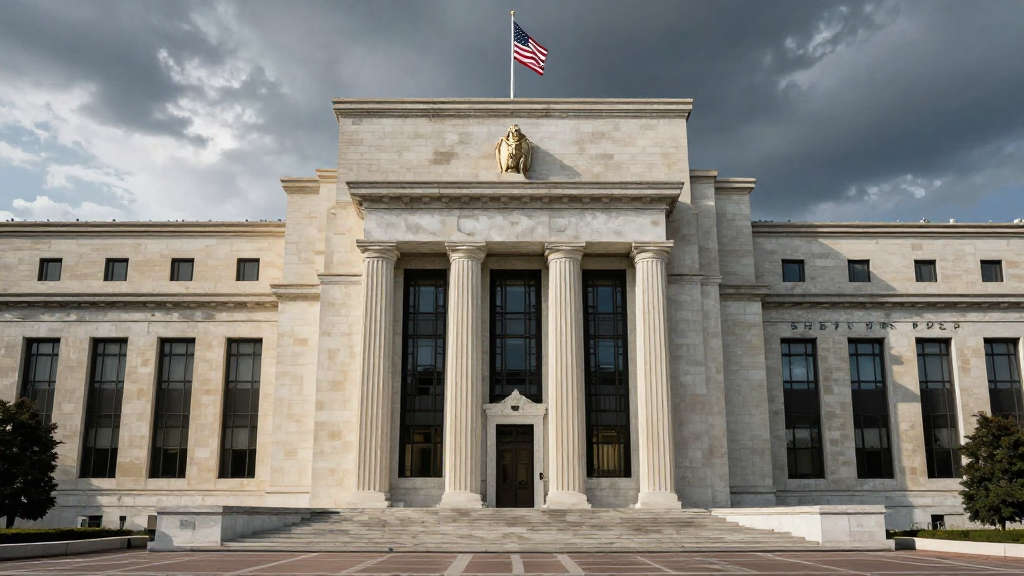
The Federal Reserve held interest rates steady on Wednesday, but policymakers now expect a hike in borrowing costs later this year amid growing concerns that inflation remains lodged above the U.S. central bank’s two percent target, according to a policy statement and new quarterly projections released after the Federal Open Market Committee’s two-day meeting.
Inflation Above Target Forces Hawkish Rethink
New quarterly projections showed nine Fed officials now anticipate a hike in rates by the end of 2026, a significant shift from prior expectations that had pointed toward further easing. The updated policy statement removed language that had been used to flag the likelihood of further reductions in borrowing costs this year, a clear signal that the committee’s stance has shifted decisively toward vigilance on price pressures.
“We are committed to returning inflation to our two percent objective,” the statement read, a phrase that officials have repeated across multiple meetings but one that carries sharper weight given the current trajectory of price growth.
The revised format, described by analysts as a return to a style similar to that used by former Fed chairman Alan Greenspan, was approved by a unanimous 12-to-zero vote. Rather than offering forward guidance, the statement simply noted the rate decision and reaffirmed the central bank’s intent to keep ample reserves in the banking system, stripping away the careful signaling language that had characterized statements under Powell’s leadership.
Warsh’s Early Influence Visible in Statement Tone
The statement showed early signs of new Fed chairman Kevin Warsh’s influence on the debate, as he takes over after being appointed earlier this year by President Donald Trump, who had publicly pressured the central bank for rate cuts. The description of the economy touched on issues Warsh has long emphasized, noting that productivity growth and capital investment are strong, suggesting a shift in focus toward supply-side improvements as a driver of long-term economic health.
“Productivity growth is the key variable,” Warsh told reporters at the post-meeting press conference. “If American businesses continue to invest and innovate, the supply side of the economy can absorb pressures that would otherwise require tighter monetary policy to contain.”
While acknowledging that inflation was elevated relative to the central bank’s target, the statement also highlighted labor market conditions, noting that job gains had been solid and the unemployment rate remained low. That balanced tone masks underlying tension: officials are grappling with an economy where price pressures refuse to fully normalize even as growth shows signs of moderation.
Market Reaction and Economic Outlook
Financial markets reacted with notable volatility following the announcement. Yields on short-term Treasury securities rose sharply as traders repriced the likelihood of rate cuts, with fed funds futures now suggesting that any move before year-end is unlikely. Equity markets initially fell on the hawkish signals before stabilizing, with investors parsing the changed statement language for clues about the pace and timing of any future adjustments.
The decision arrives against a backdrop of persistent inflation that has confounded the Fed’s expectations for much of the past two years. While headline inflation has declined substantially from its 2022 peak, it has proven sticky in certain categories, particularly in services where shelter costs and wages remain elevated. The Fed’s own projections now suggest that inflation will not return to target until well into 2027, a timeline that has rattled bond investors who had anticipated earlier relief.
Uncharted Territory for the New Chairman
For Warsh, the meeting represented a pivotal introduction to his chairmanship, coming just months after his appointment by a president who had been vocal in calling for lower rates. The unanimous vote suggests internal cohesion, but analysts cautioned that the real test will come as the year progresses and inflation data continues to arrive. The chairman will need to balance political pressure with the Fed’s mandate for price stability, a tightrope that his predecessors have navigated with varying degrees of success.
Consumer confidence indices have shown increasing sensitivity to rate expectations, with surveys suggesting that households are growing more cautious about major purchases as borrowing costs remain elevated. Business investment, while boosted by productivity narratives, faces headwinds from higher financing costs and uncertainty about the regulatory environment.
The next FOMC meeting is scheduled for September, when updated economic projections will provide a fuller picture of where the committee collectively sees the economy heading. Until then, policymakers will be watching a slate of inflation and employment data that will either reinforce or complicate the hawkish pivot signaled this week. Analysts at major banks have already begun revising their forecasts, with several now projecting no rate changes through the first half of 2027.