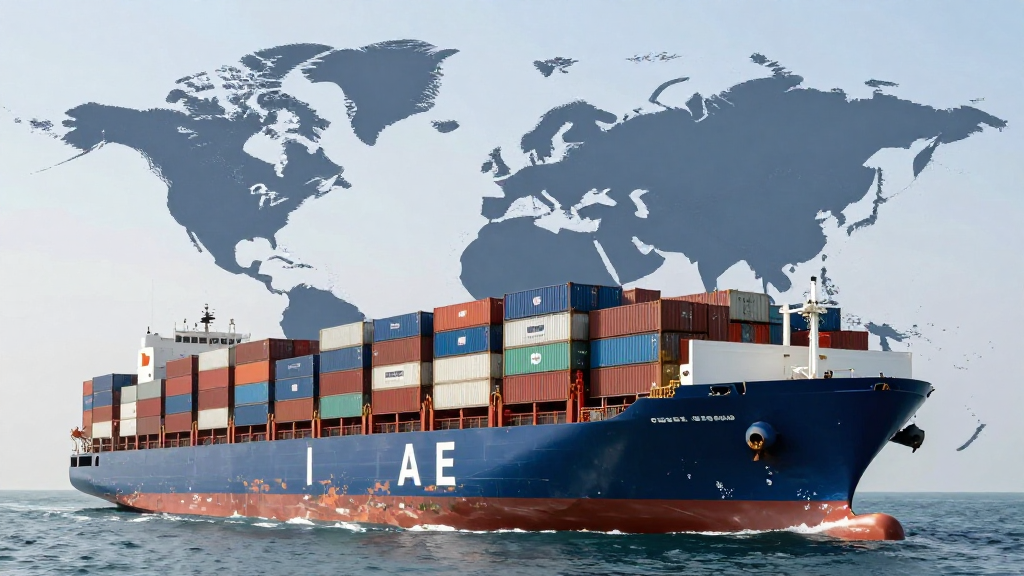
The global economy is navigating a rare moment where two powerful forces are pulling in opposite directions at the same time. On one side, a worldwide wave of protectionism is driving nations to erect fresh barriers against foreign goods, reshaping supply chains and pushing import costs higher. On the other, major central banks are moving in sharply different directions — some holding rates steady while others cut aggressively, creating waves of capital movement that complicate the picture for policymakers everywhere. The result is an era of deep economic divergence where the rules governing international commerce are being rewritten in real time, and no country’s playbook is the same.
The most immediate trigger for this rupture is the escalating tariff conflict that has moved well beyond the opening salvos of 2025. The United States under the Trump administration’s second term has imposed sweeping duties on Chinese goods, triggering retaliatory measures from Beijing that have now spread to third-country suppliers suspected of serving as transshipment routes. Europe, which initially sought a negotiated settlement, crossed its own threshold in June when the European Commission approved countermeasures targeting approximately 26 billion euros in American exports — a list that includes industrial machinery, aerospace components, and agricultural products concentrated in politically sensitive rural constituencies. China’s own tariff regime has moved beyond technology products into raw materials, creating bottlenecks in sectors that had come to rely on Chinese processing capacity as a structural given.
The Tariff Architecture Is Shifting Permanently, Not Temporarily
What makes the current trade conflict structurally different from the episodic spats of the past two decades is the degree to which it is being embedded into domestic political coalitions. In Europe, the shift toward protectionism has attracted rare cross-party consensus, with industrial unions and agrarian interests aligning behind the view that globalization outsourced too much productive capacity without adequate safeguards. In the United States, the bipartisan consensus supporting free trade has fractured along new lines, with fiscal conservatives and labor Democrats finding unexpected common ground on restricting foreign competition. This political architecture makes a full reversal of tariff levels unlikely even if negotiations resume, because the constituencies that benefit from protection in key electoral states have now been mobilized and will punish any government that dismantles the barriers quickly.
The implications for corporate planning are severe. A manufacturer deciding whether to build a new facility in Michigan or Sonora must now account for the possibility that the tariff regime applicable to their inputs could change with little warning, rendering a three-year investment horizon suddenly uneconomical. This uncertainty is already showing up in capital expenditure data, where companies in tariff-exposed sectors have sharply reduced forward-looking investment guidance. The reshoring of manufacturing that policymakers celebrated as a success story of the 2025 industrial policy push is now being partially undermined by the very cost unpredictability that tariffs introduce. Executives who modeled reshoring as a one-time adjustment to a new normal are discovering that the adjustment may need to be repeated as tariff rates shift with each new round of retaliation.
“The companies that will survive this environment are those that build genuine optionality into their supply chains — not just a backup supplier in Vietnam, but a supplier network that can pivot within weeks rather than months,” said Marcus Chen, head of global trade research at Harmonic Capital Partners in Singapore. “Most corporate supply chain architectures were optimized for a world of stable tariffs and predictable logistics costs. That world is gone, and the transition is painful.”
Central Banks Are Responding to the Same Shock With Completely Different Tools
The Federal Reserve’s decision to hold rates steady at its June 2026 FOMC meeting was the expected move in an environment where inflation remains above the 2 percent target but growth is showing signs of deceleration. What was less expected was the hawkish undertone in the post-meeting statement and the revised dot plot, which showed Fed officials projecting fewer cuts for the remainder of the year than markets had priced in. The message from Governor Warsh and his colleagues was clear: the central bank is not prepared to ease financial conditions in response to market volatility driven by trade uncertainty, because easing could reignite the inflation dynamics that took two years of restrictive policy to bring under control.
The contrast with the European Central Bank could not be starker. The ECB accelerated its rate-cutting cycle in June, responding to data showing that the eurozone’s recovery has been weaker than anticipated and that core inflation has fallen closer to target than in the United States. ECB President Lagarde signaled that the bank remains willing to act as a counterweight to fiscal tightening in member states, particularly in Germany where the new coalition government’s austerity posture has created a dual drag on domestic demand and industrial investment. The divergence between a hawkish Fed and a dovish ECB has pushed the euro to its weakest level against the dollar in over two years, making European exports cheaper in dollar terms while simultaneously making American goods more expensive in Europe — a dynamic that is reshaping trade flows in real time.
For emerging market economies, this central bank divergence creates a particularly acute dilemma. Countries that have linked their currencies to the dollar as an inflation anchor are now facing the blowback of that choice as the strong dollar makes their import bills more expensive and their external debt service more costly. Countries that allow their currencies to float are experiencing capital outflows as investors chase higher US yields, creating currency depreciation that simultaneously fights inflation domestically. The IMF has warned that at least 18 emerging market economies face a collision between the need to support growth and the need to defend their currencies, with central bank credibility hanging in the balance either way. The institutions that survived the 2022 rate shock with their policy frameworks intact are now being tested again under conditions that are structurally more complex, because the tariff dimension adds a supply-side inflationary pressure that conventional monetary policy is poorly equipped to address.
The Long Shadow Over the Second Half of 2026
Financial markets have absorbed the first wave of tariff announcements with a notable degree of compartmentalization — equity indices in the United States remain near record levels, driven by the performance of large technology companies whose revenue streams are relatively insulated from tariff dynamics. But the distribution of pain is becoming harder to ignore. Small and medium-sized manufacturers in the industrial heartland, exporters in emerging Asia, and consumer-facing businesses in Europe that rely on imported inputs are all reporting margin compression that is beginning to show up in employment data and corporate earnings guidance. The question analysts are increasingly asking is whether the sectors insulated from the initial shock will remain so as the tariff effects work their way through supply chains and eventually reach consumers in the form of higher retail prices.
The geopolitical overlay adds another layer of unpredictability. Negotiations between the United States and China remain deadlocked over core demands that neither side appears willing to concede, while the European Union’s countermeasures are structured in a way that is deliberately designed to apply political pressure on the American electoral calendar. The durability of these negotiating positions will be tested in the autumn when mid-term election dynamics in the United States and state elections in several key European countries create new incentives for either compromise or escalation. Until then, businesses and investors must navigate an environment where the tariff regime is a moving target, monetary policy is diverging across major blocs, and the rules governing global commerce are being written in real time by political calculations that follow their own internal logic rather than economic ones.
The era of predictable global economic governance that defined the three decades following the establishment of the World Trade Organization is over. What replaces it is still being negotiated, contested, and built — in boardrooms and government ministries, in trade courts and currency trading desks — and the outcome of that reconstruction will determine the structure of the world economy for a generation.