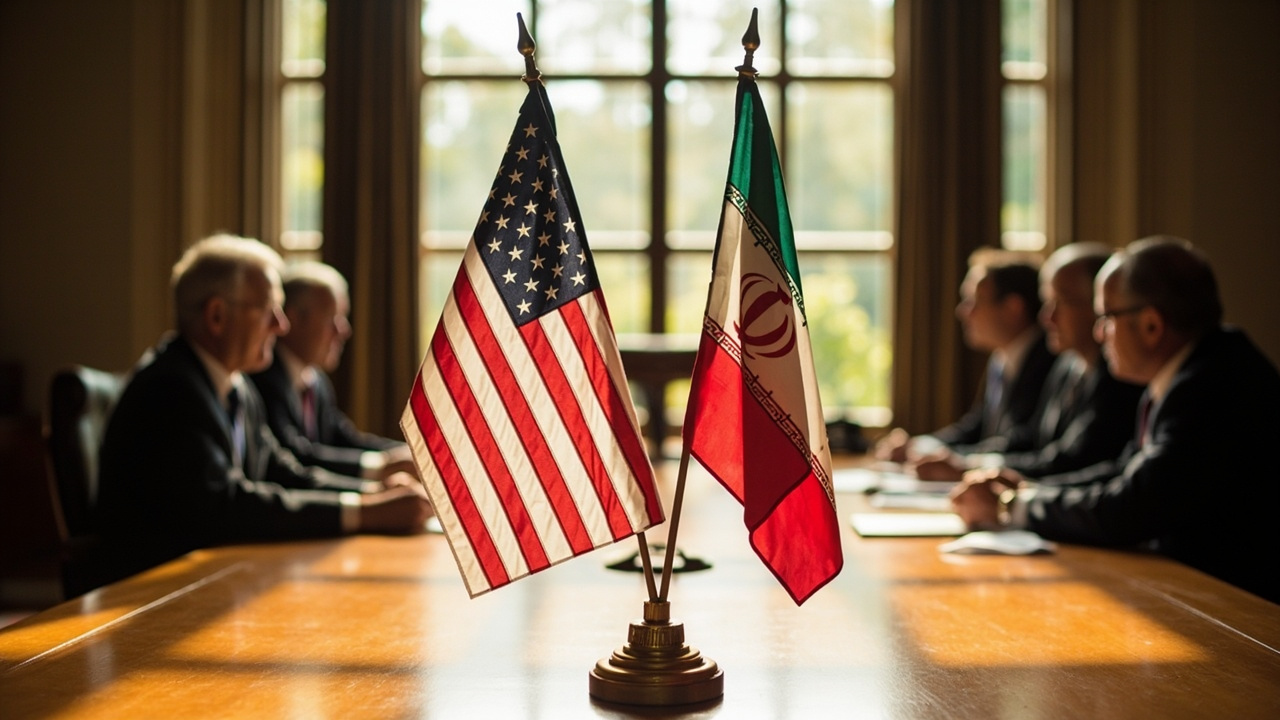
Trump has warned Tehran it cannot develop or procure a nuclear weapon, even as his administration signals a potential breakthrough in negotiations to end the US-Iran war and reopen the critical Strait of Hormuz.
“They must understand, however, that they cannot develop or procure a nuclear weapon or bomb,” Trump wrote on Truth Social on Sunday, adding that the US blockade on Iranian ships transiting the Strait would “remain in full force and effect” until a comprehensive agreement was reached.
The president said he told his representatives not to rush into any deal, cautioning that “time is on our side.” His comments came as US Secretary of State Marco Rubio, speaking from New Delhi alongside India’s foreign minister, said “significant progress” had been made in negotiations, though a final deal remained elusive.
“Some progress has been made — significant progress, although not final progress,” Rubio told reporters. He hinted that a further announcement could come within hours, noting that Iran’s uranium enrichment program remained a sticking point in discussions.
Oil markets reacted sharply to the developments. Brent crude futures fell 4.55 percent to $98.83 per barrel — a two-week low — amid optimism that a deal to reopen the Strait of Hormuz could ease supply disruptions that have kept global energy markets tight since the conflict began. West Texas Intermediate dropped to $92.03 per barrel, down 4.73 percent.
Tehran has not publicly committed to abandoning its uranium enrichment activities, a key US demand. Iran’s Fars news agency dismissed Trump’s announcement of an imminent reopening of the Strait as “incomplete and inconsistent with reality.” Iranian President Masoud Pezeshkian, however, told state television that Tehran was prepared to “assure the world that we are not after a nuclear weapon.”
The Strait of Hormuz handles roughly one-fifth of the world’s oil shipments. Its continued blockade has pushed fuel prices higher across Asia and Europe, complicating efforts to contain inflation in major economies. India, which imports most of its crude, has raised diesel and petrol prices four times this month alone.
Negotiations reportedly center on a draft framework that would lift the US naval blockade in exchange for Iran agreeing tolimit its nuclear activities and allow international inspectors full access to its facilities. The reopening of the waterway would signal a de-escalation of hostilities, though both sides have retained the right to resume military operations if terms are violated.