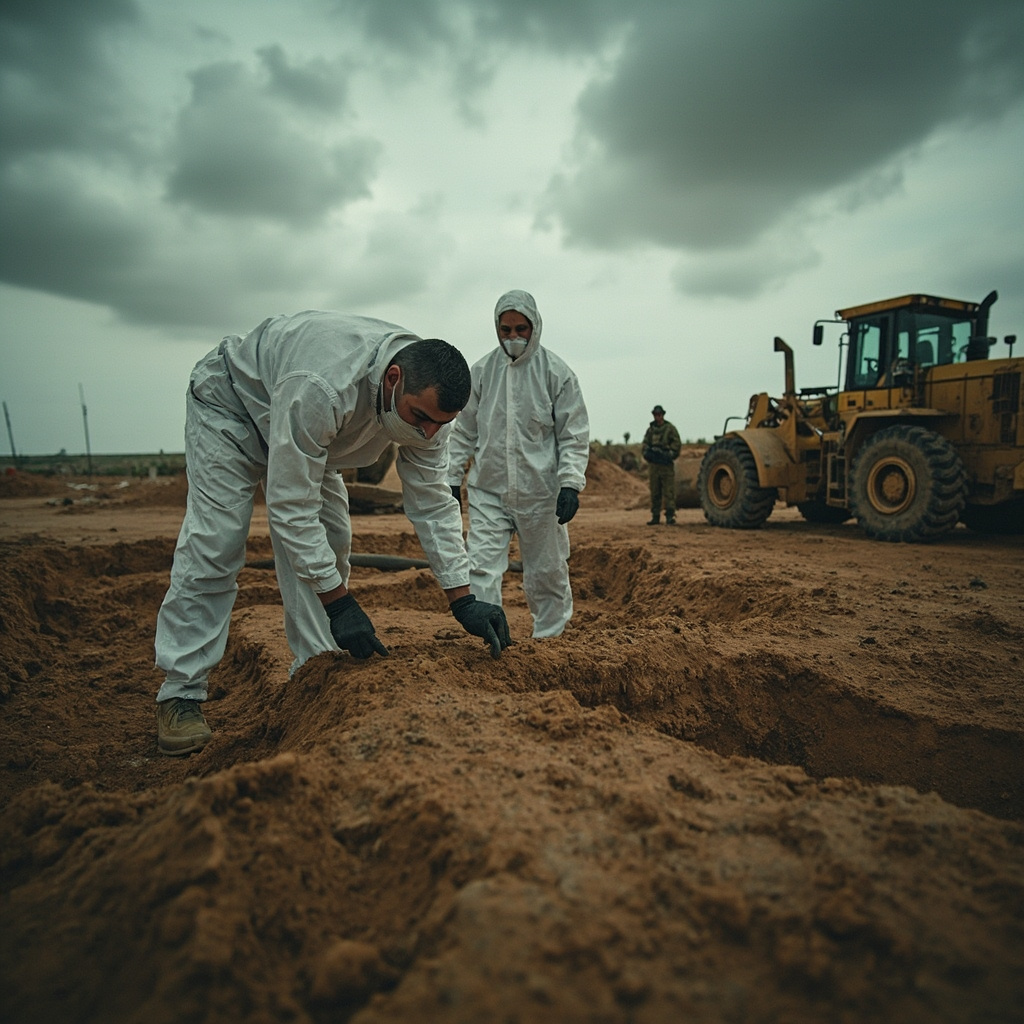
Forced Exhumation at Gunpoint
Eighty-year-old Hussein Asasa died of natural causes on Friday, May 8, and was buried shortly after in a cemetery in the village of Asasa, near Jenin. According to the family, the burial had been coordinated in advance with Israeli security authorities, who provided all necessary permits. However, within hours of the interment, settlers arrived at the cemetery claiming the grave site encroached on land belonging to the re-established settlement of Sa-Nur, located approximately 300 meters from the burial ground.
Mohammed Asasa, the son of the deceased, described the harrowing confrontation. “They said the land was for settlement and that burial was not allowed. We told them that this is the village’s cemetery, not part of the settlement,” he told journalists. The settlers reportedly threatened to use a bulldozer to exhume the body themselves if the family did not comply.
According to the Palestinian news agency Wafa, Israeli soldiers were present at the scene and also pressured the family to relocate the remains. “We found that they [the settlers] already dug the grave and reached the body,” Mohammed Asasa said. “We continued digging and got the body and buried him in another cemetery.” During the process, settlers threw stones at the grieving family, witnesses reported.
International Outcry
The United Nations Human Rights Office issued a strong condemnation of the incident. Ajith Sunghay, head of the OHCHR Palestinian office, described the forced exhumation as “appalling and emblematic of the dehumanisation of Palestinians that we see unfolding across the Occupied Palestinian Territory.” His statement underscored the gravity of the violation, noting that it “spares no one, dead or alive.”
The Israeli military issued a statement denying it gave reburial instructions to the family, claiming that soldiers were dispatched to the area after receiving reports of a confrontation involving settlers. The military said its troops confiscated digging tools from the settlers and remained at the scene to “prevent further friction.” Human rights groups have noted that such military presence at settler-led confrontations rarely results in effective protection for Palestinian civilians.
Rising Violence in the West Bank
The incident is the latest in a sharp escalation of settler violence across the occupied West Bank since the beginning of Israel’s military campaign in Gaza in October 2023. Settlers now carry out near-daily attacks on Palestinian villages and communities, including vandalism, arson, forced displacement, and physical assaults, sometimes involving firearms.
According to the Palestinian Authority’s Colonization and Wall Resistance Commission, at least 50 Palestinians have been killed by settlers since October 2023, including 15 in 2026 alone. In February, Amnesty International warned that global impunity was fueling Israel’s illegal annexation of the occupied West Bank, territory considered crucial for any future Palestinian state.
Under international law, all Israeli settlements in the occupied Palestinian territories are considered illegal and are not recognized as Israeli territory. Despite this, settlement expansion has accelerated since the current Israeli government took office, with the re-establishment of previously evacuated settlements such as Sa-Nur representing a particularly provocative development.
What This Means
The forced exhumation of Hussein Asasa marks a disturbing threshold in the ongoing conflict. While settler violence against living Palestinians has been extensively documented, the desecration of graves and coercion of grieving families to disinter their dead represents an escalation that human rights observers say reflects a broader pattern of impunity. The incident threatens to further inflame tensions across the West Bank and undermine already fragile ceasefire arrangements in the region.
