Kim Jong Un opens memorial museum honoring North Korean soldiers killed fighting alongside Russia in Ukraine, vowing continued military cooperation with Moscow in ceremony attended by Russian Defense Minister.
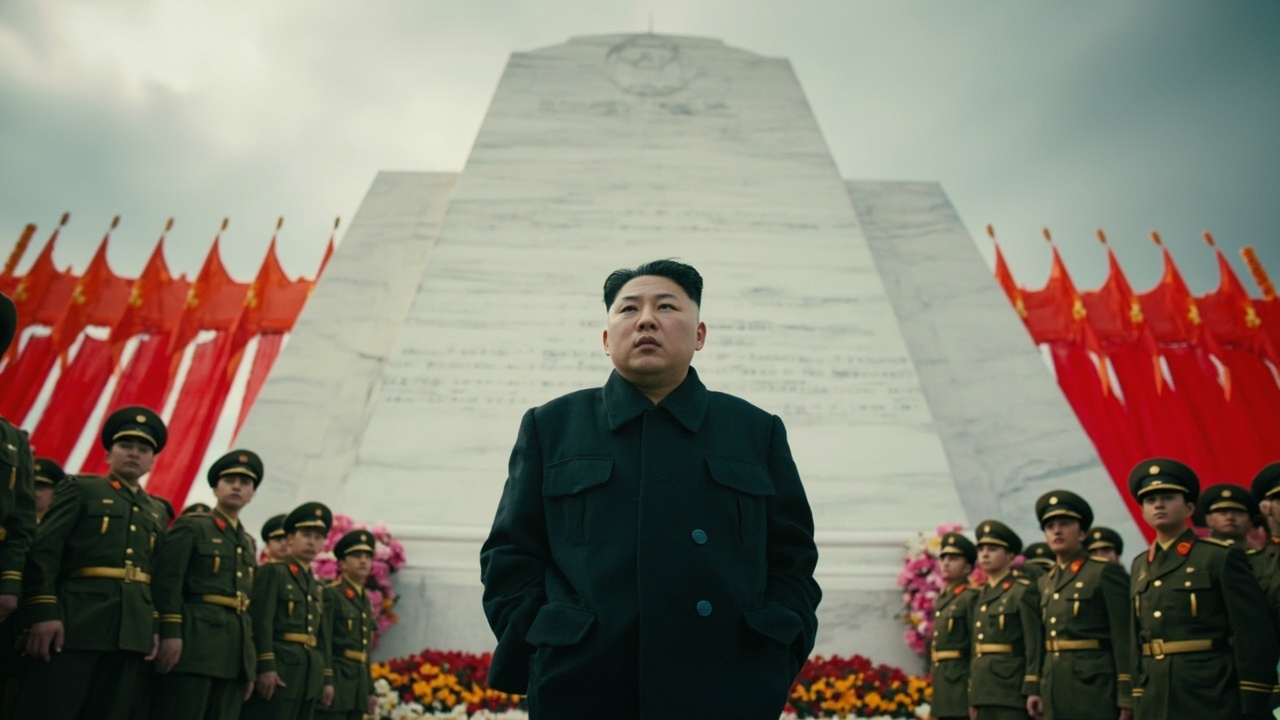
SEOUL — North Korean leader Kim Jong Un has formally opened a memorial museum dedicated to soldiers killed while fighting alongside Russian forces in Ukraine, state media reported Monday, in a dramatic display of the deepening military alliance between Pyongyang and Moscow that is reshaping security dynamics across Northeast Asia.
The ceremony, held in Pyongyang on Sunday, April 26, 2026, was attended by a high-level Russian delegation led by Defense Minister Andrei Belousov, underscoring the extraordinary nature of a partnership that has transformed from covert arms shipments to open military cooperation on the battlefield.
A Memorial to an Unprecedented Alliance
The Memorial Museum of Combat Feats, as it is officially named, honors the North Korean troops who died during operations in Russia’s Kursk region, where Ukrainian forces staged a major incursion in 2024. The museum’s opening represents the most public acknowledgment to date of North Korea’s direct military involvement in the Ukraine conflict.
According to the Korean Central News Agency (KCNA), Kim Jong Un told the assembled crowd that North Korea would “continue to support Russia’s policies” and discussed with Belousov ways to further strengthen military ties between the two nations. The Russian defense minister, in turn, announced that the two countries had agreed to put their military cooperation on a “stable, long-term footing.”
Long-Term Military Cooperation Plan
Perhaps most significantly, Belousov revealed that Moscow and Pyongyang intend to sign a formal cooperation plan covering the period from 2027 to 2031, signaling that the military partnership extends far beyond the current conflict in Ukraine.
The plan would institutionalize what has until now been an ad hoc arrangement, creating a structured framework for joint military exercises, technology transfers, and potentially the continued deployment of North Korean forces alongside Russian troops.
“This is not just about Ukraine anymore,” said one regional security analyst who spoke on condition of anonymity. “What we’re seeing is the formation of a formal military alliance that could outlast the current conflict and fundamentally alter the balance of power in Northeast Asia.”
Regional and International Reactions
The ceremony and Kim’s public pledge of continued support for Russia have drawn sharp reactions from neighboring countries and Western powers. South Korea’s Foreign Ministry issued a statement expressing “deep concern” over the deepening military cooperation, calling it a “direct threat to peace and stability on the Korean Peninsula.”
Japan’s Defense Ministry also raised alarms, with officials noting that the partnership could accelerate North Korea’s weapons programs through access to Russian technology and expertise. Both Seoul and Tokyo have called for strengthened trilateral cooperation with the United States in response.
The United States has not yet issued an official statement on the museum opening, but State Department officials have previously warned that North Korean military support for Russia violates multiple United Nations Security Council resolutions.
Implications for the Ukraine Conflict
North Korea’s military support has become increasingly critical to Russia’s war effort. Pyongyang has supplied Moscow with millions of artillery shells, ballistic missiles, and, most controversially, thousands of troops to fight alongside Russian forces in the Kursk region.
The deployment of North Korean soldiers marks the first time in decades that Pyongyang has sent combat troops to fight in a foreign conflict, representing a dramatic shift from its traditionally isolationist foreign policy.
Western military analysts estimate that North Korean forces have suffered significant casualties in the fighting, though exact figures remain classified. The opening of the memorial museum suggests that Pyongyang is prepared to accept these losses as the price of cementing its strategic partnership with Moscow.
A New Axis Emerging?
The Kim-Belousov meeting and the museum opening come amid growing concerns in Washington and allied capitals about the emergence of a new authoritarian axis linking Russia, North Korea, China, and Iran. While Beijing has maintained a more cautious public stance on military cooperation with Moscow, Pyongyang has shown no such restraint.
For Kim Jong Un, the partnership with Russia offers multiple benefits: access to advanced military technology, economic support in the face of crippling sanctions, and a powerful ally on the United Nations Security Council. In return, Russia gains a reliable supplier of weapons and manpower for its Ukraine campaign.
The memorial museum, with its permanent exhibit honoring the fallen soldiers, serves as both a tribute to the war dead and a powerful symbol of the two nations’ shared struggle against what they describe as Western hegemony.
What happens next? The planned 2027-2031 cooperation agreement will likely face intense international scrutiny. South Korea and Japan are expected to press for stronger sanctions against both Pyongyang and Moscow, while the United States may accelerate efforts to reinforce its military alliances in the Indo-Pacific region.
The North Korea-Russia partnership, once conducted in the shadows, is now on full public display — and both nations appear determined to make it a permanent feature of the international landscape.