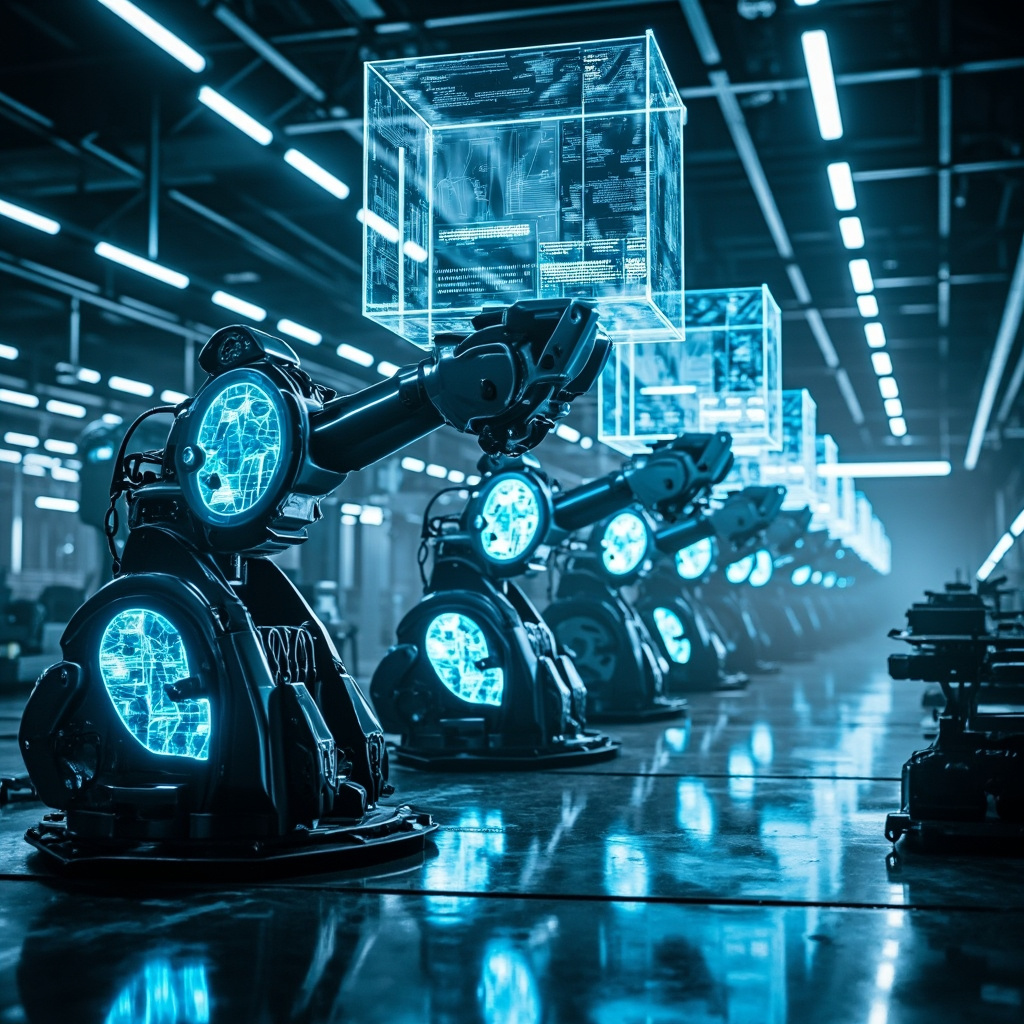
In 2026, the manufacturing sector is undergoing its most significant transformation since the introduction of the assembly line. Artificial intelligence has moved from being a tool that assists human workers to becoming an autonomous decision-maker on the factory floor. From German automotive plants to Vietnamese electronics factories to Brazilian agricultural equipment manufacturers, AI-driven robotic systems are now capable of planning their own tasks, adapting to unexpected conditions, and improving their own performance without human intervention. The implications for global manufacturing competitiveness, labor markets, and supply chain architecture are profound and are only beginning to be understood.
The numbers are striking. Global spending on AI-driven manufacturing automation reached $94 billion in 2025, up from $41 billion in 2023. More than 3.2 million AI-enabled industrial robots are now active in manufacturing facilities worldwide, a 67 percent increase from 2024. Perhaps more significantly, the capabilities of these systems have advanced far beyond simple repetitive motion. Modern AI manufacturing robots can recognize defects in real time, optimize their own energy consumption, predict equipment failures before they occur, and collaborate with human workers on complex assembly tasks that previously required years of specialized training.
The Cognitive Factory: Beyond Physical Automation
The most significant shift in 2026 is not the physical capability of AI robots — it is their cognitive capability. AI systems are now managing production schedules, adjusting inventory levels, detecting quality deviations, and making real-time decisions about production priorities based on market signals, supply chain data, and equipment performance metrics. This represents a fundamental change in the role of automation: from executing plans created by humans to creating and managing those plans autonomously.
In automotive manufacturing, this shift is most visible. Several major manufacturers have deployed AI production management systems that continuously optimize the configuration of production lines based on real-time demand signals, component availability, and workforce scheduling data. These systems have reduced production changeover times by an average of 34 percent while simultaneously reducing quality defects by 28 percent compared to human-managed production lines.
“We gave the AI system access to our entire production data lake — supplier performance, equipment sensor data, workforce scheduling, market demand signals — and asked it to optimize. In the first month, it found 847 inefficiencies our team had never identified. Some of them had existed for over a decade.” — Henrik Larsen, Chief Operations Officer, Nordic Manufacturing Group
Supply Chain Resilience Through AI
Global supply chain disruptions, which reached crisis levels between 2021 and 2024, have catalyzed rapid AI adoption across logistics and procurement. AI systems capable of monitoring geopolitical risk, weather patterns, supplier financial health, and transportation network status are now integrated into the core planning systems of most major manufacturers. These systems can automatically reroute procurement, adjust production schedules, and trigger alternative supplier qualification when primary supply routes are threatened.
The results are measurable. Manufacturers with fully deployed AI supply chain management systems experienced 62 percent fewer production stoppages due to supply disruptions in 2025 compared to those relying on traditional planning methods. Lead times for complex product configurations have shortened by an average of 19 days as AI systems can predict and mitigate bottlenecks before they materialize.
The Workforce Transformation
The transformation of manufacturing through AI is not without human cost. More than 1.8 million manufacturing jobs have been displaced by AI-driven automation since 2023, according to the International Labour Organization. The affected roles are primarily in repetitive manual tasks — quality inspection, material handling, standard assembly operations — areas where AI systems offer the greatest performance advantage. The displacement is concentrated in middle-income economies that built manufacturing strength on labor-cost advantages now being eroded by automation.
The counter-narrative is equally important. While AI eliminates certain roles, it creates new ones that did not previously exist. Demand for robot maintenance engineers, AI trainers, manufacturing data analysts, and human-machine collaboration specialists has grown by 140 percent since 2024. The workers best positioned to transition are those who can operate, program, and maintain AI systems rather than compete with them directly.
The Competitive Landscape in 2026
The countries and companies moving fastest on AI manufacturing are pulling decisively ahead of those moving slowly. South Korea, Germany, and Japan lead in AI robot deployment per capita in manufacturing, with South Korea exceeding 1,100 AI-enabled robots per 10,000 manufacturing workers. China has deployed the largest absolute number of AI manufacturing robots and is investing heavily in domestic AI chip production to reduce dependence on imported semiconductor technology.
For emerging market manufacturers, the calculus is complex. AI automation reduces the labor cost advantage that has driven manufacturing growth in Southeast Asia, South Asia, and parts of Latin America. Countries that can deploy AI manufacturing effectively may leapfrog traditional development stages; those that cannot may find their manufacturing growth decelerated precisely as they most need it to accelerate.
Maya Patel is a Technology Correspondent for Media Hook, covering AI, cybersecurity, innovation, and the digital transformation reshaping industries.