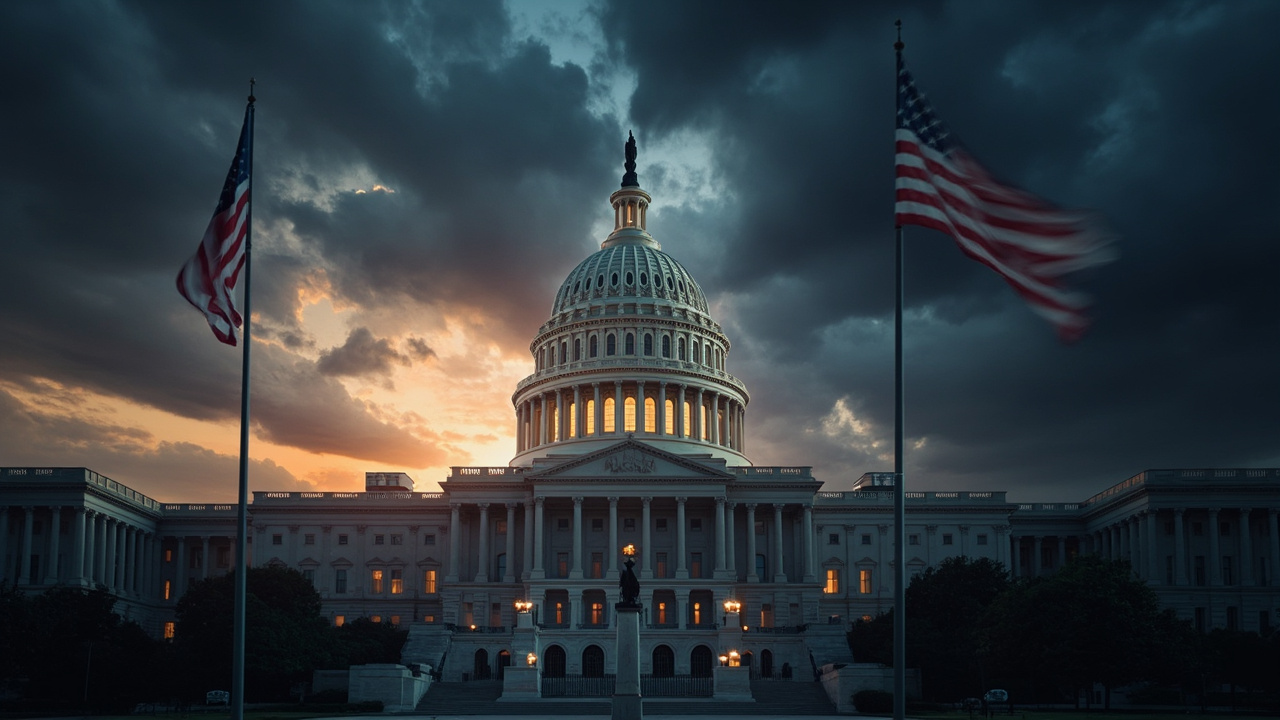
The Supreme Court’s April 2026 decision to strike down a key provision of the Voting Rights Act has set off a chain reaction of redistricting challenges from coast to coast — and the outcome will likely determine whether Democrats have a realistic shot at winning the House majority in November.
In a 5-4 ruling, the Court’s conservative majority invalidated Section 4 of the Voting Rights Act — the formula that determined which states and municipalities were required to receive federal preclearance before changing their electoral maps. The decision, which drew sharp objections from Justice Ketanji Brown-Jackson in a dissent joined by all three liberal justices, effectively strips away the most powerful enforcement mechanism protecting minority representation in Congress.
Within days of the ruling, Louisiana’s congressional map — already the subject of pending litigation — was struck down by a federal district court. That decision alone could alter the partisan balance in a state where a single House seat could mean the difference between a Democratic majority and a Republican one.
For decades, Section 4 of the Voting Rights Act required covered jurisdictions — primarily Southern states with histories of racial discrimination in voting — to obtain federal approval before enacting any changes to electoral district boundaries. That preclearance requirement was the reason the Justice Department could block maps that diluted minority voting power before they ever went into effect.
Last month’s ruling effectively ends that requirement. States that were previously covered can now implement new maps without federal review — a change that election law experts say will dramatically complicate challenges to gerrymandered districts.
“Before this ruling, the best scenario for voting rights advocates was to stop a bad map before it was used,” said one elections attorney who has been tracking the litigation. “Now, the best case is that we catch it in time to fix it before November. That’s a fundamentally different legal landscape.”
Louisiana, Georgia, Mississippi, Alabama, and Texas are among the states most directly affected by the ruling. Each has congressional maps that plaintiffs have argued were drawn with impermissible racial considerations — and each now faces a complicated choice between defending existing maps, revising them under pressure, or waiting for courts to resolve the new legal uncertainty.
In Louisiana, the timing is especially delicate. The May 19 primary proceeded using a map that federal courts had already flagged as problematic, and Tuesday’s results in the 3rd Congressional District race are now being reviewed through an entirely different legal lens. If the district court’s striking of the map stands, the candidates who won Tuesday could find themselves running again in a newly drawn district before November.
Texas, which has already seen several iterations of its congressional map challenged in federal court, is closely watched because of its size. The state’s 38 House seats represent the largest single-state exposure to redistricting litigation in the country. A map change that adds even one or two competitive seats could shift the national House math significantly.
The practical consequence of the ruling is that lawsuits filed over the past two years — maps that courts had placed on hold pending preclearance review — are now moving forward with new urgency. Legal teams on both sides of the aisle are recalibrating strategies, knowing that any maps used in the November elections will have a narrow window of legal protection.
Republican redistricting strategists have argued the ruling simply corrects an outdated framework that treated certain states differently based on decades-old patterns of discrimination. Democratic advocates counter that eliminating preclearance requirements removes the most effective safeguard against the very kinds of map manipulation that led to the VRA’s passage in 1965.
For voters in competitive districts, the uncertainty is more than academic. A district court ruling in Ohio — where the state’s congressional map has been contested since the 2022 midterms — is expected to issue a decision by early June that could force the state to draw entirely new lines before the November elections. That prospect has thrown the state’s Senate and House races into disarray, with candidates who have been running for months suddenly unsure what district they would represent.
House control in 2026 may ultimately hinge on which map is in effect on Election Day. The difference between Louisiana’s current map and a court-ordered alternative could mean a seat that Republicans currently hold flipping to Democrats. In Texas, the same dynamic applies: a revised map could create two to three new competitive districts that currently lack them.
Election law scholars have estimated that the cumulative effect of the court’s ruling could reshape the electoral prospects for as many as 30 House seats before November — a figure that would represent the largest pre-election boundary change since the 2010 cycle’s redistricting battles. Whether that actually happens depends on how quickly courts move, how willing state legislatures are to revisit maps already in use, and whether the Supreme Court itself intervenes again in the coming months.
For now, candidates in affected states are running on maps that may not exist by fall. Political parties are quietly preparing contingency budgets for races that could be entirely restructured. And voters in competitive districts are left to evaluate candidates for seats whose boundaries are themselves now in play.
The map wars are back — and this time, the courts are right in the middle of them.
Written by Carlos Mendez, Americas Correspondent
Carlos Mendez
Carlos Mendez covers Latin American politics, economics, and regional affairs from Mexico City to Buenos Aires.