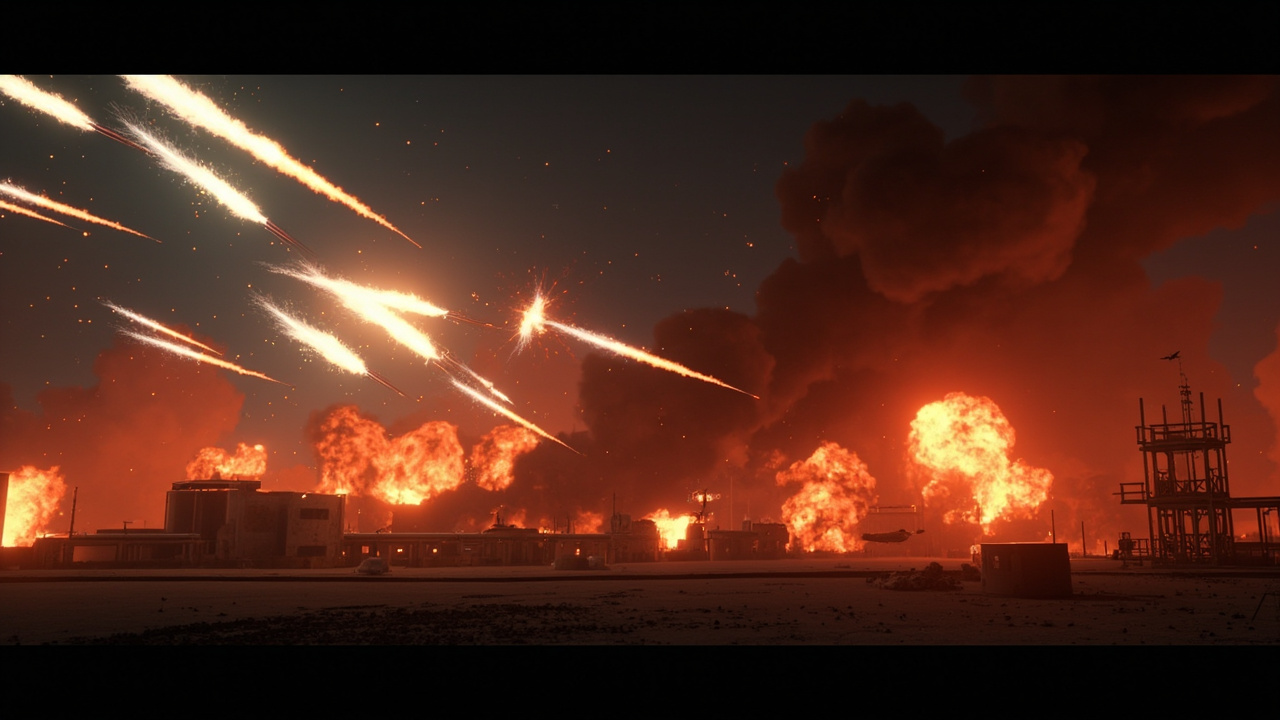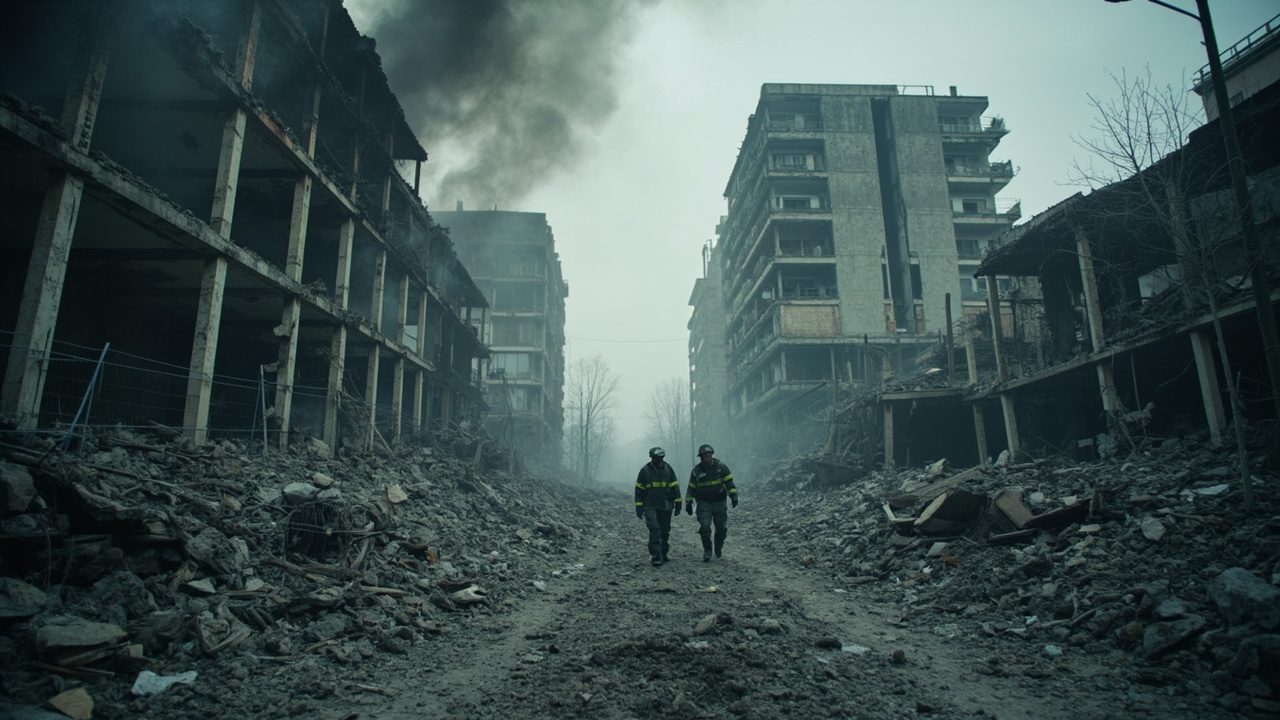
Russian forces struck the city of Merefa near Kharkiv on Monday, killing four civilians and wounding 18 others in a string of airstrikes that underscored the relentless pace of Moscow’s assault on eastern Ukraine, according to the Emergency Media and Public Relations (EMPR) Media Centre.
The strikes on Merefa, a city located approximately 35 kilometres southeast of Kharkiv, came as Ukraine’s General Staff reported 148 combat engagements across nine operational directions over the past 24 hours — one of the highest single-day intensity readings in recent weeks.
Among the dead in Merefa were two women and two men, according to local emergency services. Rescue workers spent several hours searching the rubble of a residential building that took a direct hit. The wounded, ranging in age from 19 to 67, were hospitalised with blast injuries and shrapnel wounds.
The Kharkiv region has become one of the most contested areas of the front since Russia launched a fresh offensive in the north in January. Moscow’s forces have repeatedly targeted civilian infrastructure in the area, drawing condemnation from Western allies who have accused Russian President Vladimir Putin of deliberately escalating civilian harm.
“Every day we lose people — not soldiers, but civilians going about their lives. These are not military targets. These are deliberate acts of terror against ordinary people,” said Oleksandr, a paramedic working in the region, speaking to local media.
A War That Refuses to End
The strikes on Kharkiv region are part of a broader pattern of Russian aggression that shows no signs of abating despite repeated ceasefire attempts elsewhere. The EMPR General Staff reported that in addition to the Kharkiv direction, heavy fighting continued along the Pokrovsk, Kurakhove, and Vremivka axes, with Russia committing significant reserves to maintain pressure across multiple sectors.
Ukraine’s military intelligence acknowledged that Russian forces had launched 38 strikes using various munitions types, including glide bombs, artillery, and mortars. The breadth of the assault illustrated Moscow’s strategy of overwhelming Ukrainian defences through volume and sustained pressure rather than concentrated breakthroughs.
Russian casualties over the 24-hour period were reported at 1,120 — a figure consistent with the brutal attrition rate that has characterised much of the conflict. Since the full-scale invasion began in February 2022, both sides have suffered tens of thousands of losses in what has become Europe’s deadliest conflict since World War II.
Meanwhile, the United States has announced a new weapons package for Ukraine totalling $275 million, the fourth such delivery since the administration lifted restrictions on Kyiv striking deep inside Russian territory. The package includes long-range missiles, artillery ammunition, and armoured vehicles. NATO Secretary General Mark Rutte welcomed the announcement, stating the alliance remained committed to supporting Ukraine’s right to self-defence.
“Ukraine has the right — under international law and the UN Charter — to strike the legitimate military targets that are being used to murder its citizens,” Rutte said at a press conference in Brussels.
Moscow Threatens Kyiv
In a parallel escalation, Russian officials issued stark new warnings directed at Kyiv on Monday. Foreign Ministry spokesperson Maria Zakharova said any Ukrainian strikes on Russian civilian infrastructure would be met with a “proportional and devastating” response, accusing Western sponsors of encouraging what she called “terrorist attacks on Russian soil.”
The warnings came after Ukrainian drones struck several Russian energy facilities last week, including a major oil depot in the Smolensk region — approximately 400 kilometres from the Ukrainian border. Russia’s Defence Ministry confirmed the strikes but said they caused only minor damage to infrastructure that had since been restored.
Despite the heightened tensions, diplomatic channels remained technically open. Turkish President Recep Tayyip Erdogan spoke separately with both Putin and Ukrainian President Volodymyr Zelenskyy on Monday, offering Ankara’s mediation services for a renewed ceasefire. Turkey has hosted several rounds of peace talks between the two sides since 2022, though none have produced a lasting resolution.
The strike on Merefa drew immediate condemnation from the European Union, whose foreign policy chief Kaja Kallas called it “another example of Russia’s systematic targeting of civilians” and urged member states to accelerate weapons deliveries to Ukraine.
As fighting intensifies across the eastern front, Ukrainian officials have repeatedly warned that without sustained Western support, their forces risk being overwhelmed in key sectors. The Kharkiv region, which saw a major Russian ground offensive blunted in late 2024, remains a priority defensive line — and one that has absorbed a disproportionate share of Moscow’s glide bomb campaigns.