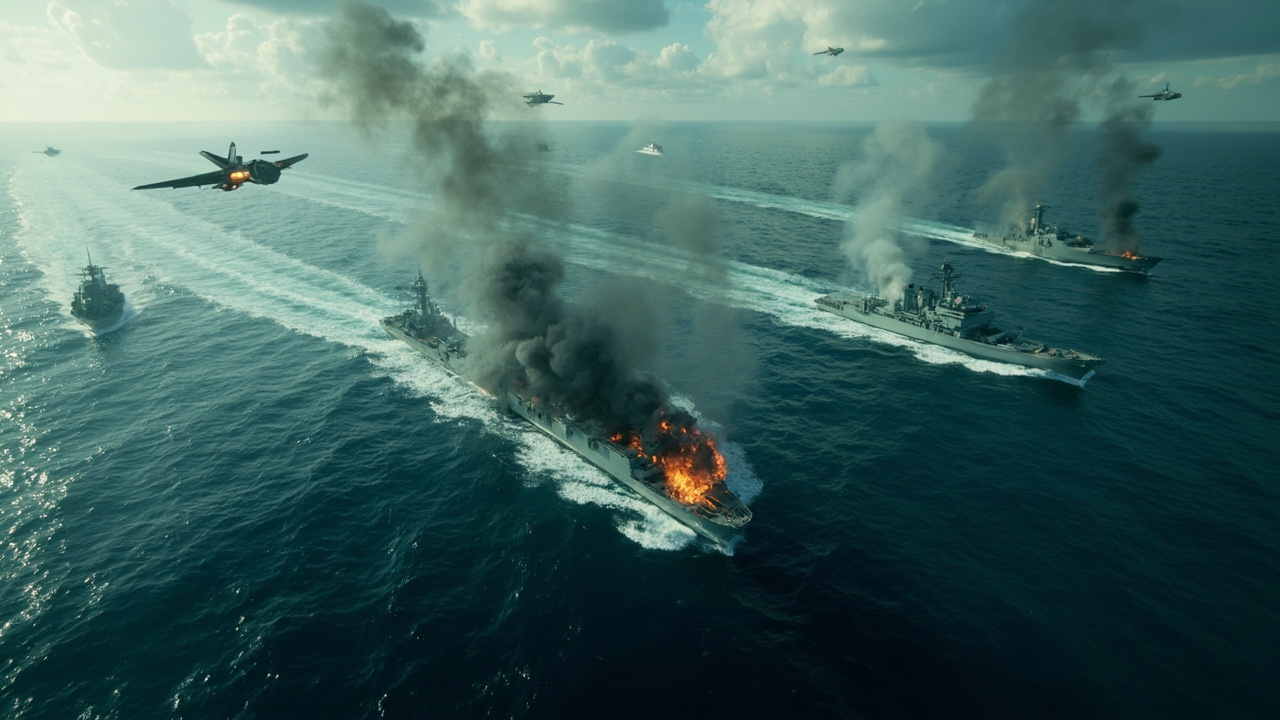
Iran-backed Houthi forces are raising the prospect of a second global shipping choke point in the Red Sea, threatening to deepen pressure on energy markets and global trade as the Iran conflict intensifies and the Strait of Hormuz remains fully blockaded.
The Bab al-Mandeb Becomes the Next Flashpoint
The Houthis entered the broader Iran conflict in early April with missile and drone strikes on Israel and have since issued explicit warnings that they could target shipping in the Bab al-Mandeb — a narrow corridor linking the Red Sea to the Gulf of Aden. The strait, which handles approximately 15 percent of global trade and 20 percent of global oil shipments, has emerged as a critical secondary flashpoint alongside the Hormuz.
Shipping analysts are warning that if Houthi forces begin targeting vessels in the Bab al-Mandeb, it could open a second maritime front in a conflict that has already choked off traffic through the Strait of Hormuz, where Bloomberg reports traffic is now fully halted with blockades firmly in place.
“Once that risk is there, shipping companies decide not to take it,” said a former Fifth Fleet commander, noting that the combination of Hormuz and Bab al-Mandeb threats would effectively create a maritime siege on global trade.
Chinese Exporters Bear the Brunt
For China’s exporters, the dual chokepoint crisis represents an existential threat to supply chains. The Bab al-Mandeb is the primary route for Chinese container ships traveling between the Indian Ocean and the Mediterranean, carrying everything from electronics to machinery. With Hormuz already blocked, any disruption at Bab al-Mandeb would force vessels to divert around the Cape of Good Hope — adding 14 days to journey times and hundreds of dollars per container in fuel costs.
Major Chinese shipping companies have already begun rerouting vessels, but capacity constraints are severe. Freight rates on the Asia-Europe route have surged to record levels, with industry sources telling Bloomberg that container spot rates have climbed more than 300 percent since the Hormuz blockade began.
Military Escalation Deepens Concerns
The Pentagon has acknowledged increased Houthi naval activity in the southern Red Sea, with U.S. intelligence suggesting that Iranian Revolutionary Guard Corps advisors are now embedded with Houthi naval forces to coordinate anti-ship missile operations. A U.S. Navy destroyer shot down multiple Houthi drones in the Red Sea on Wednesday, marking the first direct engagement since the broader Iran conflict began.
“We are monitoring the situation closely,” a Pentagon spokesperson said in a statement. “Any attempt to expand the maritime conflict to the Bab al-Mandeb would be met with a severe response.”
The Bab al-Mandeb handles approximately 15 percent of global trade and 20 percent of global oil shipments annually, making it one of the world’s most critical maritime chokepoints.
Insurance Costs Surge as War Risk Premiums Spike
Lloyd’s of London and major maritime insurers have already elevated the Red Sea and surrounding waters to the highest risk category, effectively war zones under standard maritime insurance definitions. The escalating premiums are forcing smaller shipping companies out of the market entirely, while larger firms are passing costs onto consumers.
Global retailers are already warning of holiday shopping disruptions, with electronics, apparel, and consumer goods among the most affected categories. The automotive industry, already strained by semiconductor shortages, faces additional delays in component shipments from Asia.
Published: April 26, 2026 | Author: Sarah Mitchell, News Correspondent