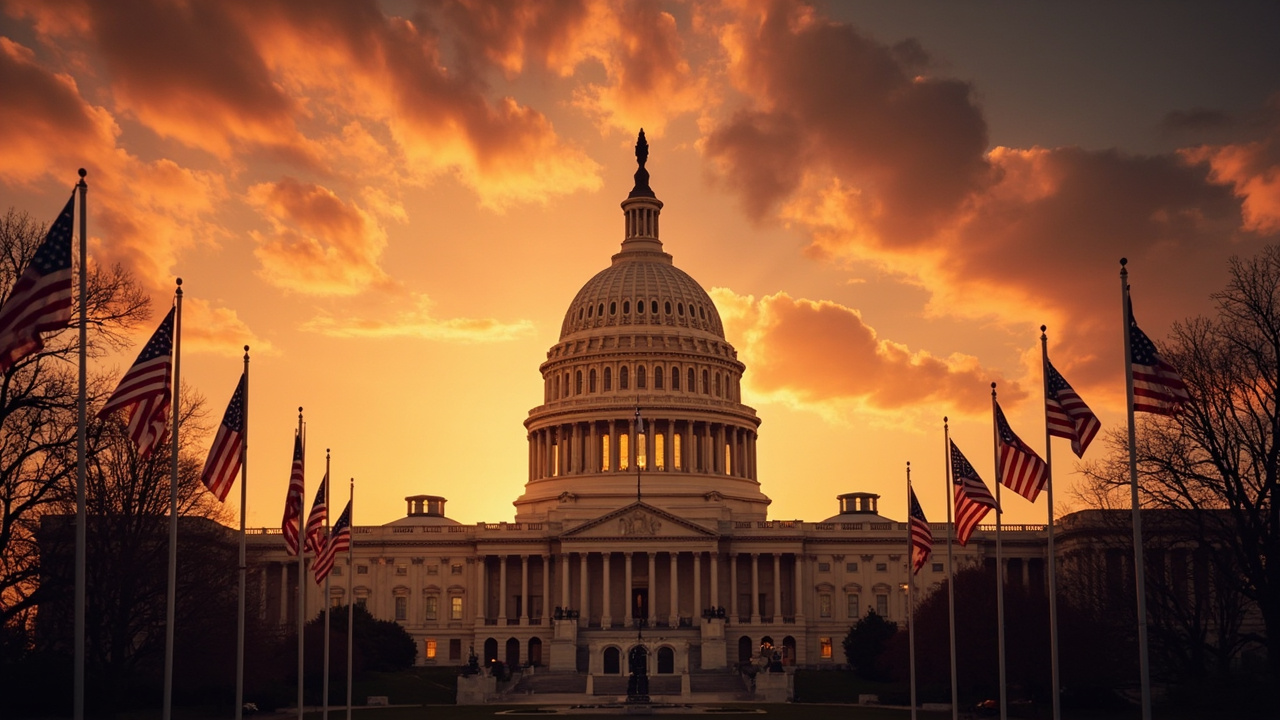
The Senate Judiciary and Homeland Security Committees released text of their respective portions of the reconciliation bill on May 4. Combined, the two sections direct approximately $72 billion toward immigration enforcement agencies: more than $38 billion for U.S. Immigration and Customs Enforcement (ICE) and more than $26 billion for U.S. Customs and Border Protection (CBP).
The Congressional Budget Office scored the Judiciary Committee portion separately, finding it would directly appropriate $39.2 billion in fiscal year 2026 for immigration-related agencies alone. The CBO’s scoring of the full package is expected to inform the floor debate but does not need to be completed before the budget resolution advances.
Under reconciliation rules, the Senate can adopt the budget resolution and then consider the actual appropriation text without facing a filibuster. That process — budget resolution first, then legislative text — is what Tuesday’s committee vote enables.
The Senate Budget Committee has 20 members: 12 Republicans and 8 Democrats. Tuesday’s vote fell along strict party lines, reflecting uniform Democratic opposition to the reconciliation instructions that would fund aggressive expansion of detention and removal operations. No Democratic amendments were adopted in committee.
Chairman Graham presided over the business meeting at 608 Dirksen Senate Office Building. The resolution instructs the Senate Judiciary Committee to produce its portion of the reconciliation bill by May 15 — a deadline already met with the May 4 text release — and the Homeland Security Committee to do the same. Those two committee submissions are then combined into a single package for Senate floor consideration.
S.Con.Res.33 is commonly described as a second, targeted budget resolution — distinct from the broader House-passed reconciliation measure colloquially known as the “One Big Beautiful Bill,” which carries a substantially larger price tag across tax and spending policy. S.Con.Res.33 is capped at roughly $70 billion in deficit-increasing instructions and focused narrowly on committees with jurisdiction over immigration and homeland security.
The Committee for a Responsible Federal Budget has noted that the two parallel reconciliation efforts — the targeted immigration package here and the broader House measure — could together allow up to $140 billion in total allowable deficit increases across committee pairs. That combined figure is likely to feature in floor debate and in political messaging ahead of the November midterm elections.
With S.Con.Res.33 advanced out of committee, the Senate is expected to move toward a floor vote on the combined $72 billion immigration enforcement package before the end of May. The markup sessions held the week of May 19 in the Judiciary and Homeland Security Committees produced the legislative text that will now be merged and prepared for floor consideration.
The reconciliation process shields the package from a Senate filibuster, meaning it can advance with a simple majority — and the current 53-47 Republican majority is sufficient to pass it if no senators cross party lines. All eyes are on the handful of Republicans who have previously expressed concerns about deficit impacts, as the final floor vote will test whether the $72 billion ceiling holds.
Constitutional researchers and budget experts note that the concurrent resolution does not present a veto target for the President — it is a congressional budget document, not an appropriations bill. The actual appropriations, once passed by both chambers and signed, would trigger the funding flows to ICE and CBP that the reconciliation package envisions.
The Congressional Research Service updated its analysis of the resolution on April 30, providing detailed guidance on the reconciliation directives and their deficit implications. That document is expected to serve as a reference point for senators requesting clarification on the scope and limits of the reconciliation instructions before the floor vote.
Robert Callahan covers federal legislation and congressional procedure for this outlet. He tracks the intersection of executive authority, legislative process, and budgetary policy in Washington.
Written by Carlos Mendez, Americas Correspondent
Carlos Mendez
Carlos Mendez covers Latin American politics, economics, and regional affairs from Mexico City to Buenos Aires.