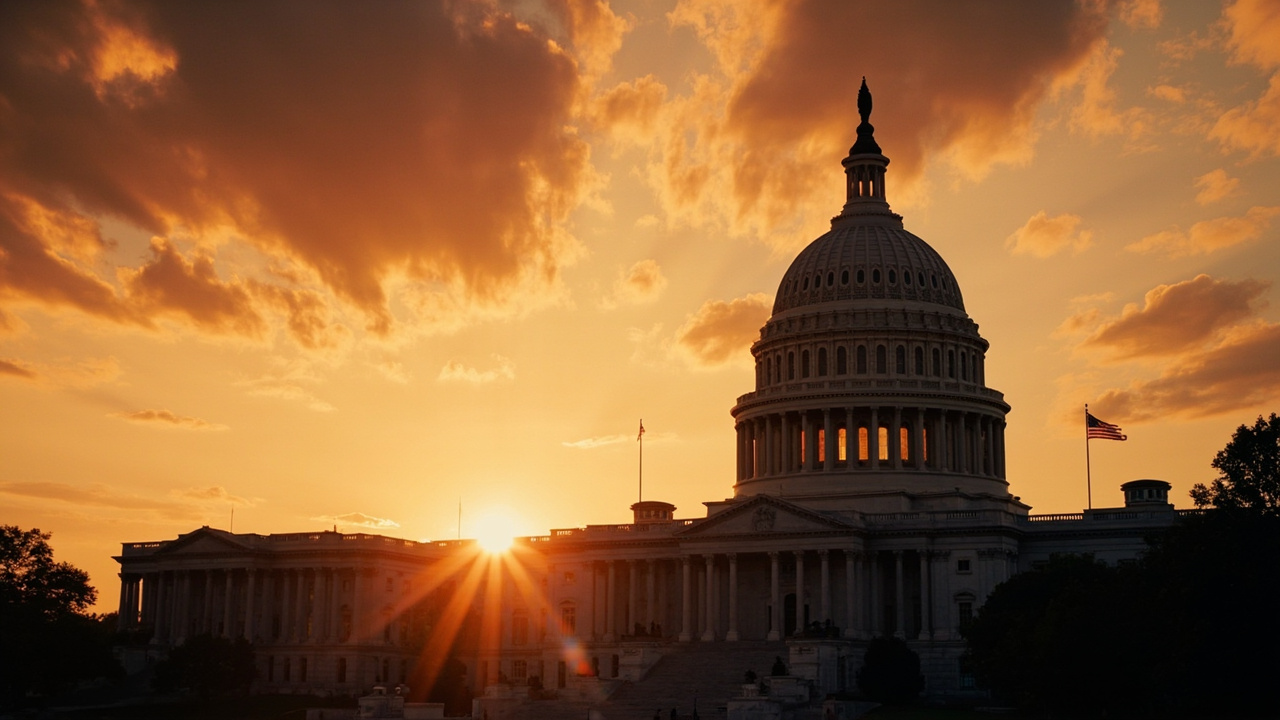
Senate Republicans derailed a major immigration enforcement bill and cleared out of Washington entirely Thursday, leaving Capitol Hill in deadlock until early June after a bitter confrontation over a nearly $1.8 billion Justice Department fund that critics have labeled a “slush fund” for Trump-era allies.
The dramatic collapse of the ICE funding vote represents one of the most visible legislative failures for the Republican-controlled Senate in recent memory, laying bare deep fissures within the party over how to handle funding for the very law enforcement agencies central to President Donald Trump’s immigration agenda.
The breaking point came during a closed-door meeting Thursday morning between Senate Republicans and Acting Attorney General Todd Blanche, a former personal attorney to President Trump who now serves as the Justice Department’s top official. Senators demanded answers about the $1.8 billion “anti-weaponization fund” included in the department’s budget — money that could be distributed to individuals connected to the January 6, 2021 Capitol attack.
The fund has drawn sharp criticism from members of both parties, though Republican opposition proved fatal to the ICE bill’s chances. Senate Minority Leader Mitch McConnell of Kentucky — typically a reliable ally of tough-on-crime enforcement — did not hold back in a scathing statement issued after the meeting.
“So the nation’s top law enforcement official is asking for a slush fund to pay people who assault cops? utterly stupid, morally wrong — take your pick,” McConnell wrote.
Sources in the room described Republican senators as visibly shaken after the Blanche meeting. Rather than attempt a vote or negotiate a scaled-back version of the bill, Senate Republican leadership made the decision to send members home — effectively killing the immigration enforcement package until after the Memorial Day recess.
The ICE funding debacle stands in stark contrast to another major Senate vote the same week: the bipartisan advancement of a resolution aimed at reining in President Trump’s authority to launch military operations against Iran. That measure, advanced by Senator Bill Cassidy of Louisiana alongside Democratic co-sponsors, cleared the Senate with near-unanimous Republican support — a rare instance of Cassidy bucking the Trump administration on a high-profile foreign policy vote.
The juxtaposition of the two votes illustrates the uneven state of the Republican coalition in the 2026 Senate. On foreign policy and war powers, enough Republicans have shown willingness to cross the administration. But on domestic priorities like immigration enforcement — where Trump’s personal legal interests intersect with official funding decisions — the party remains paralyzed.
The collapsed ICE funding legislation would have provided billions in additional appropriations for Immigration and Customs Enforcement detention beds, court proceedings for asylum seekers, and expanded border barrier maintenance. The bill represented a central pillar of the Trump administration’s mass deportation agenda and had been a top legislative priority for the White House heading into the spring.
Without the supplemental funding, ICE operations are expected to continue at current levels — which immigration advocates argue are already insufficient to carry out the administration’s stated enforcement priorities. Senior administration officials told reporters Thursday that they are “deeply disappointed” by the outcome and are exploring executive branch workarounds to maintain enforcement capacity through the summer.
The Senate’s departure means a raft of high-priority items will languish through the Memorial Day recess. In addition to the ICE funding bill, the upper chamber left without passing the annual Pentagon authorization act, a short-term highway funding extension, or any of the several appropriations bills needed to keep the government funded past the current fiscal year deadline.
When the Senate returns in early June, it will face an immediate pileup of stalled business — and renewed pressure from the White House to find a path forward on immigration funding. Whether Republicans can paper over their differences over the Justice Department’s controversial fund remains to be seen. The ICE bill’s future is deeply uncertain, and the recess gives dissenters more time to rally opposition rather than letting the momentum of negotiations carry a deal to the floor.
Written by Catherine Morales, Latin America Analyst
Catherine Morales
Catherine Morales covers Latin American politics and economics.