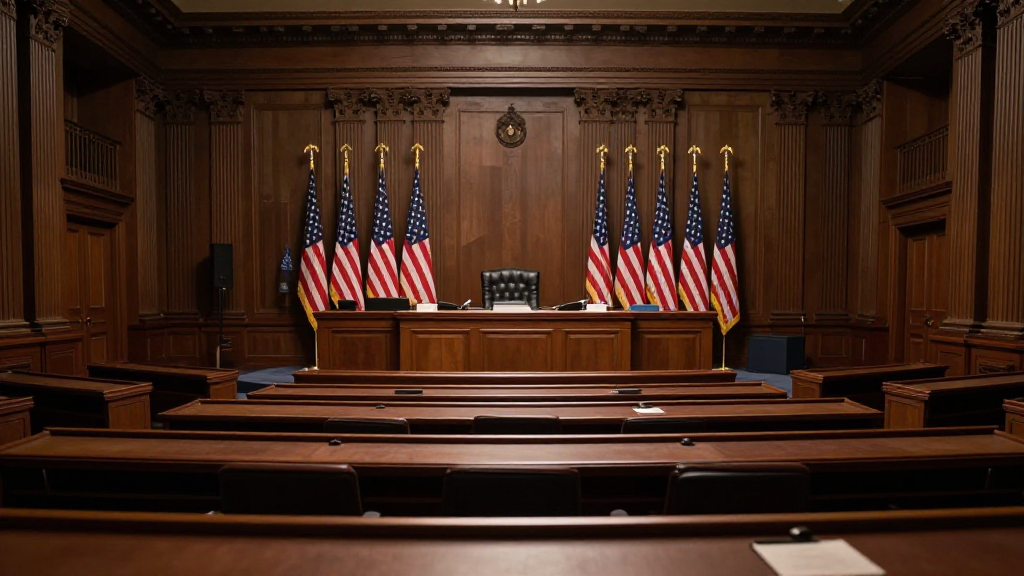
The United States Senate entered a high-stakes confrontation Thursday as lawmakers failed to reach a bipartisan agreement on reauthorizing Section 702 of the Foreign Intelligence Surveillance Act, leaving a key warrantless surveillance program on track to expire at midnight. Congressional leaders from both parties acknowledged privately that the window to pass a clean extension had nearly closed, with House and Senate negotiators still hundreds of votes apart on competing reform packages. The standoff pits civil liberties advocates against intelligence officials who warn that letting the program lapse would create a dangerous gap in the nation’s ability to monitor foreign threats. President Trump, whose administration has pushed for broader surveillance authorities, declined to publicly intervene, leaving it to congressional leaders to broker a deal before the deadline. The outcome will shape the legal landscape for U.S. intelligence gathering for years to come.
Key Republican Defections Sink Reform Package
A coalition of Senate Republicans, defying White House pressure, blocked a procedural vote on the Government Surveillance Reform Act after the Congressional Budget Office projected the bill would cost $3.2 billion over ten years, primarily from expanded judicial oversight and compliance staffing. Senator Rand Paul of Kentucky led a bloc of eight fiscal conservatives who argued that even reformed FISA authorities risked becoming a permanent domestic surveillance apparatus without strict warrant requirements woven into the underlying statute.
“We have been lied to before by intelligence agencies that claimed their programs were narrowly scoped,” Senator Paul said Thursday on the Senate floor. “If we are going to reauthorize anything, it must require a warrant for Americans communications, full stop.”
Senate Minority Leader Chuck Schumer responded that Paul’s position was “well-intentioned but dangerously naive” in an era of heightened cyber threats and foreign espionage campaigns targeting critical infrastructure. The failed procedural vote leaves only two legislative paths forward: a narrow clean extension with minimal reforms, or a lapse in authority that would force the NSA to shut down data collection systems that intelligence officials say have intercepted communications from adversaries in Iran, China, and Russia.
Intel Community Warns of Lapse Consequences
Director of National Intelligence Tulsi Gabbard issued a rare public statement Thursday evening urging Congress to pass a clean reauthorization, warning that the United States would “go dark” on certain ongoing foreign intelligence collection if the law expires. The statement, coordinated with the NSA and FBI, marked an escalation in the executive branch’s public lobbying effort.
“The men and women of our intelligence community have worked within the law to keep this country safe,” Gabbard said. “They deserve a Congress that will give them the tools to finish the job.”
The FBI’s Director, Kash Patel, told reporters separately that FBI field offices had been briefed on contingency plans that would require dismantling some joint counterterrorism task forces with foreign partners if the program lapsed, though he declined to elaborate on operational specifics. Current law requires that any surveillance targeting foreigners overseas must, under Section 702, incidentally capture some American communications, a feature critics call a backdoor warrantless wiretap of U.S. citizens.
Broader Implications and What Comes Next
The debate has crystallized a broader philosophical divide over the balance between national security and civil liberties that has defined surveillance policy since the post-9/11 era. Georgetown University Law Center’s Professor Laura Collins, who testified before the Senate Intelligence Committee in January, said the current standoff reflects a fundamental failure to reform FISA’s governance structure since the 1970s Church Committee revelations.
“Section 702 was designed for a world where foreign intelligence meant radio signals and embassy cables,” Collins said. “Today, the same legal authority covers metadata from a billion smartphones and cloud storage accounts. The law has not caught up with the technology, and the politics certainly has not.”
Civil liberties groups including the ACLU and Electronic Frontier Foundation have pledged to mobilize public pressure against any bill that does not mandate a warrant for queries touching American communications. Senate Majority Leader John Thune of South Dakota told reporters late Thursday that he had not given up on a last-minute deal, with talks reportedly centered on a hybrid package combining a 90-day clean extension with a binding legislative commitment to vote on structural reforms by October.
If the program expires at midnight, the NSA will be legally required to halt data collection under Section 702’s incidental authority provisions, according to a legal analysis by the Congressional Research Service. A final vote, if it comes, is expected no later than Friday afternoon, with the House standing by to take up any Senate-passed bill immediately.