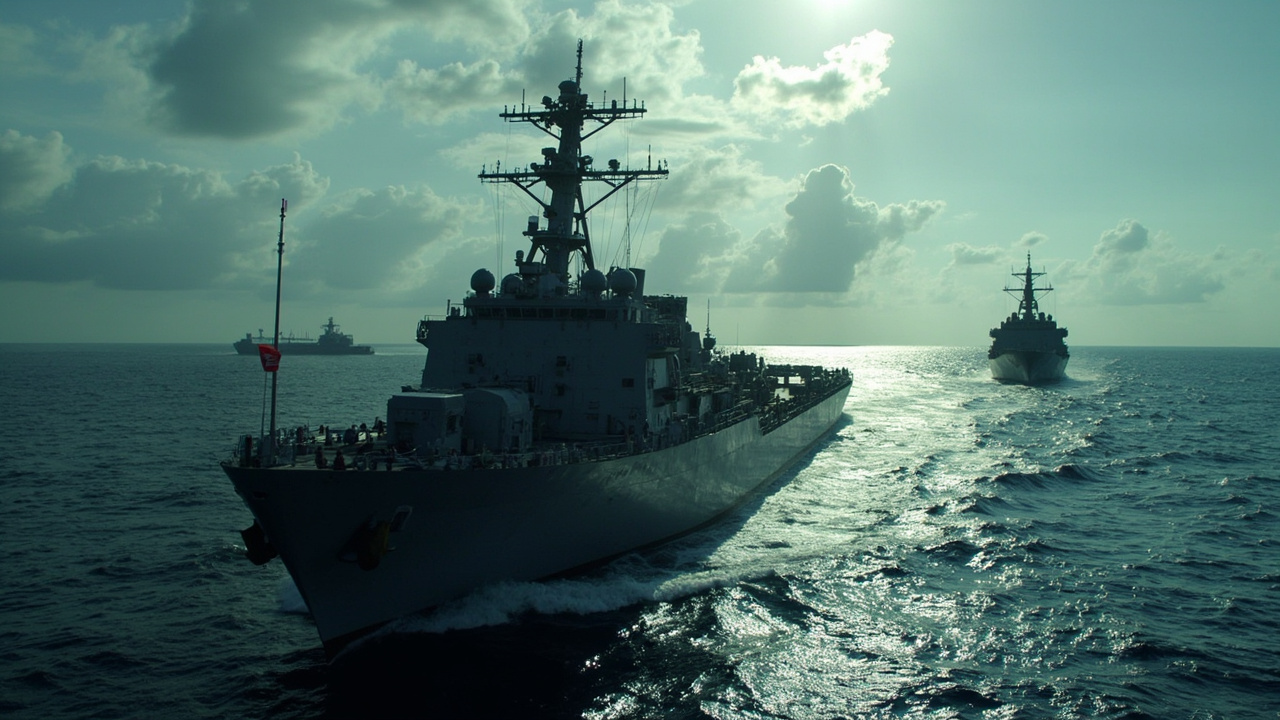
On January 29, 2026, Iran, China, and Russia formalized what analysts had long feared: a trilateral strategic pact binding their diplomatic, economic, and security interests into a coordinated challenge to Western-led international order. The signing came exactly as the United States reimposed its “snapback” sanctions on Iran’s oil and financial sectors — and the timing was not coincidental. It was a direct rejoinder.
The snapback mechanism, designed originally as part of the 2015 Joint Comprehensive Plan of Action (JCPOA), allows any participant to restore UN sanctions on Iran if it deems the country in material breach of the nuclear deal. The Trump administration, having exited the agreement in 2018 and then rejoined briefly in 2023, formally invoked the snapback clause in November 2025, citing Iran’s accelerated uranium enrichment activities and its transfer of advanced missiles to Russian forces in Ukraine. The move triggered a cascading series of financial restrictions that cut off what remained of Iran’s legitimate oil revenue and froze assets of its central bank held abroad.
The trilateral agreement, whose full text has not been made public, is understood to include provisions for preferential trade in energy and industrial goods, coordinated diplomatic positioning at the UN Security Council, and — most significantly — mutual defense consultations in the event of military confrontation with Western powers. For Beijing, the pact represents an opportunity to secure long-term oil supplies while advancing its aspiration to restructure the international system around multipolarity. For Moscow, it offers a strategic depth that complicates NATO’s containment strategy in Europe and the Middle East simultaneously. For Tehran, it is a lifeline — economic access to markets that no longer require SWIFT-based transactions, and diplomatic cover that makes direct confrontation with the United States more survivable.
What is remarkable is not that these three nations found common cause — their convergences have been evident for years — but that the architecture of the pact is specifically calibrated to exploit vulnerabilities in the Western sanctions regime. Energy trade is denominated in yuan and rubles, with settlement mechanisms running through the Chinese cross-border interbank payment system (CIPS), bypassing the dollar-dominated SWIFT network entirely. This is not simply hedging against US pressure; it is the construction of an alternative financial infrastructure.
The alliance finds itself in a strategic bind. NATO’s 2026 threat assessment, unveiled at the Brussels summit in February, identifies the emerging Iran-China-Russia axis as a “tier-one challenge” — language previously reserved for the Kremlin alone. The report warns that coordinated pressure across the European, Middle Eastern, and Indo-Pacific theaters could stretch alliance resources to a breaking point. A crisis in the Persian Gulf — say, a confrontation over Hormuz Strait shipping — would now draw in Beijing’s commercial interests and Moscow’s regional partnerships simultaneously, vastly complicating any potential US-led response.
The European members of NATO face an acute dilemma. The EU has been a co-signatory to the original JCPOA and has consistently advocated for diplomatic engagement with Tehran. The restoration of full US sanctions — extended extraterritorially to European companies — forces European governments into an uncomfortable choice: comply with secondary sanctions and forfeit billions in trade with Iran, or defy Washington and risk transatlantic fracture at a moment when the alliance is already under strain from defense spending disputes and divergent approaches to Ukraine.
What is conspicuously absent from the current trajectory is any serious diplomatic off-ramp. The United States has ruled out direct negotiations with Iran absent a complete cessation of enrichment activities — a precondition Tehran considers non-starter. China has positioned itself as a mediator while simultaneously deepening its strategic partnership with Iran — an arrangement that provides Beijing with leverage in its broader competition with Washington. Russia, for its part, has used the crisis to normalize its role as a indispensable security broker in the Middle East, a position it has cultivated since its military intervention in Syria in 2015.
The paradox of the snapback strategy is that it was designed to isolate Iran economically and thereby force political change. Instead, it has provided the impulse for Tehran to integrate itself into a broader Eurasian alignment that makes isolation impossible without extraordinary and costly measures — measures that would themselves reshape the global economy in ways that may prove unsustainable for the Western coalition.
The immediate test will be Iran’s nuclear clock. International Atomic Energy Agency (IAEA) inspectors report that Iran has now enriched uranium to 84 percent purity — just below weapons-grade — and has accumulated sufficient fissile material for multiple devices. The window for a diplomatic resolution is narrowing, and the political will in Washington to offer concessions appears minimal. Meanwhile, the trilateral pact provides Tehran with a degree of security guarantees that its negotiators would have considered impossible two years ago.
The United States and its allies face a fundamental strategic question: whether the goal of preventing Iran from acquiring nuclear weapons is achievable through economic pressure alone, or whether the snapback strategy has so thoroughly foreclosed diplomatic options that the only remaining paths are military confrontation or acceptance of a nuclear-capable Iran integrated into a hostile geopolitical bloc. The next twelve months will likely provide an answer — and that answer will reshape the architecture of global security for decades.
Jonathan Wells is a geopolitical policy analyst for this outlet, specializing in foreign policy, multilateral institutions, sanctions, and diplomatic strategy.
Written by Carlos Mendez, Americas Correspondent
Carlos Mendez
Carlos Mendez covers Latin American politics, economics, and regional affairs from Mexico City to Buenos Aires.