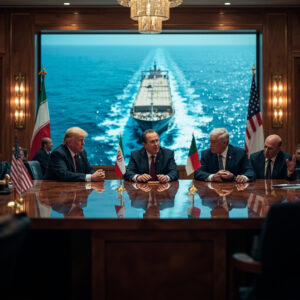
South Korea and Japan Sign Landmark Reciprocal Logistics Defense Pact
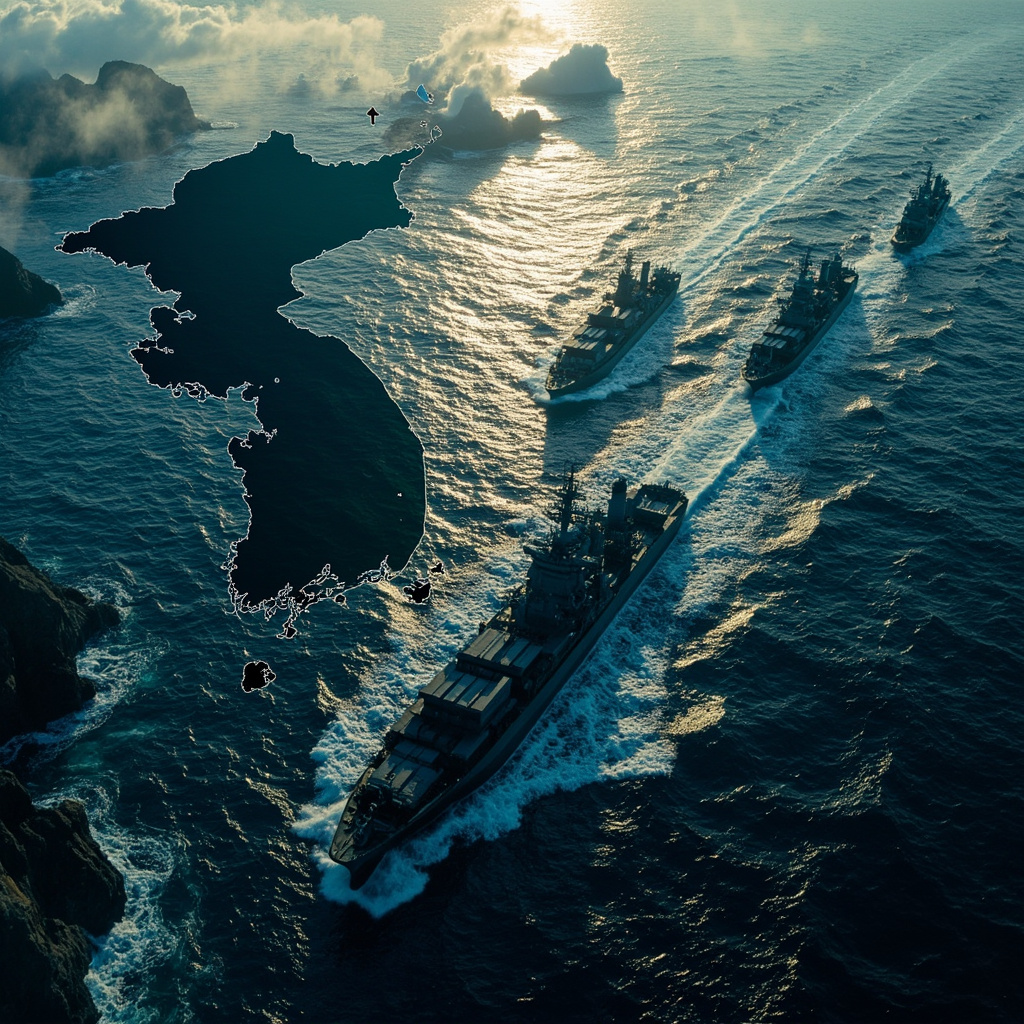
South Korea and Japan signed their most consequential defense agreement in decades on June 30, formalizing a reciprocal logistics pact in Seoul that grants each nation direct access to the other’s military supplies, fuel, and infrastructure without requiring separate negotiations for each mission. Defense Minister Ahn Gyu-back and his Japanese counterpart Shinjiro Koizumi completed the signing at Seoul’s Ministry of National Defense headquarters, ending months of negotiations that began with preliminary talks in May and culminated in an accord that analysts called the most significant realignment of Northeast Asian security architecture since the 1965 normalization of bilateral relations.
Seoul and Tokyo Formalize Reciprocal Logistics Accord
The agreement includes provisions for expedited customs clearance, priority transportation corridors, and shared logistics infrastructure during joint operations and emergencies. It is the first arrangement of its kind between the two nations since their diplomatic normalization in 1965, and it fundamentally alters the strategic calculus of a region that has watched North Korea’s weapons programs accelerate and China’s military footprint expand across the Indo-Pacific. The two governments agreed in a joint statement to explore cooperation in artificial intelligence for defense systems, cybersecurity for military networks, and aerospace surveillance sharing.
A senior South Korean defense official described the accord as “decades overdue” given the deteriorating security environment in Northeast Asia. The statement reaffirmed their commitment to the complete denuclearization of the Korean Peninsula and to trilateral cooperation with Washington. The agreement also establishes an emergency consultation mechanism allowing direct coordination between the two sides during crises without routing through American channels, a provision that senior officials in both governments described as a strategic watershed.
China and North Korea Warn of Destabilizing Consequences
Beijing’s foreign ministry expressed concern within hours of the announcement, saying the agreement risks destabilizing Northeast Asia and warning against turning the region into a flashpoint. “We hope relevant countries will abandon Cold War mentality and bloc confrontation thinking,” a ministry spokesperson said. North Korea’s state media called the pact an aggressive military conspiracy and said it would accelerate regional arms racing. The statements followed a submarine-launched anti-ship missile test by Pyongyang in the East Sea, the latest in a series of weapons trials this month that have included ballistic missiles and multiple cruise missiles.
The timing of the agreement coincides with a broader realignment of Indo-Pacific alliances. Australia and Vanuatu signed the Nakamal Security Agreement on June 29, explicitly barring foreign military bases on Vanuatu’s territory in a provision widely read as targeting Chinese expansion. The Philippines and Vietnam separately elevated their bilateral ties and renewed their 2010 defense cooperation agreement, declaring peace and stability in the South China Sea non-negotiable. Those three agreements, combined with the Seoul-Tokyo pact, give the United States three treaty allies with operational defense frameworks across Southeast Asia and the Pacific.
Security Architecture Rewired Across the Indo-Pacific
Under the Nakamal Agreement signed in Canberra, Vanuatu committed to consulting Australia on any third-party investment in critical infrastructure. Prime Minister Anthony Albanese called it a bedrock commitment to regional stability and said the agreement ensures Vanuatu’s sovereignty is respected by all partners. His Vanuatu counterpart Jotham Napat said the pact reflects a shared dedication to a peaceful, stable and prosperous Pacific founded on mutual respect and trust. China criticized the agreement as a tool of geopolitical rivalry and urged against using Pacific Island partnerships for bloc confrontation.
Analysts say the pace of the realignment reflects growing concern in democratic capitals about Chinese military expansion, North Korean nuclear escalation, and the erosion of the rules-based order in the region’s waterways and corridors. The convergence of bilateral and trilateral defense agreements across the Indo-Pacific now collectively constrains Chinese and North Korean strategic options in ways that were inconceivable just three years ago. South Korea, Japan, Australia, the Philippines, and the United States are now linked by a web of bilateral and trilateral defense agreements that senior officials in all five governments describe as the most significant structural shift in regional security in a generation.
The broader Indo-Pacific security realignment now underway reflects a structural shift that analysts say is unlike any since the Nixon-era rapprochement with Beijing. Five separate bilateral and trilateral defense agreements have been signed across the region in the past eighteen months, creating an interlocking network of commitments that senior officials in Washington describe as the most significant reinforcement of the rules-based order in Asia since the founding of ASEAN. South Korea’s participation in this architecture, long reluctant due to its dependence on Chinese trade, represents a decisive strategic pivot that would have been unthinkable before Pyongyang accelerated its weapons program in 2024.
The logistics agreement specifically grants South Korean forces access to Japanese Ground Self-Defense Force installations for refueling, maintenance, and supply purposes, creating an unprecedented interoperable footprint across the two nations’ territorial chains. Under the pact, each country’s military vessels and aircraft gain expedited clearance procedures at designated ports and airfields, reducing bureaucratic friction that had previously slowed joint exercises to a crawl. The agreement is structured as a reciprocal arrangement, meaning Japanese forces receive equally frictionless access to South Korean bases, creating a bilateral logistics network spanning from Pusan to Sasebo. Military analysts note this eliminates the single greatest operational constraint that had prevented meaningful bilateral defense integration since the 2016 intelligence-sharing agreement.
Beyond the immediate defense logistics, the pact signals a fundamental shift in how Tokyo and Seoul view their security architecture in the context of broader great-power competition in the Indo-Pacific. South Korean Defense Minister Kim Yong-woo told reporters in Seoul that the agreement was ‘not directed at any third country’ while simultaneously acknowledging that it would ‘dramatically improve our ability to respond to regional contingencies.’ Japanese officials were more blunt, with one senior Foreign Ministry figure telling local media that the agreement was ‘a direct response to the rapidly deteriorating security environment in the East China Sea and the Taiwan Strait.’ The two governments agreed to a standing committee to manage the logistics framework, with quarterly reviews and an emergency consultation mechanism that can be activated within 24 hours of a crisis declaration.