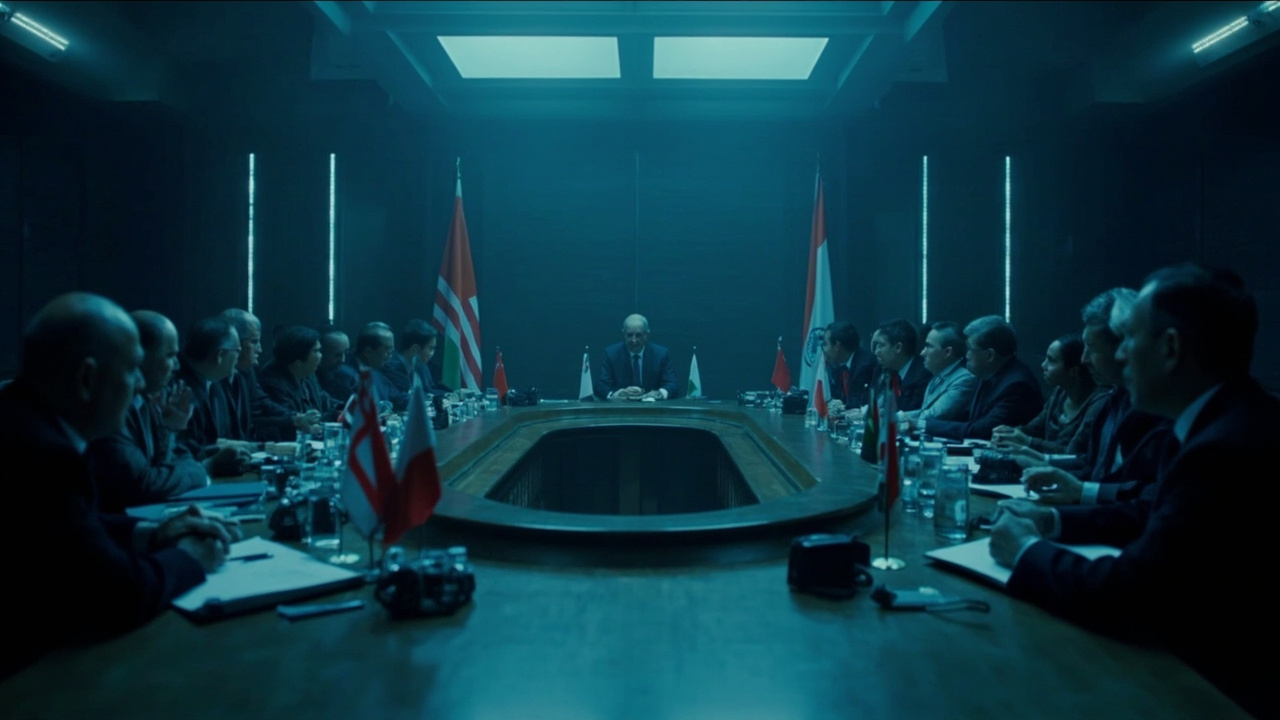
The confrontation crystallised a structural crisis that has been building for years and that now threatens to accelerate rather than resolve. Article 50 was designed for a world in which a country would invoke exit once, under a specific political mandate, and leave cleanly. What the architects of the Lisbon Treaty never anticipated was the emergence of governments that would use Article 50 not as a destination but as a negotiating weapon, invoked, suspended, threatened, and re-invoked to extract concessions, domestic political advantage, and tactical leverage — all without ever actually leaving.
The Strategic Weaponisation of Withdrawal
Hungary has become the most cited case. Since Viktor Orban’s government re-initiated Article 50 talk in January 2026 — framing it as a “renegotiation of membership terms” — the country has used the implicit threat of exit to extract an estimated EUR4.2 billion in agricultural subsidy reallocations from Brussels. EU negotiators, acutely aware that losing a member of Hungary’s size would accelerate the fracture of the Union’s cohesion, have made concessions repeatedly. The European Commission’s internal analysis, leaked to Politico in March 2026, described Hungary’s approach as “a systematic exploitation of the exit mechanism as a first-mover weapon” and warned that replication by other member states would be “inevitable and potentially terminal” for the Union’s institutional coherence.
Poland, governed since March 2026 by the centre-right KO coalition, has adopted a subtler version of the same strategy. Warsaw’s foreign minister, Radoslaw Sikorski, told a Warsaw Strategy Forum panel in April that Poland was “not leaving the EU, but redefining what membership means” — language that signals a desire for opt-outs on agricultural policy and judicial reform timelines without formally triggering Article 50. Triggering Article 50 in Poland requires a referendum, which the government would likely lose given current polling showing 58 percent support for continued EU membership. The informal pressure campaign achieves the same leverage without the political cost of a formal exit.
The UN Session and the Reform Debate
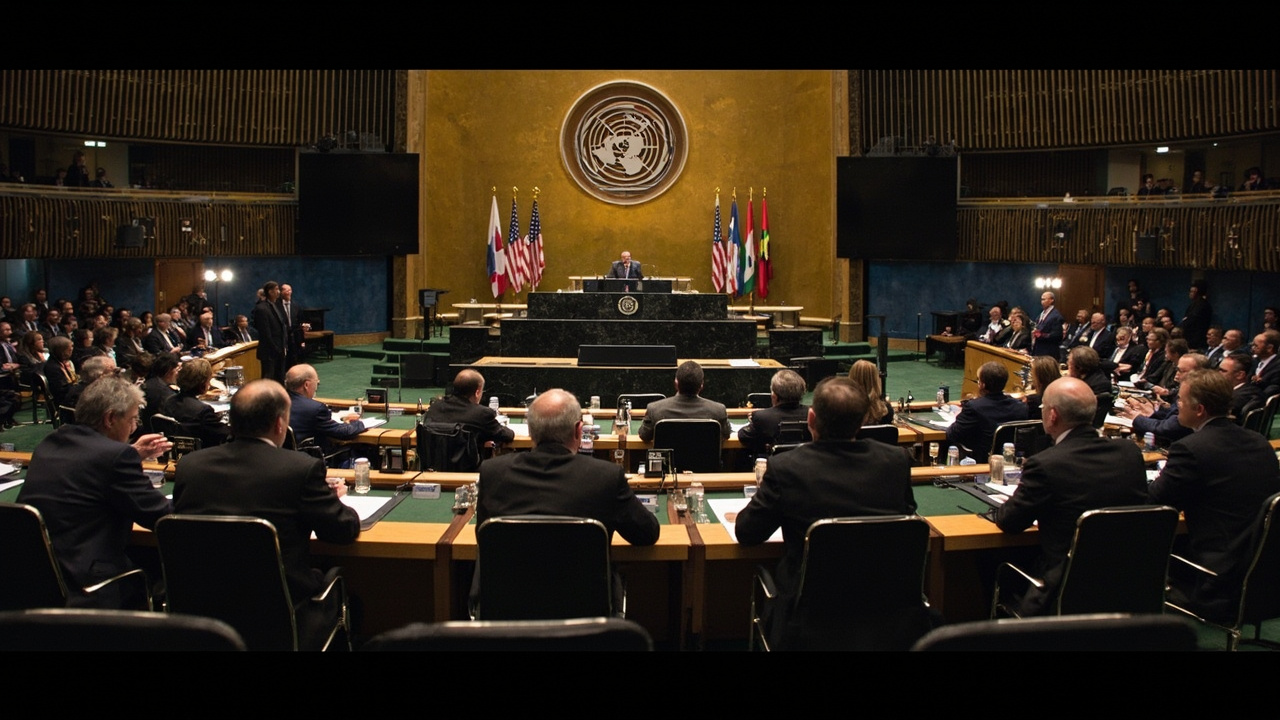
Germany’s foreign minister, Annalena Baerbock, addressed the chamber with a proposal that made explicit what has been implicit in European diplomatic circles for months: the EU needs a mechanism to penalise member states that weaponise Article 50 without triggering a formal withdrawal. Her proposal — distributed as a non-binding resolution text — calls for a new protocol that would allow the European Council to suspend a member state’s voting rights if that member has maintained an active Article 50 process for more than eighteen months without a referendum or formal withdrawal decision.
The proposal immediately drew fire from Hungary, which called it “legally incoherent and politically provocative.” The UK representative argued that any UN discussion of Article 50 reform exceeded the General Assembly mandate — a position that won quiet support from Russia and China. The vote on the UK procedural challenge was deferred to May 5, 2026 — a delay that signals the difficulty of building consensus even on the procedural question of whether Article 50 reform is a legitimate topic for multilateral discussion.
Domestic Political Calculi Behind the Exit Games
The politics of Article 50 weaponisation differ sharply across member states, but the pattern is consistent: governments use the exit threat when domestic polling shows EU membership is unpopular with key electoral constituencies, but a formal exit referendum would likely fail. The result is strategic ambiguity that extracts concessions from Brussels while avoiding the electoral risk of a clean break. EU trade specialists describe it as “managed multipolar pressure” — a phenomenon that analysts at the Centre for European Policy Studies argue is now the primary driver of EU policy paralysis on agricultural reform, judicial independence standards, and migration burden-sharing.
France presents a different variant. President Emmanuel Macron, facing a re-election challenge from the nationalist right in 2027, has oscillated between championing deeper EU integration — the “European sovereignty” narrative — and quietly tolerating Article 50 threats from Hungary and others, because doing so weakens Brussels and concentrates power in Paris. French diplomats described the German proposal as “structurally sound but politically premature” — language that signals Paris is not yet ready to commit to a hard enforcement mechanism that could be used against its own future governments.
What Reform Could Actually Look Like
Scholars have proposed several concrete reform options. The first — favoured by Germany and the European Commission — is a new “Article 50 suspension protocol” that would allow the European Council, by qualified majority vote, to declare an Article 50 process “inactive” after eighteen months and restore full membership rights. The legal basis is disputed: Hungary has threatened to challenge any such protocol at the European Court of Justice, arguing that only a formal amendment to the Treaty on European Union — requiring unanimous ratification — could restrict a state’s right to invoke Article 50.
A second proposal, floated by France and the Netherlands, is a “conditional membership” framework that would allow the EU to offer member states a form of associate membership status with limited voting rights — a middle ground that neither requires a full exit nor unconditional continuation of standard membership obligations. This concept has gained traction among legal scholars at the EUI in Florence and at the Bertelsmann Foundation, which published a detailed proposal in April 2026 modelling the fiscal implications of such a tiered membership structure.
The Clock Is Ticking
Whatever path the EU chooses, the window for action is narrowing. Hungary’s next formal Article 50 notification window opens in June 2026, and Orbán has signaled publicly that his government will use it. The Austrian election in October 2026, where the anti-EU Freedom Party currently leads polls by 8 points, could produce a second front. If the pattern replicates, the Union faces not one exit crisis but several simultaneous ones — each feeding on the ambiguity created by the last. The UN General Assembly may debate Article 50 reform until the building empties, but the real negotiation is happening in Budapest, Warsaw, Vienna, and Paris — and in Brussels, where the question being asked in private is no longer whether the EU can reform Article 50, but whether it can survive without doing so.
Elena Rodriguez is an International Affairs Correspondent for Media Hook, covering global diplomacy, conflict, and the emerging world order.