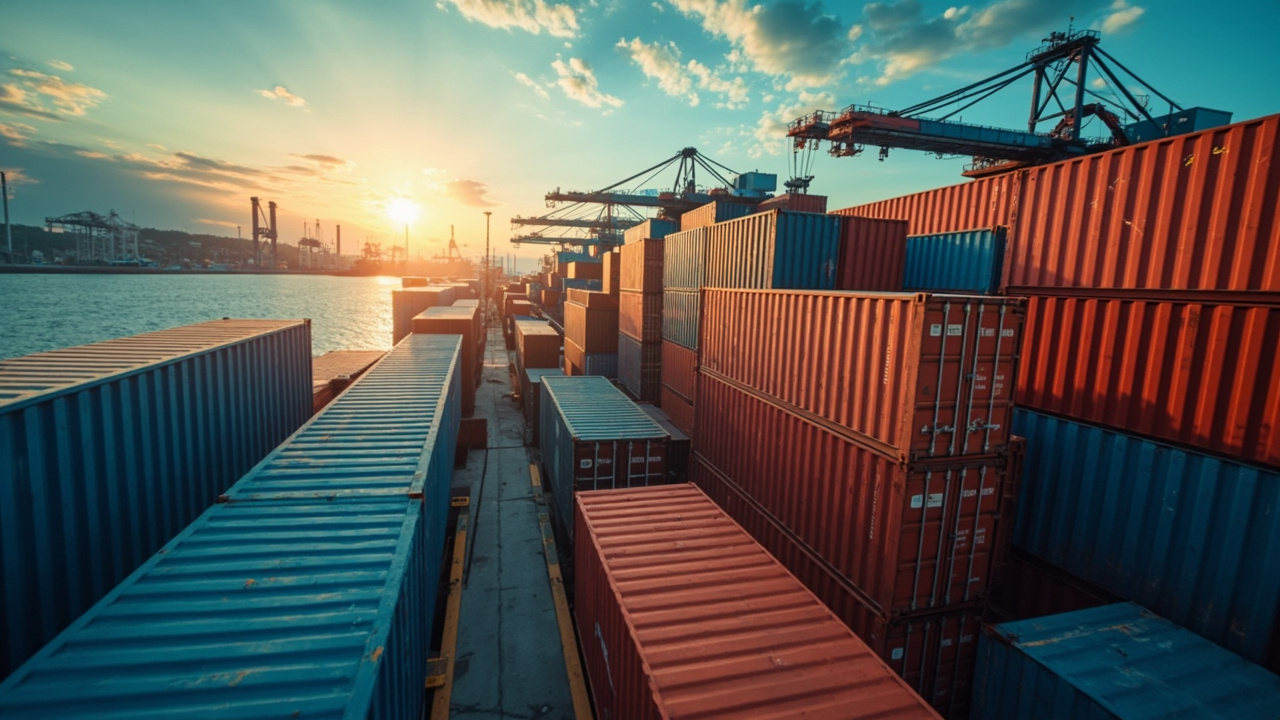
The Semiconductor Saga of 2026 reads like a geopolitical thriller that no screenwriter would dare pitch: too implausible to be believed. Yet here we are. Nvidia is under export restrictions. TSMC is expanding in Arizona. China is pouring hundreds of billions into domestic chipmaking. And the global technology supply chain, once the model of international cooperation, has become the central front of a new kind of economic warfare.
This is the chip war. And 2026 may be the year it reaches a point of no return.
The Anatomy of a Stranglehold
To understand why semiconductors have become the 21st century equivalent of oil reserves, you need to understand the extraordinary concentration of capability that the industry has produced. A single company — ASML of the Netherlands — manufactures the extreme ultraviolet lithography machines required to produce chips at the leading edge. No other company on Earth can replicate its technology. ASML ships to a handful of customers globally, and the United States has successfully lobbied the Dutch government to block shipments of its most advanced machines to China.
This single export control measure illustrates how a handful of companies and a small number of governments hold effective veto power over another country technological development. China cannot manufacture chips below 7 nanometers without ASML machines. ASML will not sell those machines to China. Therefore, for the foreseeable future, China cannot manufacture chips below 7 nanometers. That is the stranglehold.
The question is not whether China will try to break this stranglehold. It will. The question is whether it can — and what happens to the global economy if it attempts to do so by other means.
Peter Wennin, Senior Fellow, Peterson Institute for International Economics
The American Strategy
The United States CHIPS Act, passed in 2022, committed fifty-two billion dollars to rebuild domestic semiconductor manufacturing. By 2026, the results are tangible if modest: several new fabs have broken ground, Intel has broken ground on new Ohio facilities, and TSMC has begun limited production in Phoenix. But the gap between ambition and reality remains wide. Building a leading-edge semiconductor fab takes five to seven years and requires a workforce of thousands of specialized engineers that the United States simply does not have in sufficient numbers.
The more immediate American weapon is export controls. The October 2022 chip rules and their subsequent expansions have effectively blocked Nvidia A100 and H100 GPUs — the workhorses of modern AI training — from reaching Chinese customers. Nvidia responded by designing the H20, a downgraded chip compliant with export rules. Chinese companies bought them in enormous quantities until the Commerce Department tightened the rules again in early 2026, restricting those exports too.
The effect on Chinese AI development has been real but not catastrophic. Chinese firms have stockpiled millions of dollars worth of chips in advance of each round of restrictions. They are also working furiously to develop domestic alternatives, even if those alternatives lag behind the global frontier by several generations.
China Response: Self-Reliance at Any Cost
Xi Jinping has called semiconductor self-sufficiency a matter of national security. The results of that push are mixed but structurally significant. SMIC, China primary chipmaker, has managed to produce 7nm chips using techniques that are technically impressive given the equipment constraints — though the yields are low and the cost per chip is high. Huawei new Kirin 9000S chip, produced by SMIC, demonstrated that Chinese engineering can close some of the gap, even without access to the world most advanced equipment.
The Chinese government has committed over one hundred fifty billion dollars to semiconductor investment through its National IC Fund, and provincial governments have added billions more. The goal is not merely to survive the export controls but to ultimately displace them — to build a domestic ecosystem capable of producing chips at scale without foreign technology.
Western analysts estimate that closing the gap will take a decade or more. Chinese engineers estimate less. The truth probably lies somewhere in between, and the trajectory depends heavily on whether ASML can be further restricted, whether Taiwan production remains accessible, and whether China can attract and retain the engineering talent required for such an ambitious buildout.
Taiwan: The Ultimate Fulcrum
The Taiwan Strait is the most volatile point in the chip war. Taiwan Semiconductor Manufacturing Company produces roughly ninety percent of the world most advanced chips. If that production were disrupted — through conflict, through evacuation, or through political pressure — the economic consequences would dwarf anything the global economy has experienced in decades. Every modern technology product, from smartphones to military systems, depends on TSMC output.
The geopolitical implications of this concentration have made Taiwan the most watched piece of real estate on Earth. The United States has a strategic interest in Taiwan deterrence. Japan has invested heavily in TSMC facilities in Kumamoto partly because of its own strategic vulnerability. The European Union has launched its own chip act in response to the realization that it has almost no capacity to produce leading-edge semiconductors.
The Economic Stakes
The chip war is not merely a technology competition. It is a competition between two fundamentally different visions of the global economy. The United States and its allies want to preserve a system in which technological leadership remains concentrated in friendly nations, and in which export controls can be used as a calibrated instrument of geopolitical leverage. China wants to build a parallel system — one in which it controls the means of production of the technologies that will define the coming decades.
The economic stakes are staggering. Semiconductors are the backbone of the AI revolution. AI is the foundation of future military capability, economic productivity, and scientific discovery. Whoever leads in AI leads in everything. That is the prize. And the chip war is the contest that will determine who claims it.
What Comes Next
The trajectory for the remainder of 2026 and beyond looks increasingly like bifurcation. Two distinct technology ecosystems — one centered on the United States, Japan, South Korea, and the Netherlands; the other centered on China with whatever allies it can cultivate — are taking shape. The cost of this bifurcation will be paid by consumers globally, through higher prices for electronics, slower innovation cycles, and the loss of the kind of global supply chain efficiency that made semiconductors so cheap and abundant in the first place.
The chip war will not end in 2026. It may not end in this decade. But 2026 has become the year when the world stopped pretending that globalization in technology was reversible, and began accepting that a new economic order — divided, competitive, and more expensive — is the world we actually live in.
James Wright is the Economy Correspondent for Media Hook, covering markets, monetary policy, and the forces shaping the American economy.