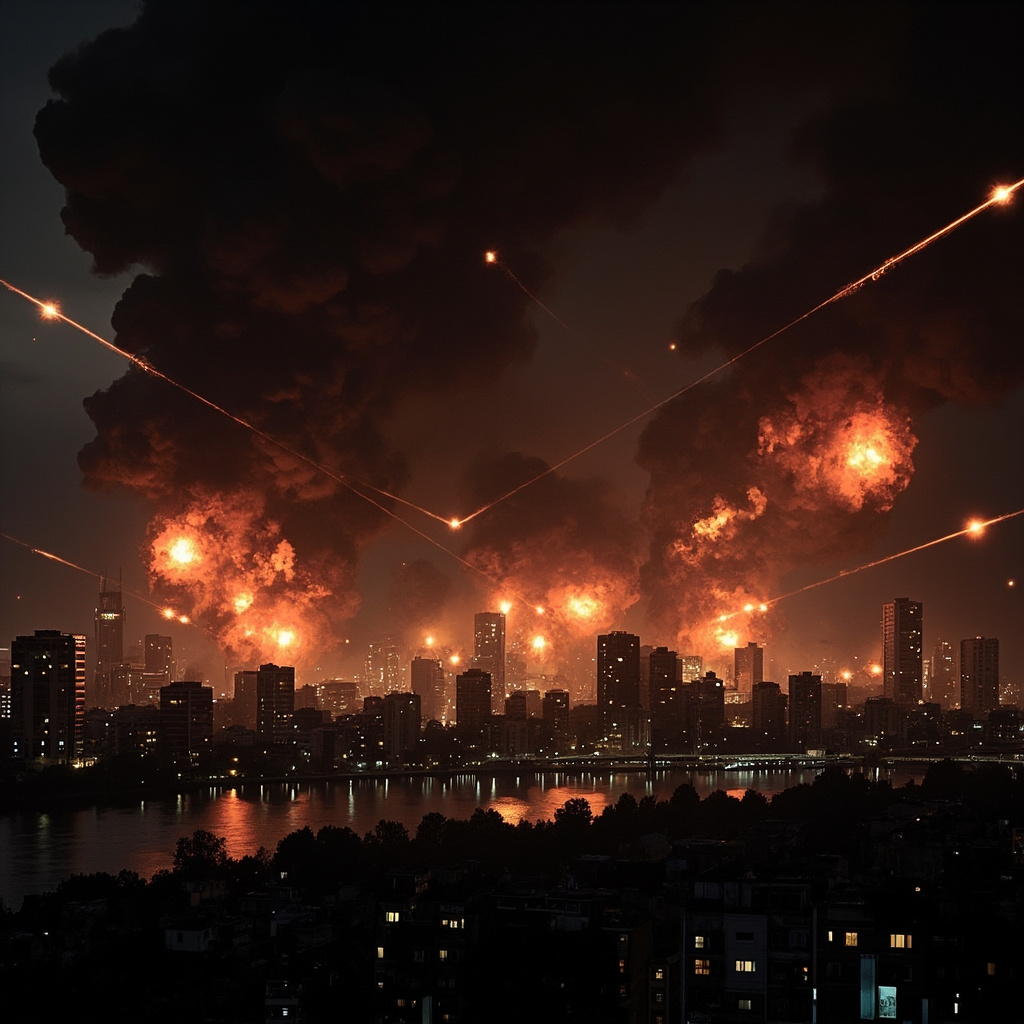
The largest drone attack of the war. That is how international media are describing Russia’s overnight bombardment of Kyiv on May 14, 2026 — a sustained, multi-wave assault involving Shahed drones, ballistic missiles, and Iranian-designed cruise missiles that killed at least seven people and wounded more than 30.
What happened
Russian forces launched their largest drone attack of the entire war overnight, with waves of Shahed-136/171 drones striking residential districts across the Ukrainian capital. Emergency services responded to dozens of fires across five districts. The attack lasted more than six hours, with air defense units engaging targets well into the morning rush hour.
Why this matters
Previous large-scale attacks have typically targeted energy infrastructure. This barrage targeted civilian areas directly, suggesting either a deliberate strategic shift or an operational opportunity seized amid weakened air defenses. The fact that seven civilians died in their sleep marks a significant escalation in the human cost of the conflict.
What this signals
Russia is demonstrating it can sustain high-intensity strikes even as diplomatic efforts intensify. The timing — coming hours before a scheduled ceasefire talks in Istanbul — suggests Moscow wants to strengthen its negotiating position through battlefield pressure rather than concessions.
The bottom line
Ukraine’s air defenses held, but barely. The strike revealed gaps that Russian planners will exploit in future operations. Without a sustained increase in air defense capability, Ukraine faces a summer of intensified bombardment — regardless of what happens at the negotiating table.