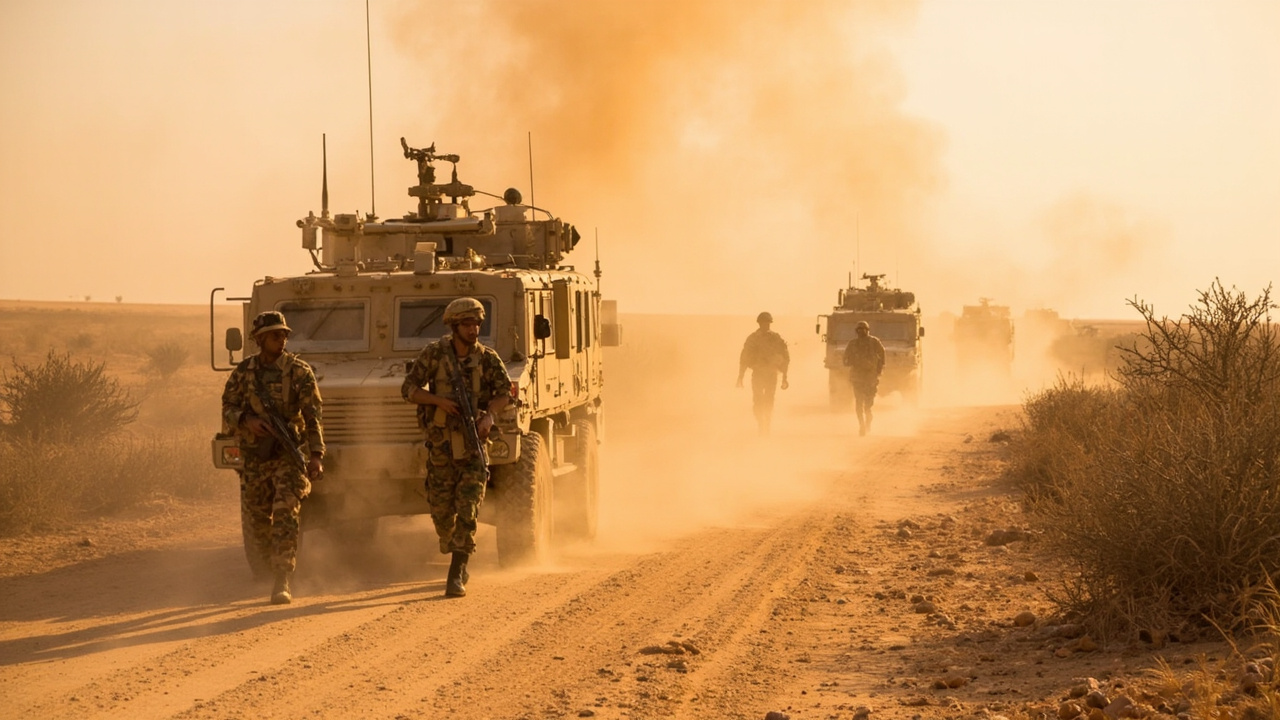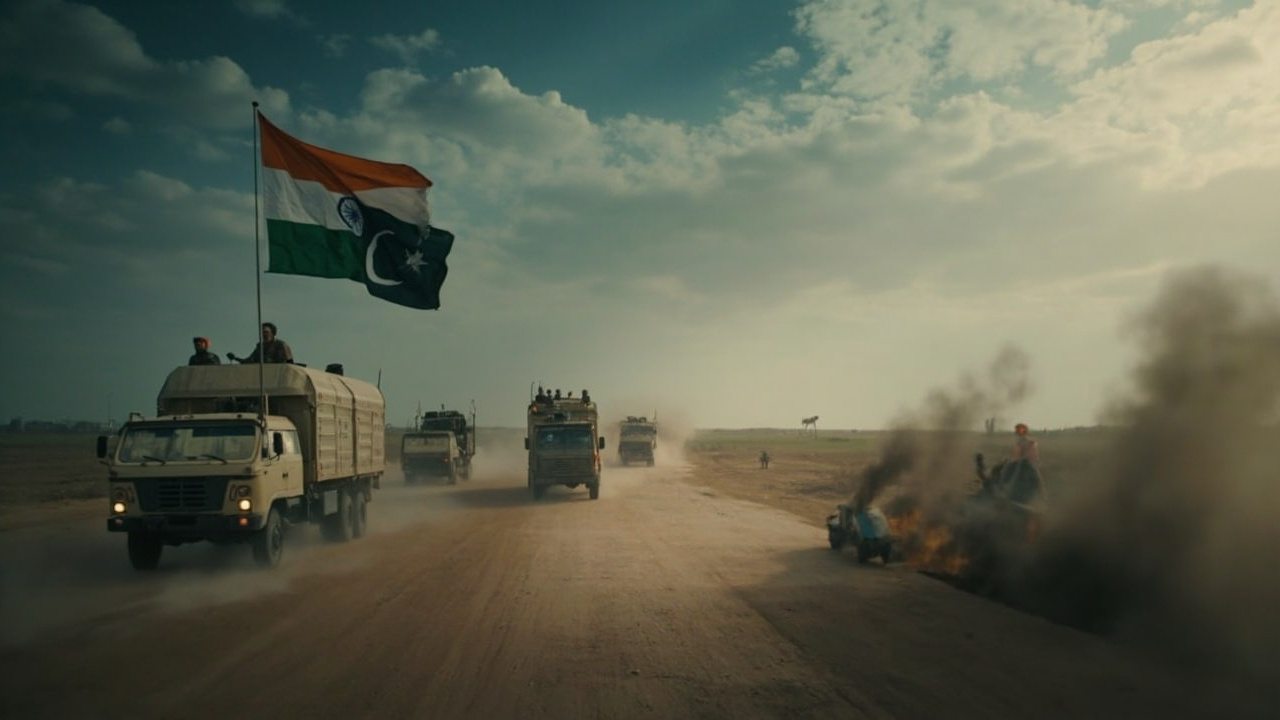
In spring 2026, India and Pakistan engaged in the most serious military confrontation since their 2002 standoff, a crisis that came within hours of triggering established nuclear risk reduction protocols maintained by both countries since the 1990s. On April 22, an Indian military operation in the vicinity of Pahalgam resulted in the deaths of 26 civilians, including 24 Indian nationals and 2 Pakistani nationals. Both governments released conflicting casualty figures within hours. Within 72 hours, both nations had mobilized additional military formations to their respective borders, recalled their high commissioners, expelled diplomats, and invoked emergency economic provisions.
The international response was immediate and unprecedented in its coordination. The United States, United Kingdom, China, Russia, and the European Union all issued simultaneous statements calling for de-escalation within the same four-hour window, an outcome of diplomatic coordination that one senior State Department official described privately as the most tightly synchronized multilateral signal since the Cuban Missile Crisis. The United Nations Security Council held an emergency session within 48 hours of the incident. The resulting Resolution 2347 called for restraint, the establishment of an independent joint investigation, and a 30-day cooling-off period monitored by UN military observers.
Military Mobilization: What Both Sides Deployed
The Indian Armed Forces mobilized elements of the IX Corps in Punjab and the XVI Corps in Jammu and Kashmir. The Indian Air Force activated additional squadron reinforcements at Hindan, Adampur, and Bhatinda air bases, with Sukhoi Su-30MKI and Rafale formations visible in increased sorties over the disputed region. The Indian Navy repositioned assets in the Arabian Sea as a visible signal of sea-lane control capability.
Pakistan responded by placing its II Corps and Lahore Corps on active operational footing, deploying JF-17 Thunder fighters from Base PAF Sargodha, and activating the Pakistan Army Special Services Group for forward reconnaissance operations. Pakistan full-spectrum deterrence doctrine, which allows for first use of tactical nuclear weapons to counter conventional overwhelming force, added an explicit nuclear signaling dimension that complicated India operational calculus.
The Pahalgam crisis of 2026 is a reminder that the India-Pakistan conflict is not frozen. It can thaw rapidly, and the consequences of miscalculation between two nuclear-armed states with overlapping territorial claims remain genuinely catastrophic.
— Dr. S. Jaishankar, India’s Minister of External Affairs, April 2026
The Kashmir Factor: Why History Keeps Repeating
Kashmir has been the central conflict driver between India and Pakistan since Partition in 1947. Three full-scale wars and one limited war have been fought over the region. The Line of Control, established in 1949 and reaffirmed in the 1972 Simla Agreement, is a cease-fire line that both governments have consistently treated as negotiable rather than permanent. Every Indian government since 1990 has attempted a Kashmir settlement through back-channel negotiations, and every attempt has collapsed under the weight of domestic political pressure on both sides.
The 2019 constitutional changes by India, which revoked Article 370 and reorganized Jammu and Kashmir into two union territories, fundamentally altered the political landscape. The Pakistani government referred the matter to the International Court of Justice and lobbied for UNSC review. Pakistan also deepened its security relationship with China, which shares a strategic partnership and borders India at the disputed Aksai Chin region.
Kashmir is not just a territorial dispute. It is a conflict over identity, sovereignty, and the question of who gets to determine the political fate of 20 million people caught between two nuclear-armed states for nearly eight decades.
— Maleeha Lodhi, Former Pakistani Ambassador to the United Nations
Nuclear Risk Reduction: The Mechanisms That Existed
The India-Pakistan agreement on advance notification of military exercises and the 2004-2007 confidence-building measures covering nuclear and missile deployments have been utilized during every major crisis. During the April 2026 crisis, the nuclear hotline between the National Security Advisers of both countries was activated for the first time since 2019. The United States, which maintains back-channel relationships with both governments, provided shuttle diplomatic support.
These mechanisms worked. But their existence also creates a subtle moral hazard: the knowledge that nuclear risk reduction protocols exist may reduce the political cost of military adventurism in future crises.
The International Dimension: China, the US, and the Limits of Multilateralism
The United States relationship with India has deepened significantly since the QUAD partnership and the 2022 CHIPS and Science Act. Washington regards India as a counterweight to Chinese influence in the Indo-Pacific and has invested heavily in the India-US defence relationship. The US response to the Pahalgam crisis was calibrated to support India right to self-defence while actively pressing for de-escalation.
China, which shares a border with India in the Aksai Chin region and has a comprehensive strategic partnership with Pakistan, took a more complicated position. The Chinese foreign ministry called for restraint by all parties while simultaneously maintaining military pressure on the Line of Actual Control in Ladakh.
The Bottom Line: Why 2026 Changes the Calculus
The Pahalgam crisis of 2026 is a warning about the fragility of deterrence in South Asia. Both India and Pakistan have nuclear arsenals growing in sophistication and decreasing in threshold. India is pursuing a triad of nuclear delivery systems including submarine-launched ballistic missiles. Pakistan is developing tactical nuclear weapons specifically designed for battlefield use against conventional Indian formations. The logic of full-spectrum deterrence, which Pakistan has articulated, means the threshold for nuclear use is deliberately ambiguous.
What 2026 has demonstrated is that the existing risk reduction architecture, while imperfect, still functions. But it has also shown that the architecture depends on political will, which can shift quickly. Managing a conflict for 80 years is not the same as resolving it, and the Pahalgam crisis is evidence that the gap between management and resolution keeps getting wider.
David Foster is a Senior Analyst for Media Hook, specializing in geopolitical analysis, economic trends, and the forces reshaping the global order.