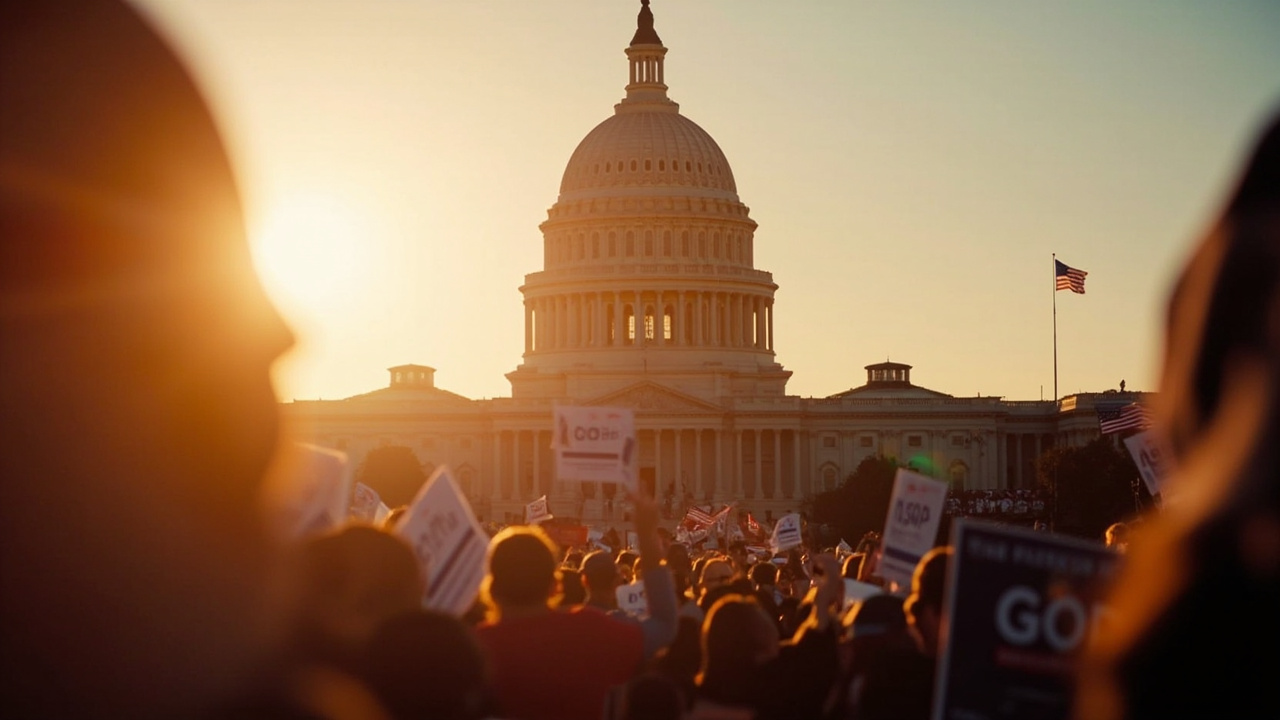
Most campaign coverage focuses on polls, fundraising, and candidate gaffes. But the single biggest variable shaping the 2026 midterm may not appear on any ballot — it’s the patchwork of voting rules that differ by state, many of them changed just in the past six months.
Since January, at least eleven states have enacted or implemented new voting procedures ahead of November. The Brennan Center’s May 2026 roundup documents changes ranging from voter ID reinforcement in three states to automatic registration expansion in two others. The net effect is a country where the act of casting a ballot looks meaningfully different depending on your ZIP code.
States advancing new restrictions include Texas, where a proof-of-citizenship requirement for voter registration takes full effect by August, and Florida, where a recent court ruling upheld precinct-based ballot segregation for mail voters — meaning ballots cast at the wrong location are partially counted. Supporters call these integrity measures. Opponents call them suppression dressed up in procedural language.
On the expansion side, California and Michigan have moved to same-day voter registration, which research consistently links to higher turnout among younger and first-time voters. Colorado added a permanent mail ballot list, while New York extended early voting windows by four days in anticipation of record turnout.
The states running the tightest elections in 2026 are the ones whose rules were finalized earliest. Late changes create chaos at the precinct level — poll workers can’t train on rules that don’t exist until three weeks before Election Day.
The electoral math here is not subtle. Proof-of-citizenship requirements disproportionately affect newly registered voters and voters who move frequently — groups that skew younger and Democratic. Same-day registration benefits the same populations. In a cycle where control of the House may come down to margins under 100,000 votes across six or seven districts, these rule effects are not peripheral noise. They are the signal.
Consider Texas. The state’s proof-of-citizenship rule, if it survives expected legal challenges, could affect an estimated 600,000 registered voters whose registrations are considered “incomplete” under the new standard. The majority of those voters live in urban counties that lean Democratic. In the 2024 Senate race, Texas Republicans won by roughly 700,000 votes. The math of suppressed registration is the math of the election.
Florida’s ballot segregation rule — sorting mail ballots into ” valid” and “partial” piles at the precinct level — was upheld by a federal appeals court in March. The practical effect: a mail ballot cast by a voter in the wrong precinct is counted for any races where the voter’s correct precinct and actual precinct overlap. If that voter is in a district that straddles two precinct boundaries, some down-ballot votes simply disappear. Election officials in Miami-Dade County estimated this could affect up to 3% of mail ballots in affected areas — a number that represents tens of thousands of votes in a state decided by single-digit margins.
Several of the most consequential rule changes are tied up in litigation with uncertain outcomes. The Texas proof-of-citizenship rule faces a pending challenge in the Fifth Circuit. Florida’s ballot segregation rule is being appealed to the full Eleventh Circuit after a panel split 2-1 in March. A Michigan same-day registration expansion is also in legal limbo, with opponents arguing the administrative implementation timeline violates federal election law.
What makes this particularly volatile for 2026: courts have shown willingness to issue injunctions close to Election Day. The 2024 cycle saw last-minute judicial intervention on voting rules in at least three states in the final 60 days before November. Campaign managers and election lawyers are treating court calendars as campaign infrastructure.
The rules that will govern the 2026 election are still being written — in courtrooms, not just legislatures. And that uncertainty is itself a strategic variable for both parties.
Both parties are aware of the rule-change dynamic, and both are calibrating their turnout operations accordingly. A Democratic campaign operative in Pennsylvania told reporters that their field team is now “rating” voters not just by support level but by how many procedural hurdles stand between them and a counted ballot. “We used to ask: will they vote? Now we also ask: can they vote without their ballot being challenged?”
Republican strategies are along parallel lines, focusing resources on precincts where procedural challenges to irregular ballots could flip results post-election rather than pre-election turnout. This is a meaningful shift from pure GOTV to GOTV-plus-ballot-integrity-challenge operations — a strategy that requires different staffing, different legal resources, and different data systems.
Pollsters and election forecasters face a problem: their models are built on historical turnout patterns, and historical turnout patterns were produced under different rule sets. A state that adds same-day registration in 2025 will not look like the same state in 2022 when those models were calibrated. Forecasters who do not account for rule-change effects risk systematic error in battleground states.
Several modeling teams at academic institutions have begun incorporating state-level rule change indices into their 2026 projections. The results are eye-opening: models that control for procedural access suggest narrower margins in Texas and Florida than raw polling indicates, and wider margins in Michigan and Pennsylvania where registration expansions are most fully implemented.
The bottom line is simple: the 2026 map is not just a demographic map or a polling map. It is a regulatory map, and that map is still being drawn. Every week between now and November brings new court rulings, new administrative guidance, and new opportunities for procedural change to alter the electoral outcome. Campaigns that understand the rules are writing the rules — and the ones that don’t are already behind.
Written by Thomas Mercer, Senior Editor
Thomas Mercer
Thomas Mercer is a senior political analyst covering policy, elections, and institutional dynamics across the Atlantic.